
Solana News Today: SEC's Utility Token Framework Paves Way for Blockchain Innovation


 Aime Summary
The U.S. Securities and Exchange Commission's recent no-action letter regarding Solana-based tokens has ignited a seismic shift in the cryptocurrency regulatory landscape, offering clarity and a potential blueprint for distinguishing utility tokens from securities. The decision, which exempted Fuse Energy's Solana-based token from securities classification, hinges on the token's utility within a decentralized energy grid rather than speculative investment value. This ruling not only validates the functional use case of blockchain technology but also signals a more nuanced approach to regulating digital assets, potentially easing the path for innovation in the sector.
The SEC's determination emphasizes that tokens with genuine, non-speculative utility—such as Fuse Energy's use in energy service access—can avoid being categorized as securities under the Howey Test. This distinction is critical for projects seeking to operate within regulatory boundaries while fostering real-world applications. For the broader crypto industry, the precedent could reduce compliance burdens for developers and investors, provided they prioritize utility-driven tokenomics over profit-centric models. "This decision provides a roadmap for projects to structure their tokens in ways that align with regulatory expectations," said one industry analyst, though they cautioned that challenges remain in interpreting the SEC's evolving stance.
Coinciding with the regulatory shift, major players like CoinbaseCOIN-- are aggressively expanding their Solana-based infrastructure, signaling confidence in the ecosystem's growth. The exchange's acquisition of Vector, a Solana-native onchain trading platform, underscores its strategy to dominate decentralized trading. 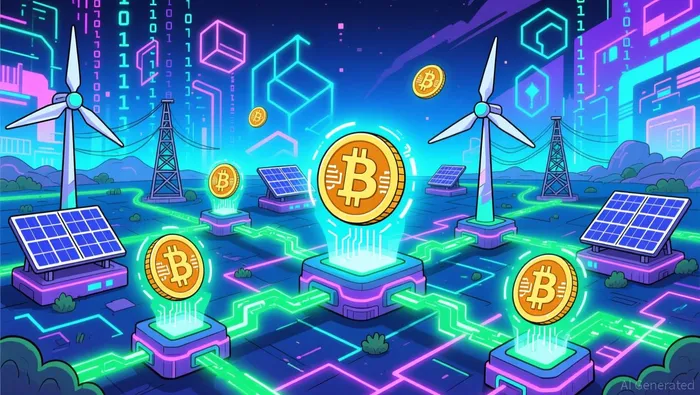 With Solana's decentralized exchange (DEX) volume surpassing $1 trillion in 2025, Coinbase aims to integrate Vector's technology to enhance speed, liquidity, and access to emerging assets. The move aligns with the SEC's emphasis on utility, as Vector's infrastructure enables real-time identification of newly launched tokens—a feature that could attract retail and institutional traders alike.
The convergence of regulatory clarity and market demand is reshaping investor behavior. The Bitwise SolanaSOL-- Staking ETF (BSOL), for instance, has amassed over $500 million in assets under management, reflecting growing institutional interest in Solana-based products. However, risks remain, including market volatility, liquidity constraints, and the inherent uncertainties of blockchain technology. The SEC's ruling does not eliminate these challenges but provides a framework for projects to mitigate regulatory ambiguity, potentially attracting more mainstream capital.
Critics argue that the SEC's approach may still lack consistency, as the decision applies only to Fuse Energy's specific case. Yet, the agency's recognition of utility-driven tokens as non-securities sets a persuasive precedent, particularly for blockchains like Solana with high transaction throughput and developer activity. As Coinbase and others scale their Solana integrations, the industry's ability to adhere to this utility-first model will likely determine the longevity of the regulatory reprieve.

Stay ahead of the market.
Get curated U.S. market news, insights and key dates delivered to your inbox.




Comments
No comments yet