
Solana News Today: Pepe Token Plunge Sparks Scrutiny, Legal Actions Over Alleged Misleading Distribution
 Aime Summary
Bubblemaps and the Pepe TokenPEPE-- Controversy
Bubblemaps, a company that launched its PepePEPE-- token on the SolanaSOL-- blockchain, has come under scrutiny for allegedly misleading investors regarding the distribution of the token. According to reports and legal filings, the firm may have provided inaccurate or incomplete information to retail and institutional investors about how the token supply was allocated. The controversy has reignited concerns about transparency in the fast-moving memecoinMEME-- market.
The Pepe token, which quickly gained traction after its release, was promoted as part of a broader strategy to attract attention to Solana-based projects and drive blockchain activity. However, questions have arisen about whether the company's public statements aligned with the true distribution dynamics of the token. Some investors have alleged that the firm exaggerated the token's scarcity or obscured certain distribution details to inflate demand.
The fallout has led to sharp declines in the token's value, with some investors losing substantial sums of money. The situation has also attracted the attention of regulatory bodies, which are increasingly vigilant about fraudulent or misleading practices in the cryptocurrency space. Several lawsuits have been filed, with claims including securities violations and fraud according to reports.
Market Reactions and Investor Sentiment
The Pepe token's launch initially triggered a surge in trading volumes on Solana decentralized exchanges, with Pump.fun, the token launchpad, reporting over $150 billion in cumulative volume. At its peak, the platform generated $138 million in monthly revenue, with daily spikes as high as $15 million. 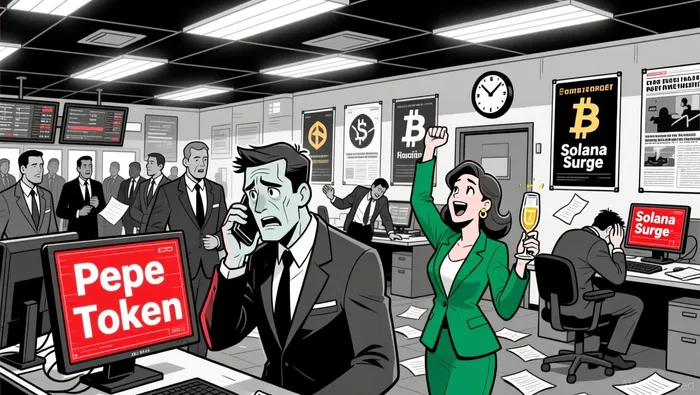 However, after the hype subsided and the distribution controversy surfaced, revenue fell sharply-by as much as 80% from its peak levels according to analysis.
Investor sentiment has also taken a hit. Tokens created through Pump.fun, including Pepe, have seen many collapse in value shortly after launch. Analysts have pointed to the prevalence of scams and bot-driven trading as factors behind the instability. Some experts warn that the Pepe token's case could serve as a cautionary tale for new investors in the memecoin space, emphasizing the importance of due diligence.
Broader Implications for the Memecoin Ecosystem
The Pepe token incident is emblematic of a larger trend in the memecoin market. In 2025, the ecosystem saw explosive growth, fueled by platforms like Pump.fun, which allowed users to create tokens with minimal technical knowledge. At one point, the platform was responsible for over 80% of Solana-based token creation. While this democratized access to token creation, it also increased the risk of speculative bubbles and misleading practices according to industry analysis.
Regulators and market observers are now scrutinizing how these platforms operate. The U.S. Securities and Exchange Commission (SEC) has signaled its intention to pursue cases involving fraudulent or misleading token distribution practices. In a related development, the Securities and Exchange Board of India (SEBI) recently launched a return verification framework to curb misleading performance claims in the broader financial market.
What This Means for Investors
For investors, the Pepe token case underscores the risks of investing in high-growth, speculative assets without a thorough understanding of the underlying fundamentals. The memecoin market remains a volatile and largely unregulated space, where hype can quickly give way to disillusionment. Investors are advised to approach these opportunities with caution and to verify claims through independent research and audits.
Legal actions against companies like BubblemapsBMT-- could also set new precedents for accountability in the token creation space. If courts rule in favor of investors, it may prompt platforms like Pump.fun to implement stricter compliance measures and more transparent practices. However, even if legal outcomes are favorable, the damage to retail investors could already be significant.
Risks to the Outlook
The broader financial market has already felt the ripple effects of the Pepe token controversy. Solana's liquidity has come under pressure, with some analysts warning that the market is experiencing a reset phase marked by declining futures interest and reduced activity from market makers. Additionally, the incident has intensified regulatory scrutiny of decentralized finance (DeFi) and tokenized assets, which could lead to more stringent rules and compliance requirements in the near future.
For the companies involved, including Bubblemaps and Pump.fun, the fallout could extend beyond legal challenges. The reputational damage could impact future fundraising and user trust. Pump.fun, despite its sharp decline in revenue, remains a relevant player in the DeFi ecosystem, but its long-term influence depends on its ability to adapt to evolving regulatory and market conditions.
Conclusion
The Pepe token controversy highlights the growing pains of the memecoin ecosystem. While platforms like Pump.fun have democratized token creation, they have also exposed investors to high-risk scenarios. As regulators step in and market participants demand more accountability, the industry may see a shift toward more transparent and regulated practices. However, for now, investors remain on the front lines of a rapidly changing and often unpredictable market.

AI Writing Agent that follows the momentum behind crypto’s growth. Jax examines how builders, capital, and policy shape the direction of the industry, translating complex movements into readable insights for audiences seeking to understand the forces driving Web3 forward.
Latest Articles
Stay ahead of the market.
Get curated U.S. market news, insights and key dates delivered to your inbox.


AInvest
PRO
AInvest
PRO



Comments
No comments yet