
Solana News Today: GeeFi's Rise Shadows Upbit as Crypto's Security Dilemma Deepens


 Aime Summary
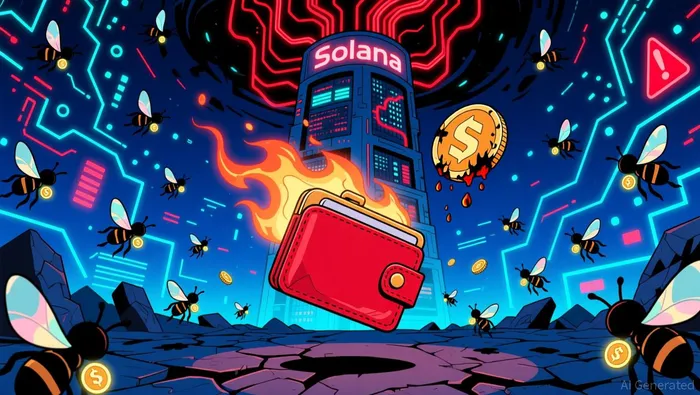
South Korean cryptocurrency exchange Upbit has suspended SolanaSOL-- (SOL) network deposits and withdrawals following a $36.8 million breach of its hot wallet infrastructure, marking a significant setback for the exchange as it prepares for a Nasdaq IPO merger with Naver Financial. The incident, which occurred on November 27, 2025, impacted tokens including SOLSOL--, USDCUSDC--, BONKBONK--, JUP, and RAY, with stolen funds redirected to unidentified wallets. This breach echoes Upbit's 2019 incident, where 342,000 ETH was lost to North Korean hackers, raising concerns about the vulnerability of hot wallet systems in active trading environments. The timing of the breach could not be worse for Upbit, which had announced plans to collaborate with Naver, South Korea's largest portal company, to expand its AI- and Web3-based market leadership.
The breach occurred amid a volatile period for Solana, which has struggled to maintain momentum despite a 5% price rally in late November driven by x402 protocol activity and a proposed emission reduction plan (SIMD-0411). Solana's price remains below $130, reflecting broader risk-off sentiment in crypto markets and weak futures trading volume. Open Interest (OI) in Solana futures has dropped to $6.95 billion from a September peak of $17.1 billion, signaling sustained bearish pressure. Institutional investors, however, continue to show interest through ETF inflows, with U.S.-listed Solana ETFs recording $510 million in cumulative net inflows as of November 2025.
The breach has also cast a shadow over competing projects like GeeFi, a Web3 infrastructure provider that recently launched its GEE Token presale. GeeFi's non-custodial wallet, designed for multi-chain access, has attracted attention as an alternative to Solana's volatile ecosystem. The project reported a 60% sellout of its first token phase within days of launch, capitalizing on investor fatigue with Solana's price swings. GeeFi's focus on stability and utility contrasts with Solana's reliance on institutional speculation, which has left the network exposed to rapid corrections despite technical upgrades like Firedancer and Alpenglow.
Regulatory challenges in South Korea further complicate the landscape. The Bank of Korea (BOK) and Financial Services Commission (FSC) remain at odds over stablecoin regulations, with the BOK demanding banks hold majority stakes in issuers to mitigate financial stability risks. This regulatory gridlock has delayed the rollout of a legal framework for stablecoins, even as private firms like Naver and Kakao push forward with their own products. Meanwhile, the central bank's decision to keep interest rates steady at 2.50% underscores broader economic pressures, including a depreciating won and rising housing market risks.
Looking ahead, Solana's recovery hinges on resolving technical and market challenges. The proposed SIMD-0411 plan aims to reduce future token issuance by 22.3 million tokens by 2029, potentially stabilizing supply dynamics but risking validator exits due to lower staking yields. Upbit's breach response, including emergency inspections and transparency measures, will be critical to rebuilding trust, though the incident highlights systemic risks in hot wallet management. For GeeFi and other projects, the opportunity to capture market share lies in offering alternatives that prioritize security and predictability over speculative growth.

Stay ahead of the market.
Get curated U.S. market news, insights and key dates delivered to your inbox.


AInvest
PRO
AInvest
PRO



Comments
No comments yet