
Solana News Today: DeFi's Security Crisis Contrasts with $2B Institutional Altcoin Push


 Aime Summary
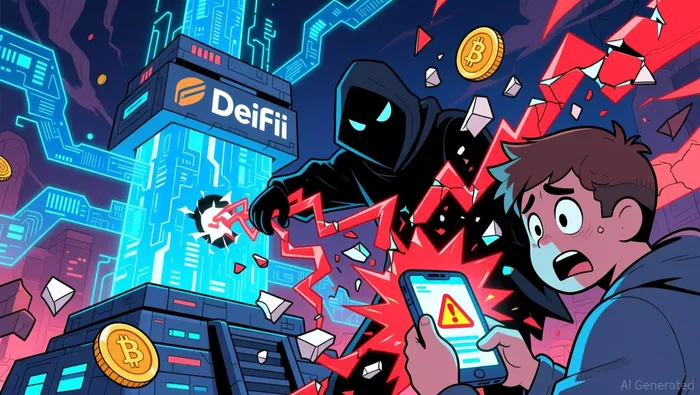
The decentralized finance (DeFi) sector faced renewed scrutiny in November 2025 as Aerodrome Finance disclosed a "front-end attack" on its platform, prompting users to avoid its main domain and revoke recent token approvals according to reports. This incident, the third such attack since late 2023, underscored persistent vulnerabilities in DeFi infrastructure, despite the AERO token maintaining relative stability at $0.67. The attack occurred amid Aerodrome's merger with Velodrome, a move intended to consolidate liquidity across Base and Optimism ecosystems under the "Aero" umbrella.
Meanwhile, market participants shifted attention to SolanaSOL-- (SOL), where a 5% price drop in early November triggered a retail exodus to emerging platforms like GeeFi (GEE). GeeFi reported a 50% sellout of its Phase-1 token presale within 24 hours, capitalizing on Solana users' demand for multi-chain accessibility. The shift reflected broader skepticism about Solana's short-term prospects, as technical indicators pointed to bearish momentum. SOLSOL-- traded below $130, lagging behind its 50-day EMA of $166, while futures open interest of $6.95 billion-a far cry from the September peak of $17.1 billion-suggested waning speculative activity.
 Institutional interest in altcoins, however, remained robust. New Solana treasury firms, backed by DeFi protocols like Marinade, announced $2 billion in plans to hold SOL on corporate balance sheets. This trend mirrored early adopters such as MicroStrategy, which has amassed billions in bitcoinBTC--. Yet, retail and institutional sentiment diverged: while ETFs continued to post inflows, with SOL ETFs recording $510 million in cumulative net inflows, derivatives markets signaled caution according to technical indicators.
The broader tech sector saw mixed results. Oil India successfully capped a blowout at its Kharsang Oil Field Well 76 after a high-risk operation involving global specialists according to reports. In contrast, Firefly Aerospace faced a class-action lawsuit over declining revenue and a failed rocket test, which drove its shares down over 20%. Legal pressures also extended to edutech, as Byju's founder Byju Raveendran faced a $1 billion default judgment in a Delaware court over Alpha Fund mismanagement.
Regulatory and legal scrutiny intensified across industries. Bragar Eagel & Squire, P.C. launched investigations into Paysafe and StubHub following earnings disappointments and stock price collapses according to reports, while Genius Group's $15–$18 million 2025 revenue guidance reflected optimism about its Genius Cities model according to analyst reports. Meanwhile, BetaNXT announced AI-driven innovations to enhance wealth management solutions, emphasizing "augmented intelligence" to improve decision-making.
As markets navigated these developments, the interplay between DeFi security, institutional adoption, and regulatory pressures highlighted the sector's evolving maturity.

Stay ahead of the market.
Get curated U.S. market news, insights and key dates delivered to your inbox.


AInvest
PRO
AInvest
PRO



Comments
No comments yet