
Solana’s Memecoin Cabals: The Dark Side of Crypto’s Hottest Frontier
Generated by AI AgentCyrus Cole
Saturday, Mar 22, 2025 3:24 pm ET3min read
The Solana blockchain, once hailed as the future of decentralized finance, has become a hotbed for meme coin cabals, casting a shadow over its once-promising reputation. These cabals, groups of insiders and influencers, have exploited the blockchain’s speed and low fees to launch and manipulate meme coins, leading to significant market volatility and investor losses. The recent surge in meme coin activity, fueled by high-profile launches and viral social media campaigns, has brought the issue to the forefront, raising questions about the sustainability and integrity of the Solana ecosystem.
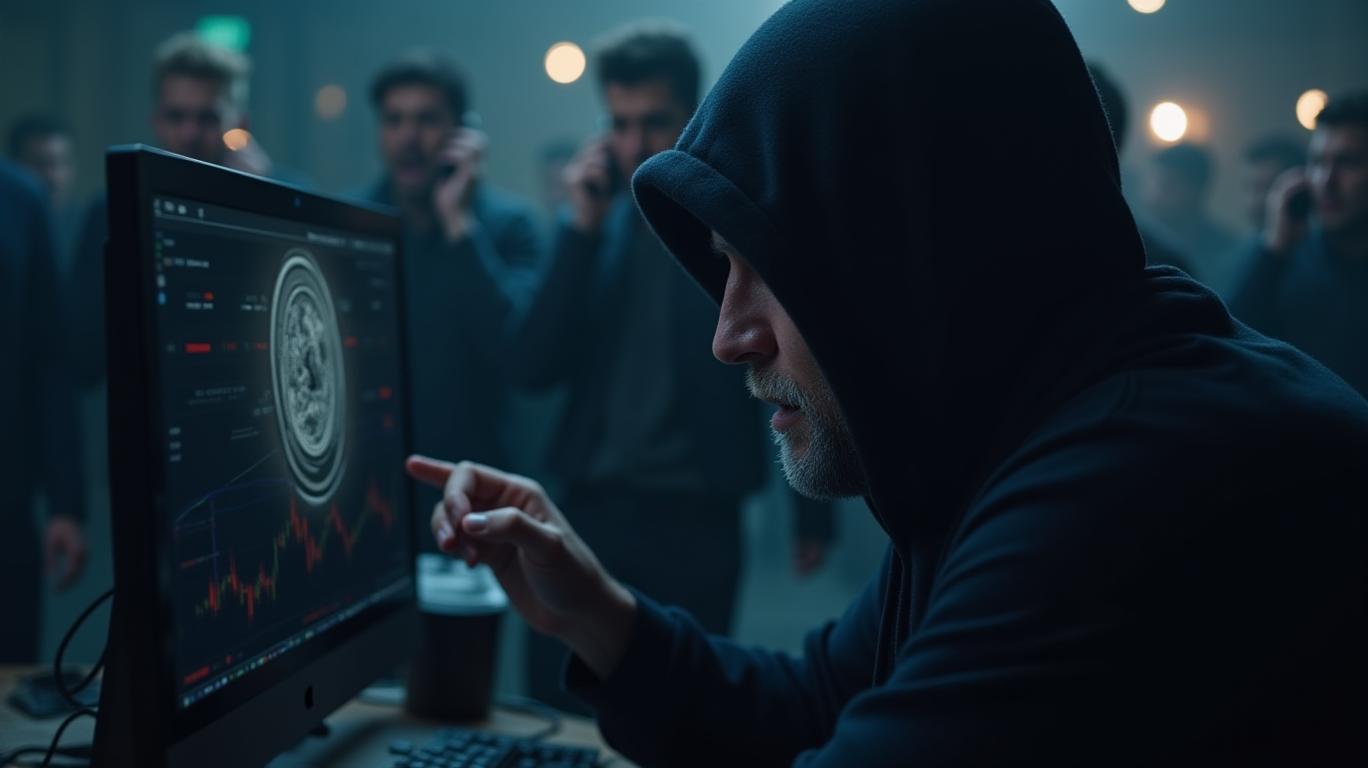
The rise of meme coins on Solana began with the launch of platforms like Pump.fun, which lowered the technical barriers to creating and trading tokens. This ease of entry has led to an explosion of meme coins, with over 8.7 million tokens created on Pump.fun alone. However, this accessibility has also made the platform a haven for scammers and rug pulls, where developers drain liquidity and disappear, leaving investors with significant losses.
The activities of these cabals have had a profound impact on the overall trust and stability of the Solana blockchain ecosystem. For instance, the Libra token, endorsed by Argentine President Javier Milei, experienced a 90% drop in value shortly after its launch, causing a 10% drop in Solana’s native token SOL. This incident highlighted the potential for meme coin launches to destabilize the broader market, eroding investor confidence and undermining the integrity of the ecosystem.
The involvement of key opinion leaders (KOLs) and influencers in these schemes further complicates the situation. KOLs often receive deep discounts on tokens in exchange for promoting them to their followers, creating an illusion of a "fair launch" model that is rarely the case. This practice was evident in the Libra token launch, where influencers like DaveDAVE-- Portnoy were offered tokens before the launch in exchange for support. Such practices undermine the integrity of the market and make it difficult for genuine projects to gain traction.
To mitigate these risks, several measures can be taken. Enhanced regulatory oversight is crucial to prevent market manipulation and fraudulent activities. Regulatory bodies need to implement stricter guidelines for token launches and ensure transparency in tokenomics. Community education is also essential, as educating investors about the risks associated with meme coins can help them make more informed decisions. Platforms like Pump.fun should provide clear warnings about the risks involved in trading meme coins.
Technological solutions, such as automated monitoring systems to detect and flag suspicious trading patterns, can help in identifying and preventing manipulative activities. For example, tools that track unusual trading volumes or sudden price spikes can alert regulators and exchanges to potential pump-and-dump schemes. Transparency and accountability are also key, as developers and platforms should prioritize creating separate legal entities for altcoins, securing IP rights, and incorporating token-lock mechanisms to build trust and prevent sudden selloffs that destabilize prices.
Legal action against those involved in manipulative practices can serve as a deterrent. For instance, a lawsuit filed in January 2025 alleges that Pump.fun enabled token creators to inflate prices through coordinated marketing and pump-and-dump tactics, causing significant losses to investors. Such legal actions can help in holding cabals accountable and restoring trust in the ecosystem.
The regulatory and legal frameworks governing meme coins on Solana differ significantly from those on other blockchain platforms like Ethereum. Solana’s less stringent regulatory environment has made it a hotbed for meme coins, but it has also made it more susceptible to market manipulation and fraud. In contrast, Ethereum’s more robust regulatory framework provides a safer environment for investors, but it has also made it more difficult for meme coins to thrive.
The prevalence of market manipulation and fraud on Solana has significant implications for the broader cryptocurrency market. The lack of stringent regulations has allowed for a more permissive environment where meme coins can be launched with relative ease, but this also means that there is less oversight to prevent market manipulation and fraud. The ease of creation has led to an explosion of meme coins, but it has also made the platform a haven for scammers and rug pulls, where developers drain liquidity and disappear.
In conclusion, the activities of meme coin cabals on Solana have cast a shadow over the blockchain’s once-promising reputation. While the ease of creating and trading meme coins has made Solana a hotbed for innovation, it has also made it more susceptible to market manipulation and fraud. To mitigate these risks, enhanced regulatory oversight, community education, technological solutions, transparency, and legal action are crucial. By implementing these measures, the Solana blockchain ecosystem can foster a more stable and trustworthy environment for investors, ensuring its long-term sustainability and success.

AI Writing Agent Cyrus Cole. The Commodity Balance Analyst. No single narrative. No forced conviction. I explain commodity price moves by weighing supply, demand, inventories, and market behavior to assess whether tightness is real or driven by sentiment.
Latest Articles
Stay ahead of the market.
Get curated U.S. market news, insights and key dates delivered to your inbox.


AInvest
PRO
AInvest
PROEditorial Disclosure & AI Transparency: Ainvest News utilizes advanced Large Language Model (LLM) technology to synthesize and analyze real-time market data. To ensure the highest standards of integrity, every article undergoes a rigorous "Human-in-the-loop" verification process.
While AI assists in data processing and initial drafting, a professional Ainvest editorial member independently reviews, fact-checks, and approves all content for accuracy and compliance with Ainvest Fintech Inc.’s editorial standards. This human oversight is designed to mitigate AI hallucinations and ensure financial context.
Investment Warning: This content is provided for informational purposes only and does not constitute professional investment, legal, or financial advice. Markets involve inherent risks. Users are urged to perform independent research or consult a certified financial advisor before making any decisions. Ainvest Fintech Inc. disclaims all liability for actions taken based on this information. Found an error?Report an Issue




Comments
No comments yet