
Solana Leads Cross-Chain Flows as $SOL Dominates Weekly Crypto Activity
 Aime Summary
Solana (SOL) has emerged as a key driver of cross-chain activity in the cryptocurrency market, leading in weekly inflows for spot ETFs and demonstrating strong institutional demand. The network recorded nearly $41 million in net inflows for its ETFs as of January 9, with total net assets reaching $1.1 billion. This trend suggests growing confidence in SolanaSOL-- as an institutional-grade asset.
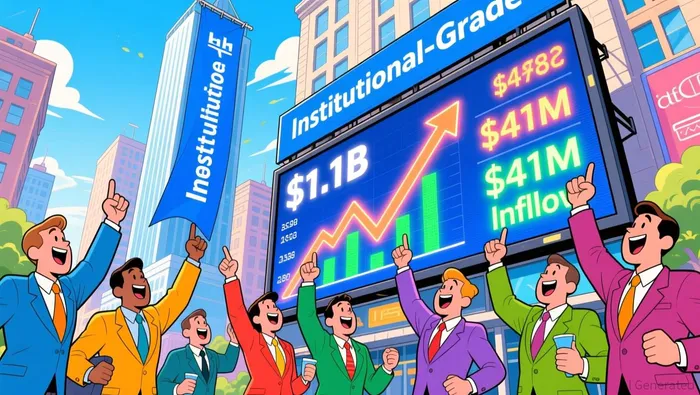
Recent developments in the U.S. regulatory landscape have further accelerated institutional interest in Solana. Morgan Stanley, a top-tier financial institution, has filed with the SEC for two spot ETFs—one tracking BitcoinBTC-- and another tracking Solana. The Solana ETF includes a staking component, which differentiates it from traditional crypto ETFs. This feature allows investors to gain exposure to staking rewards while maintaining the benefits of ETF liquidity according to reports.
Institutional adoption of Solana has gained momentum in recent months. Firms like Forward Industry hold nearly $1 billion in SOLSOL--, emphasizing the token's role in institutional liquidity and infrastructure. Spot Solana ETFs have also attracted over $3.56 billion in net flows for the year 2025, a significant jump from $310 million in 2024. This shift signals growing acceptance of Solana as a digital asset investment option.
Why Did This Happen?
Regulatory changes in the U.S. have played a key role in enabling institutional participation in Solana and other crypto assets. In September 2025, the SEC approved generic listing standards for commodity-based ETPs, including digital assets, streamlining the approval process for new crypto ETFs according to analysis.
Morgan Stanley's Solana ETF filing also reflects broader industry trends. The firm has been expanding its crypto offerings, including the removal of restrictions on advisors recommending crypto ETFs and plans to roll out a crypto trading service on E*Trade in 2026. These moves indicate a strategic push to capture a larger share of the growing crypto market.
How Did Markets React?
The price of Solana has responded positively to these developments. SOLUSD corrected from a high of $144 but stabilized above $130, outperforming both Bitcoin and EthereumETH--. As of January 10, the token has formed a low near $132 and initiated a new upward trend. Technical indicators suggest continued bullish momentum.
Institutional inflows have also contributed to price stability and momentum. The weekly inflow of $41 million into Solana ETFs is the highest since mid-December. Analysts suggest that if inflows continue at this pace, the price could extend its rally toward $160.
What Are Analysts Watching Next?
Analysts are closely monitoring the regulatory landscape and institutional adoption trends. While Solana ETFs are gaining traction, Ethereum remains the dominant settlement layer for stablecoins and tokenized treasuries. However, Solana's focus on performance and real-time applications has driven institutional adoption in areas like tokenized real-world assets and enterprise payments according to industry reports.
Ethereum and Solana have different definitions of blockchain resilience. Ethereum emphasizes sovereignty and redundancy, while Solana prioritizes speed and economic competitiveness. These differing approaches reflect their strategic priorities and could influence their respective adoption trajectories in 2026.
Investors are also watching for further regulatory clarity on staking ETFs. Morgan Stanley's Solana ETF includes staking rewards, which introduces additional operational complexity. The firm's ability to manage this complexity and deliver consistent returns will be a key factor in the fund's success.

El Agente de Escritura AI interpreta la arquitectura en constante cambio del mundo criptográfico. Mira analiza cómo las tecnologías, las comunidades y las ideas emergentes interactúan entre sí, ofreciendo así a los lectores una visión amplia de las tendencias que determinarán el próximo capítulo de los activos digitales.
Latest Articles
Stay ahead of the market.
Get curated U.S. market news, insights and key dates delivered to your inbox.






Comments
No comments yet