
Solana Introduces New Staking and Bridge Features Amid Major Security Incident
 Aime Summary
GalaxyOne has launched SolanaSOL-- (SOL) staking for eligible clients, offering variable rewards of up to 6.5%, with no platform commission until December 31, 2026 according to GalaxyOne's announcement.
The Base-Solana bridge now enables direct transfers between the Base network and Solana, boosting liquidity and developer opportunities for DeFi as reported by Intellectia.
Drift Protocol, a Solana-based decentralized exchange, has suffered a $285 million exploit, making it one of the largest in crypto history according to TradingView.
GalaxyOne, a financial technology platform from Galaxy, recently introduced Solana staking for eligible clients. The feature allows users to earn variable rewards by participating in the blockchain network validation as detailed in the company's announcement. Galaxy Digital's institutional validator infrastructure supports this initiative, providing reliability and security to staking operations as stated in the investor release.
The launch of staking is part of Galaxy's broader digital asset strategy, with plans to expand services to more than 40 U.S. states and jurisdictions. Clients can now access staking directly within their GalaxyOne accounts, or sign up at galaxy.app according to the company's announcement.
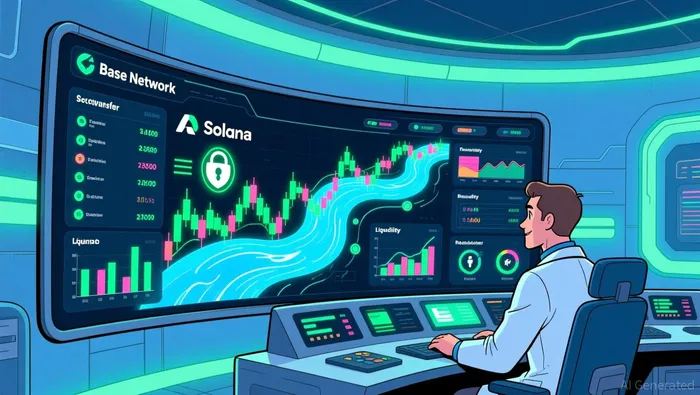
In a separate development, the Base-Solana bridge has enabled seamless asset transfers between the Base network and Solana. This development expands opportunities for DeFi users and developers by improving liquidity and user experience as Intellectia reports.
What is the significance of GalaxyOne's Solana staking launch?
Galaxy's move is a strategic expansion of its digital asset offerings, bridging traditional finance with crypto by providing institutional-grade infrastructure to retail users as described in the investor release. The zero-fee staking until the end of 2026 is a competitive move to attract and retain users in a growing staking market according to GalaxyOne's announcement.
Galaxy's decision to waive platform commissions aligns with broader industry trends where platforms compete on fees and user experience. This initiative is expected to challenge other major platforms like Coinbase and Robinhood, which already offer staking alongside trading and custody.
How does the Base-Solana bridge benefit DeFi participants?
The Base-Solana bridge allows users to transfer digital assets directly between the two blockchains without relying on centralized exchanges as Intellectia explains. This improvement enhances DeFi liquidity and supports the broader vision of an interconnected blockchain ecosystem according to the report.
By enabling cross-chain transfers, the bridge also supports developers in building innovative decentralized applications (dApps), further expanding the Solana ecosystem as noted in the analysis.
However, users should remain cautious about potential risks such as security vulnerabilities, transaction fees, and the learning curve associated with using new bridges according to Intellectia. Experts recommend starting with small transfers and using official interfaces for safety as advised by the source.
What does the Drift Protocol exploit reveal about DeFi security?
Drift Protocol suffered a $285 million exploit on April 1, 2026, through a sophisticated operation involving durable nonces and unauthorized access to administrative powers according to TradingView. This incident highlights the growing threat of human-targeted attacks in the DeFi space, where attackers focus on manipulating signers rather than exploiting code bugs as reported in the analysis.
The attack involved multi-week preparation and staged execution, with the malicious actor leveraging Solana's durable nonce feature to pre-sign transactions for delayed execution according to the investigation. Drift's Security Council multisig was manipulated through social engineering, allowing attackers to bypass controls and execute large-scale withdrawals in under 12 minutes as detailed in the report.
Security experts attribute the attack to DPRK-linked threat actors, citing patterns similar to the 2022 RoninRON-- bridge hack according to the analysis. This incident underscores the importance of implementing safeguards like timelocks to delay administrative actions, which could have prevented the rapid execution of the exploit as noted in the report.
The Drift Protocol incident has caused significant volatility, with the DRIFT token plummeting by nearly 40% in 24 hours according to TradingView. Users in related protocols like Pyra and Carrot remain unable to access funds as of April 3, 2026 as reported.
In response, Drift has suspended all deposits and withdrawals and is collaborating with security firms, bridges, and exchanges to contain the situation. The incident serves as a wake-up call for the industry to improve security measures beyond code audits and into operational and social engineering risk mitigation according to the analysis.

Blending traditional trading wisdom with cutting-edge cryptocurrency insights.
Latest Articles
Stay ahead of the market.
Get curated U.S. market news, insights and key dates delivered to your inbox.


AInvest
PRO
AInvest
PRO



Comments
No comments yet