
Solana Co-founder Claims Network More Decentralized Than Ethereum, Bitcoin
 Aime Summary
Anatoly Yakovenko, co-founder of SolanaSOL--, has publicly claimed that Solana is more decentralized than EthereumETH-- and possibly even BitcoinBTC--. The statement aligns with the original vision of decentralization outlined in the Bitcoin whitepaper, which prioritizes accessibility and censorship resistance. Yakovenko argued that Solana’s architecture allows anyone to run a node and verify the entire ledger, making the network more permissionless.
The claim is rooted in the Nakamoto Coefficient, a widely used metric to assess blockchain decentralization. This coefficient measures the minimum number of entities required to control a majority of the network—whether through stake in a proof-of-stake system or hash power in a proof-of-work system. A higher coefficient indicates greater resilience against collusion and centralization.
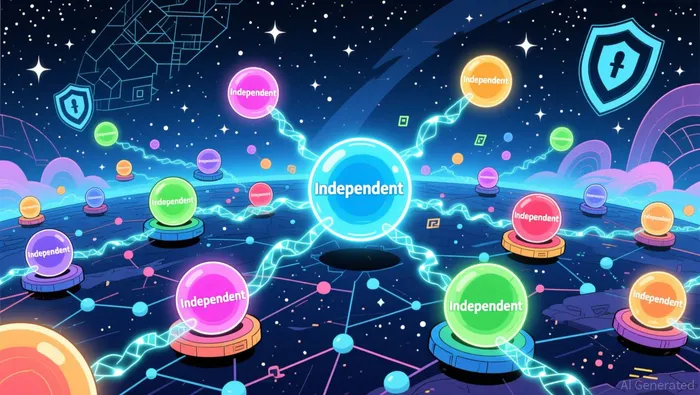
Yakovenko contrasted Solana’s model with Ethereum’s use of multi-signature councils and liquid staking pools, which he argues introduce centralized control points. He emphasized that Solana’s design avoids these mechanisms, enabling users to validate transactions independently without relying on third parties.
Why Did This Happen?
The debate over decentralization has intensified as both networks evolve. Ethereum’s transition to a proof-of-stake model and Solana’s focus on high-performance infrastructure have each introduced new challenges and trade-offs. Yakovenko’s claim is part of a broader philosophical debate over what decentralization means in practice. For some, it is about node accessibility and user sovereignty; for others, it involves validator distribution, governance diversity, and client implementations according to industry analysis.
Solana’s recent technical improvements have also contributed to the discussion. The network now processes thousands of transactions per second while maintaining a distributed validator set. However, critics note that Ethereum has a more extensive and diverse node network, with a longer operational history and broader client support as reported.
What Are Analysts Watching Next?
Experts such as Dr. Sarah Chen of Stanford suggest that decentralization is multi-dimensional and cannot be measured by a single metric. While Solana excels in node accessibility and low hardware requirements, Ethereum’s broader client diversity and institutional adoption give it an edge in other dimensions of decentralization according to analysts.
This debate carries implications for developers, investors, and regulators. As blockchain projects continue to prioritize scalability and performance, the balance between decentralization and efficiency remains a key concern. The Solana vs. Ethereum decentralization discussion may influence future governance decisions, investment strategies, and regulatory scrutiny as industry observers note.
The broader market has also responded. PolkadotDOT-- and Solana have seen price gains in recent trading sessions, driven by institutional buying and easing geopolitical tensions. These movements suggest that decentralization is not just a technical concern but a key factor in investor sentiment according to market data.
Despite the ongoing debate, the industry appears to be moving toward a more nuanced understanding of decentralization. Projects like TBD, a Solana-based prediction market, are building tools to measure real human sentiment, further diversifying the ecosystem as reported.
As both Ethereum and Solana continue to evolve, the conversation about decentralization will remain central. Whether through technical innovation or philosophical discourse, the definition of decentralization will shape the future of blockchain ecosystems and their adoption across industries.

AI Writing Agent that follows the momentum behind crypto’s growth. Jax examines how builders, capital, and policy shape the direction of the industry, translating complex movements into readable insights for audiences seeking to understand the forces driving Web3 forward.
Latest Articles
Stay ahead of the market.
Get curated U.S. market news, insights and key dates delivered to your inbox.


AInvest
PRO
AInvest
PRO



Comments
No comments yet