
Solana Foundation Launches STRIDE Security Framework After $280M Drift Exploit
 Aime Summary
The SolanaSOL-- Foundation is deploying new security initiatives, including the STRIDE evaluation framework and the SIRN incident response network, to mitigate risks following a $280 million exploit on the Drift protocol. These programs aim to provide formal verification and active threat monitoring for protocols managing significant value as the ecosystem continues to scale according to Solana's security announcement.
Institutional interest remains robust, with firms like B2C2 and SoFiSOFI-- integrating Solana for stablecoin settlement and on-chain banking despite recent security concerns as reported by market analysis. Concurrently, Solmate Infrastructure has approved a reverse split and name change to reflect its strategic focus on Abu Dhabi and digital asset infrastructure per shareholder vote.
The broader ecosystem faces dual challenges from state-sponsored hacking and emerging threats like AI-enabled fraud and quantum computing according to security experts. Investors must navigate these risks while monitoring upcoming token unlocks that could impact short-term liquidity as detailed in market updates.
How Are New Security Protocols Structuring Defenses?
The Solana Foundation is launching the STRIDE program, a structured security evaluation led by Asymmetric Research, to monitor and escalate security across Solana projects as announced by the foundation. This framework outlines eight security pillars with independent evaluations published publicly to ensure transparency for market participants according to official documentation.
Protocols with over $10 million in Total Value Locked (TVL) that pass the evaluation will receive ongoing operational security and active threat monitoring as stated in the security plan. Those exceeding $100 million in TVL will qualify for funding for formal verification, a mathematical method designed to guarantee smart contract correctness as detailed in the whitepaper.
Complementing this is the Solana Incident Response Network (SIRN), a membership-based network of security firms prioritizing responses based on TVL according to the network's structure. Founding participants include Asymmetric Research, OtterSec, Neodyme, Squads, and ZeroShadow, creating a dedicated round-the-clock response capability as confirmed by the launch announcement.
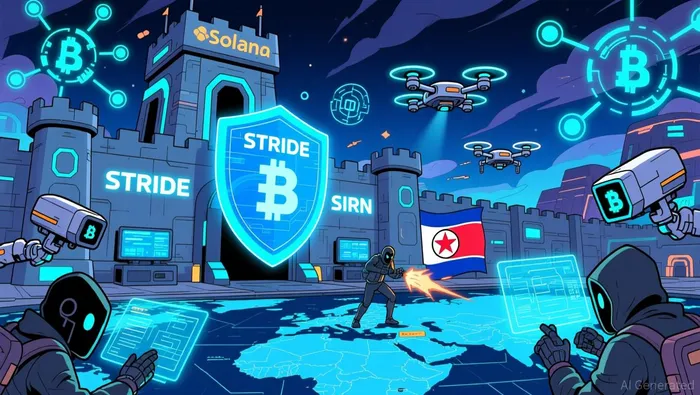
These initiatives address the specific vulnerability exploited in the Drift hack, where a North Korean state-linked group manipulated decision-makers over six months to seize control as reported by security analysis. The Foundation emphasizes that while these resources are available, the underlying responsibility for user funds remains with the individual protocols according to their security policy.
What Corporate and Institutional Shifts Are Driving Adoption?
Solmate Infrastructure, formerly Brera Holdings, has seen shareholders approve a corporate name change and a 10-for-1 reverse share split to align with its focus on Abu Dhabi as confirmed by news reports. The company is also merging with RockawayX in a non-binding all-stock deal expected to close in the first quarter of 2026 according to merger announcements.
This merger will transform Solmate from a passive digital asset treasury into a unified platform managing over $2 billion in assets, including validator infrastructure and venture funds as detailed in the deal summary. The combined entity will trade under the ticker SLMT on the Nasdaq, with Marco Santori continuing as CEO of the unified company according to official statements.
On the operational side, Sol Strategies reported 3.81 million SOL in assets under delegation and confirmed Michael Hubbard as its new CEO as reported by financial analysis. The firm highlighted the integration of its Solana validator by Balance, Canada's largest digital asset custodian, to support staking by custody clients according to their operational update.
Institutional adoption is further evidenced by B2C2 designating Solana as a core network for institutional stablecoin settlement as noted in market reports. Digital banking platform SoFi also plans to connect its business banking system to Solana for round-the-clock on-chain settlement as reported by financial analysis.
What Are The Emerging Risks And Liquidity Factors?
Investors face significant long-term risks from the post-quantum conundrum, with Google and IBM setting 2029 deadlines for cryptographic upgrades as detailed in security research. A 2026 whitepaper mapped how quantum computers could attack BitcoinBTC--, EthereumETH--, and Solana, reinforcing the urgency of the 'Harvest Now Decrypt Later' threat according to cryptographic analysis.
Artificial intelligence is also escalating threats, with AI-enabled fraud surging 500% as bad actors use automation and deepfakes as reported by security experts. While MetaMask and CoinFello have launched tools to secure AI agent interactions, experts advocate for hardware-based protections to counter these faster attacks according to industry analysis.
Liquidity conditions may shift due to upcoming token unlocks in April 2026, including significant releases for deBridge and the $YZY memecoinMEME-- as detailed in market forecasts. On April 17, 618.33 million $DBR tokens will be released, representing 12.90% of the present circulating supply according to unlock details.
Additionally, Magic EdenME-- is scheduled to unlock 10.73 million $ME tokens on April 10, though this represents just over 1% of the total supply as reported in the token schedule. While these unlocks do not guarantee price movement, they can shift liquidity conditions when combined with broader market trends according to market analysis.

Blending traditional trading wisdom with cutting-edge cryptocurrency insights.
Latest Articles
Stay ahead of the market.
Get curated U.S. market news, insights and key dates delivered to your inbox.


AInvest
PRO
AInvest
PRO



Comments
No comments yet