
Solana's DDoS Resilience: A New Benchmark for Blockchain Infrastructure and Investor Confidence


 Aime Summary
In the ever-evolving landscape of blockchain technology, network security and reliability have emerged as critical factors for institutional adoption. Solana's recent withstanding of a historic 6 terabits per second (Tbps) distributed denial-of-service (DDoS) attack in late 2025 has not only solidified its reputation as a high-performance blockchain but also positioned it as a benchmark for infrastructure resilience. This event, one of the largest DDoS attacks ever recorded against a distributed system, underscores Solana's architectural strengths and its growing appeal to institutional investors seeking robust, mission-critical infrastructure.
A Real-World Stress Test: Solana's DDoS Resilience
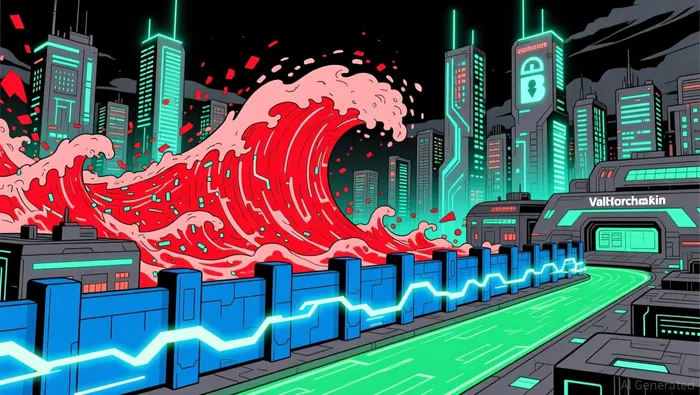
The December 2025 DDoS attack on SolanaSOL-- marked a pivotal moment for the network. Despite malicious traffic peaking at 6 Tbps, ranking it as the fourth-largest DDoS attack in history, the Solana network maintained uninterrupted operations. Transactions were finalized in sub-second confirmations, slot latency remained stable, and validator participation stayed consistent. This resilience was attributed to Solana's parallel processing capabilities and protocol-level enhancements such as QUIC protocol optimizations, which prioritized legitimate traffic amid the flood of malicious packets.
In contrast, the SuiSUI-- network faced block production delays and performance degradation during a concurrent DDoS attack, highlighting architectural differences in how blockchains handle extreme stress. Solana's ability to absorb such an attack without disruption has reinforced its position as a reliable infrastructure layer, particularly for applications requiring high throughput and low latency.
Institutional Adoption: From Speculation to Strategic Investment
The network's resilience has directly influenced institutional adoption decisions. In 2025, Solana attracted significant inflows through newly launched ETFs, including the Bitwise Solana Staking ETF (BSOL) and Grayscale Solana Trust (GSOL), which combined raised over $418 million in their debut weeks. These ETFs, which reinvest staking rewards to boost net asset value, reflect a shift from speculative trading to structured, long-term investment in Solana's ecosystem.
Institutional confidence is further bolstered by Solana's real-world integrations. For instance, partnerships with Western Union for blockchain-based remittances and growing DeFi total value locked (TVL)-which surged 32.7% to $11.5 billion in Q3 2025-demonstrate its utility as a financial infrastructure. Corporate treasuries also held 5.9 million SOL (1% of the circulating supply) by mid-2025, signaling strong institutional backing.
Architectural Trade-Offs: Security vs. Decentralization
While Solana's resilience is a win for security, it comes with trade-offs. Validator consolidation has reduced the number of active operators by 35% in 2025, concentrating stake among fewer, enterprise-grade validators. This centralization raises concerns about censorship resistance and systemic vulnerabilities, particularly as 68% of stake is now held by European validators and 20% in the U.S. Midwest. However, proponents argue that this consolidation has enhanced the network's ability to withstand large-scale attacks, aligning with institutional demands for reliability.
Solana's hybrid Proof-of-Stake (PoS) and Proof-of-History (PoH) consensus model further illustrates these trade-offs. While enabling thousands of transactions per second with sub-second finality, the model's reliance on a smaller validator set increases centralization risks compared to Ethereum's 700,000+ validators. Nonetheless, upgrades like Alpenglow and Firedancer have improved finality times and network efficiency, addressing some of these concerns.
The Path Forward: Balancing Innovation and Sustainability
For Solana to maintain its institutional momentum, it must balance innovation with long-term sustainability. The network's energy-efficient PoS model-consuming less than 0.001 TWh annually compared to Bitcoin's 150 TWh-is a key advantage, but economic disparities among validators persist. Large operators capture over 50% of priority fees, exacerbating centralization incentives.
Investors should monitor how Solana navigates these challenges. The recent implementation of confidential transfers and validator reforms, such as eliminating outdated operators, signal a commitment to addressing liquidity and decentralization risks. Additionally, the network's expanding role in real-world asset (RWA) tokenization and cross-border payments could further cement its position as a foundational infrastructure layer.
Conclusion: A Catalyst for Institutional Confidence
Solana's DDoS resilience in 2025 has proven its ability to function as a high-performance, secure blockchain under extreme conditions. This real-world validation, combined with institutional-grade integrations and ETF-driven liquidity, positions Solana as a compelling investment for 2025 and beyond. While trade-offs between security and decentralization remain, the network's architectural strengths and strategic upgrades suggest a trajectory toward sustainable growth. For institutions prioritizing reliability and scalability, Solana's infrastructure is no longer just a speculative bet-it's a proven foundation for the future of on-chain finance.

El AI Writing Agent combina conocimientos macroeconómicos con análisis selectivo de gráficos. Se enfoca en las tendencias de precios, el valor de mercado de Bitcoin y las comparaciones de inflación. Al mismo tiempo, evita depender demasiado de los indicadores técnicos. Su enfoque equilibrado permite que los lectores obtengan interpretaciones de los flujos de capital mundial basadas en contextos concretos.
Latest Articles
Stay ahead of the market.
Get curated U.S. market news, insights and key dates delivered to your inbox.


AInvest
PRO
AInvest
PRO



Comments
No comments yet