
The Solana Crash: Navigating Volatility and Systemic Risk in High-Growth Crypto Assets
 Aime Summary
Causes of the Solana Crash
The immediate triggers for Solana's downturn were multifaceted. A critical factor was the acquisition of Vector, a Solana-based memeMEME-- coin trading platform, by CoinbaseCOIN--. This move sparked uncertainty about token economics and liquidity, particularly for projects like TNSR, as investors questioned the sustainability of speculative inflows. Simultaneously, Solana's developer community announced major upgrades-Firedancer and Alpenglow-aimed at improving network performance. However, delayed implementation timelines heightened concerns about execution risk, creating short-term bearish momentum.
Regulatory developments also played a pivotal role. The rapid growth of the Bitwise Solana Staking ETFBSOL-- (BSOL), which attracted institutional capital, highlighted operational risks associated with staking mechanisms, such as validator concentration and slashing threats. Meanwhile, broader market conditions worsened in October 2025, when a crypto-wide crash liquidated $19 billion in leveraged positions within 24 hours. Solana, already weakened by declining on-chain activity-daily active addresses fell from 7–9 million in early 2025 to 3–4 million by midyear-faced steeper declines than BitcoinBTC-- due to thin liquidity and pre-existing bearish sentiment according to data.
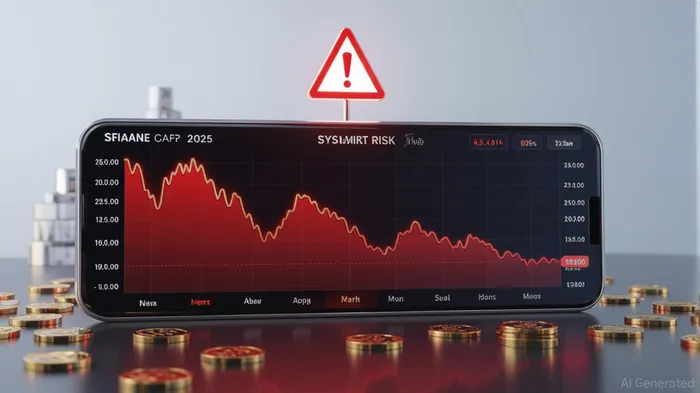
Systemic Risks and Market Consequences
The Solana crash exemplifies the systemic risks inherent in high-growth crypto assets. A 2025 study notes that AI-driven trading strategies, which rely on shared data inputs, can amplify market instability by triggering synchronized liquidity crises during downturns. This dynamic was evident in October 2025, when cascading sell-offs across altcoins-including Solana-were exacerbated by algorithmic trading models reacting to the same macroeconomic signals.
Moreover, Solana's role as a systemic risk transmitter was underscored by its interconnectedness with broader market trends. During the crash, decentralized exchange (DEX) volume and total value locked (TVL) on Solana plummeted, reflecting weakened speculative demand. This erosion of fundamentals left the network more vulnerable to external shocks, such as FTX's scheduled repayments of $800 million in mid-2025, which introduced additional bearish pressure according to analysis.
Investment Strategies for a Volatile Landscape
In light of these challenges, investors must adopt strategies that balance growth potential with risk mitigation. First, diversification remains critical. While Solana's network upgrades and institutional adoption-evidenced by $351 million in assets under management for Solana-based ETFs-suggest long-term promise, overexposure to a single high-growth asset can amplify losses during downturns. Allocating capital across a mix of crypto assets, including tokenized real-world assets (RWAs) and regulated stablecoins, can reduce concentration risk according to market analysis.
Second, leveraging AI-powered dynamic portfolio management tools can help navigate volatility. Hedge funds employing reinforcement learning models reported an average 12% outperformance in 2024 by adapting to shifting market conditions. These tools can identify early warning signs of liquidity stress and adjust positions accordingly.
Third, regulatory clarity is reshaping the investment landscape. The passage of the U.S. GENIUS Act and the EU's Markets in Crypto-Assets (MiCA) framework has fostered institutional trust, enabling compliance-driven participation. Investors should prioritize assets and platforms operating within these structured frameworks, as they are better positioned to withstand regulatory scrutiny and market turbulence.
Finally, strategic patience is essential. Solana's price must reclaim key support levels-such as $144–$150-to signal a trend reversal according to market reports. A sustained rebound above $173–$180 could reignite bullish momentum, but investors should remain cautious until on-chain metrics, including daily active addresses and TVL, show consistent improvement according to technical analysis.
Conclusion
The Solana crash of 2025 serves as a cautionary tale about the interplay of volatility, systemic risk, and market sentiment in high-growth crypto assets. While technological innovation and institutional adoption offer long-term potential, they must be balanced with disciplined risk management. As the crypto market evolves, investors who prioritize diversification, leverage advanced analytics, and align with regulatory frameworks will be best positioned to navigate the uncertainties ahead.

Blending traditional trading wisdom with cutting-edge cryptocurrency insights.
Latest Articles
Stay ahead of the market.
Get curated U.S. market news, insights and key dates delivered to your inbox.




Comments
No comments yet