
Solana Builds High-Speed Network for Institutional Growth in Asia-Pacific
 Aime Summary
- Solana Company is building the 'Pacific Backbone,' a high-speed network across the Asia-Pacific to support institutional-grade services like staking and trading on the SolanaSOL-- blockchain.
- The infrastructure aims to reduce reliance on external providers and meet growing demand from traditional finance institutions entering the crypto space.
- Institutional-grade DeFi tools, liquid staking, and execution services will be prioritized in the next 12-18 months.
Solana Company is actively expanding its infrastructure to meet surging institutional interest in the Asia-Pacific region. The 'Pacific Backbone' initiative is designed to offer low-latency, compliant services tailored for regulated markets. By connecting key financial hubs such as Tokyo, Singapore, and Hong Kong, the project 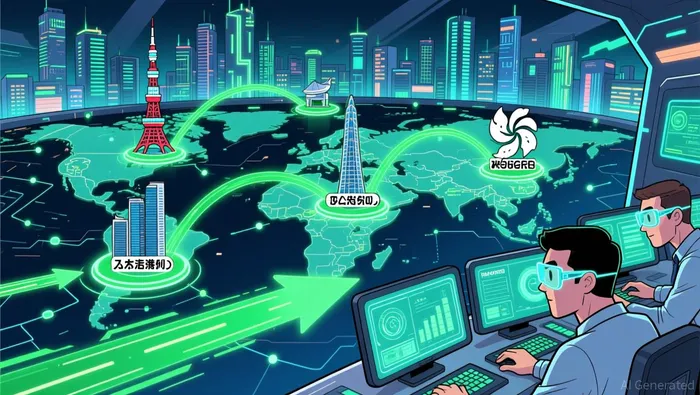 positions Solana as a serious contender in institutional crypto adoption. The company aims to reduce reliance on third-party providers and optimize performance for high-volume staking and trading.
The project is expected to launch within 12-18 months, with the first phase focused on performance optimization and product development. This includes automated market makers and execution services that align with traditional finance standards. The initiative is also aligned with broader market expectations for the next 'super cycle' in Solana's growth trajectory.
What Challenges Does Solana Face in MEV Extraction and Infrastructure?
Advanced MEV (Maximal Extractable Value) strategies on Solana are becoming increasingly competitive. The network's performance and low-latency RPCs are critical for capturing on-chain opportunities. In 2025, MEV capture on Solana exceeded $720 million, driven by optimized bot strategies and $1 trillion in DEX volume. However, the introduction of institutional-grade Solana ETFs has heightened competition among MEV operators.
Upcoming network upgrades, including Alpenglow and ACE, aim to reduce MEV volatility and improve fairness. These changes are expected to enhance network predictability but will likely intensify competition for smaller operators.
How Are Market Pressures Affecting Solana's Price and Investor Sentiment?
Solana's price has faced downward pressure, with recent declines triggering bearish sentiment. Open interest in Solana futures fell 2% to about $5.09 billion, despite a surge in trading volume. This combination is often seen as an indicator of liquidations and growing bearish sentiment among traders.
The price drop below $80 has increased bearish pressure, with analysts suggesting further declines could follow. Broader market conditions, including Bitcoin's downward momentum, have contributed to heightened uncertainty.
Investors remain cautious, evaluating whether the decline reflects structural shifts or temporary volatility. Network usage, developer activity, and ecosystem growth are being closely monitored as long-term indicators of Solana's potential.

Blending traditional trading wisdom with cutting-edge cryptocurrency insights.
Latest Articles
Stay ahead of the market.
Get curated U.S. market news, insights and key dates delivered to your inbox.


AInvest
PRO
AInvest
PRO



Comments
No comments yet