
Solana's $250 Price Target and ETF Speculation: Navigating the Shift from Low-Cap Altcoin Hype to Institutional-Driven Growth


 Aime Summary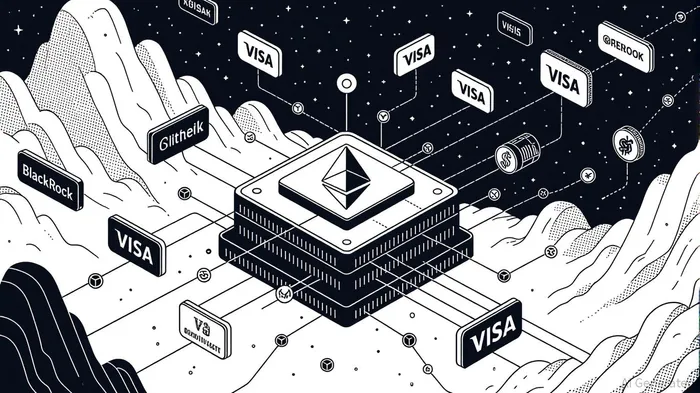
The cryptocurrency market in 2025 is at a crossroads. While low-cap altcoins continue to capture headlines with viral surges driven by social media hype and speculative fervor, SolanaSOL-- (SOL) is carving a distinct path—one rooted in institutional partnerships, technical innovation, and regulatory alignment. As the market debates whether Solana can reach $250 by year-end, it's critical to dissect the forces propelling its ascent and contrast them with the volatile, often fragile dynamics of low-cap altcoin speculation.
Solana's Institutional-Driven Catalysts: A Foundation for $250
Solana's trajectory toward a $250 price target is underpinned by three pillars: strategic partnerships, technical upgrades, and regulatory progress.
Institutional Adoption and Real-World Utility
Solana has secured alliances with financial giants like BlackRockBLK--, VisaV--, and Franklin Templeton, positioning itself as a backbone for cross-border payments, tokenized assets, and high-velocity settlements. For example, the WLFI USD1 stablecoin has minted 100 million tokens on Solana, leveraging its sub-150ms transaction finality to enable real-time financial infrastructure. These partnerships are not speculative—they are operational, .Alpenglow Upgrade: Scaling for Enterprise Demands
The Alpenglow consensus upgrade, implemented in Q3 2025, . This performance has attracted institutional capital, . Such scalability is critical for sustaining growth as demand for blockchain-based financial infrastructure accelerates.ETF Speculation and Regulatory Tailwinds
The U.S. SEC's anticipated decision on Solana ETFs by October 16, 2025, has already triggered a wave of institutional interest. , . Analysts estimate a 95–99% approval probability for additional ETFs from VanEck and Fidelity, . , including the and initiatives, is further reducing ambiguity and encouraging traditional firms to allocate capital to Solana.
The Low-Cap Altcoin Surge: Hype vs. Substance
While Solana's growth is anchored in fundamentals, low-cap altcoins often rely on fleeting catalysts. Tokens like Wall Street Pepe ($WEPE) and Maxi DogeDOGE-- ($MAXI) have surged on social media virality and meme-driven narratives, . However, these gains are typically short-lived and lack the structural support of institutional adoption.
Catalysts: Social Media and Liquidity Events
Low-cap altcoins thrive on community-driven hype, , and . For instance, $WEPE's expansion to Solana and its 1:1 peg with EthereumETH-- created a narrative of “meme coin proliferation,” attracting retail investors. Similarly, projects like Arweave (AR) and Gradients ($SN56) leverage niche use cases (e.g., , ) to generate buzz.Risks: Volatility and Regulatory Scrutiny
These tokens are inherently volatile. , illustrating the fragility of liquidity in low-cap markets. Additionally, projects like BitcoinBTC-- Hyper (HYPER) remain in presale, with unproven utility, exposing investors to high risk. Regulatory uncertainty also looms, as the SEC's stance on meme coins and unregistered tokens remains ambiguous.
Contrasting the Narratives: Why Solana Stands Out
The key difference lies in . Solana's partnerships with Visa and BlackRock are not speculative—they are operational, with real-world applications in cross-border payments and asset tokenization. In contrast, low-cap altcoins often lack tangible utility beyond social media traction.
For example, , supporting institutional-grade trading and lending. Meanwhile, tokens like $PEPENODE or $SNORT rely on staking rewards and community sentiment, which can vanish as quickly as they emerge.
Investment Advice: Balancing Exposure in a Shifting Landscape
For investors, the lesson is clear: . Solana's institutional-driven narrative offers a compelling case for long-term growth, particularly if ETF approvals materialize and the Alpenglow upgrade sustains scalability. However, allocating a small portion of a portfolio to high-potential low-cap altcoins—like $WEPE or $MAXI—can capture short-term gains, provided risks are managed.
- For Solana:
- : Consider buying on dips near $200, .
- : Monitor whale activity and macroeconomic factors (e.g., interest rates) that could trigger sell-offs.
- For Low-Cap Altcoins:
- : Allocate no more than 5% of a crypto portfolio to high-volatility tokens, with strict stop-loss orders.
- : Research tokenomics, team credibility, and real-world use cases to avoid speculative duds.
Conclusion: The Future of Crypto Infrastructure
Solana's $250 price target is not a pipedream—it's a reflection of its role as a foundational infrastructure asset in the digital economy. While low-cap altcoins may offer explosive short-term gains, their risks often outweigh their rewards. In a market increasingly defined by institutional adoption and regulatory clarity, Solana's blend of scalability, utility, and strategic alignment with traditional finance positions it as a standout investment for 2025 and beyond.
"""

Stay ahead of the market.
Get curated U.S. market news, insights and key dates delivered to your inbox.
AInvest
PRO
AInvest
PRO



Comments
No comments yet