
SOL Weakens Below $80 Amid Drift Protocol Hack and Bearish Market Conditions
 Aime Summary
Solana (SOL) is trading below $80 as of April 3, 2026, due to broader market conditions and a recent protocol hack on Solana-based platforms.
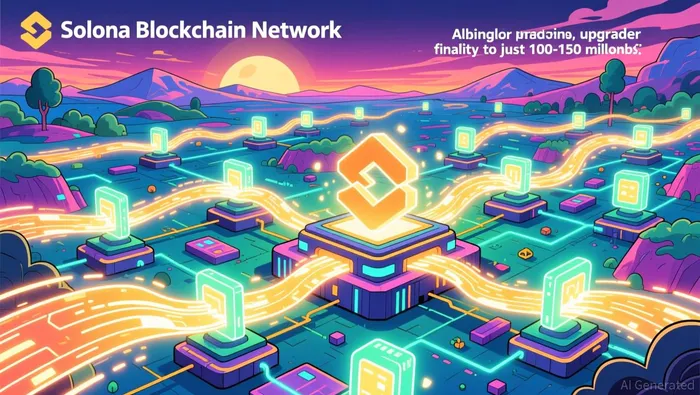
The upcoming Alpenglow upgrade is expected to reduce transaction finality from 12.8 seconds to as low as 100-150 milliseconds, potentially boosting on-chain AI and HFT activity.
Over $211 million in staked SOL was unlocked in early April due to large un-staking activity, raising concerns among traders about increased selling pressure.
Solana's price has been under pressure for several weeks as demand from both institutional and retail investors has waned. The cryptocurrency has been trading within a narrow range of $77 to $96 since February. Technical indicators suggest bearish dominance, with the coin remaining below key moving averages and the Supertrend indicator. This consolidation may signal an imminent breakdown or a potential reversal if buyers step in to defend critical support levels.
The Drift protocol hack has further exacerbated the negative sentiment. The Solana-based platform experienced a significant exploit, leading to further sell-offs across the network. This event has shaken investor confidence, especially in the wake of broader crypto market volatility.
Despite the short-term bearish bias, there are some signs of stabilization. Spot ETF inflows increased by nearly $1 million on April 2, marking the first inflow since March 24. However, derivatives data shows that long liquidations continue to dominate, indicating that bullish positions are being forced out as prices fall.
What Is Causing the Weakness in Solana's Price?
The weakness in Solana's price is attributed to both macroeconomic and protocol-level factors. In April alone, spot ETFs have seen the weakest inflows compared to previous months. Inflows have been trending downward since their inception in October 2025. If the trend continues, it is possible that the funds will see outflows as investors continue to exit the market.
In addition, SolanaSOL-- has lost institutional interest from treasury companies. No major firm has bought SOL tokens in the last 30 days. The existing institutional holdings now total over 18.3 million tokens, valued at over $1.5 billion.
The un-staking of over 2.6 million tokens has also added to the bearish sentiment, as large holders are adjusting their strategies. This has raised concerns about potential downward pressure on the price as more tokens become available for trading.
What Are the Key Technical Levels to Watch for Solana?
Key technical levels for Solana include the immediate support at $75.63 and $67.50, with the next major target at the psychological level of $50 if the breakdown continues. On the upside, the 50-day EMA at $89.65 represents a crucial resistance level that would need to be decisively breached to ease selling pressure.
Technical indicators such as the MACD and RSI also suggest bearish momentum, with the RSI at 38 showing continued selling pressure. The Open Interest-Weighted Funding Rate remains at 0.0004%, indicating indecisiveness among traders.
The recent price action has also formed a bearish flag pattern, which typically signals a continuation of the downward trend after a prior steep decline. A breakdown below $68.54 could trigger further losses, potentially leading to the $50 level.
The market remains in a wait-and-see mode as investors await the performance of the Alpenglow upgrade. While the upgrade could unlock new use cases for Solana, the market is currently focused on short-term volatility and liquidity concerns.
What Is the Outlook for Solana in the Long Term?
Long-term analysts have highlighted several factors that could influence Solana's future trajectory. The blockchain platform has demonstrated significant network growth since its 2020 launch, particularly in transaction speed and developer adoption.
The Alpenglow upgrade is expected to be a major catalyst for on-chain AI and high-frequency trading, potentially unlocking new use cases and attracting institutional interest. If the upgrade is successful, it could help Solana achieve a new all-time high by 2027.
However, long-term valuation depends on several external factors, including regulatory clarity and technological competition from other blockchain platforms. Network fundamentals, such as transaction volume and developer activity, will also play a critical role in determining Solana's long-term prospects.
Despite the current bearish trend, Solana's unique proof-of-history consensus mechanism continues to differentiate it from competitors. If the platform can maintain its technical edge and attract more institutional adoption, it could still see a strong rebound in the coming months.
Until then, investors are advised to monitor key metrics such as transaction volume, developer activity, and the implementation of technical upgrades. Risk assessment should also consider factors like network stability, regulatory developments, and potential market disruptions.

Blending traditional trading wisdom with cutting-edge cryptocurrency insights.
Latest Articles
Stay ahead of the market.
Get curated U.S. market news, insights and key dates delivered to your inbox.


AInvest
PRO
AInvest
PRO



Comments
No comments yet