
SOL Introduces Tri-Party Staked Custody Lending as Price Weakness Clashes with Record DeFi Lockups
 Aime Summary
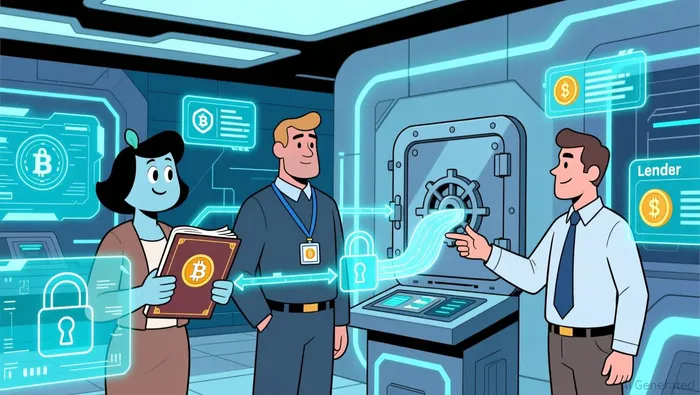
- Solana Company, in partnership with Anchorage Digital and KaminoKMNO--, introduced a tri-party custody model allowing institutions to borrow against natively staked SOLSOL-- while maintaining custody.
- A popular trader warns that SolanaSOL-- could fall toward $50 if key support fails, as price action showed a break below a long-watched horizontal support zone near the mid-$90s.
- Despite the price drop, DeFiLlama data shows a new record for $SOL locked in DeFi, reflecting deepening on-chain commitment amid broader market weakness.
Solana's tri-party custody model marks a significant development in institutional-grade digital asset management. By allowing institutions to earn staking rewards while accessing on-chain liquidity, the model supports a more dynamic use of collateral. This innovation is designed to enhance institutional participation in Solana's lending markets while maintaining the security of federally regulated custodians.
Meanwhile, the price of Solana faced turbulence, dropping over 11% on a single session and breaking below key support levels. The price decline has drawn attention from analysts, who warn that failure to hold the $75-$80 zone could lead to further downward pressure. The price move is particularly significant because it coincided with the token's broader ecosystem showing signs of resilience.
Data from DeFiLlama indicates that total value locked in Solana-based DeFi protocols hit a record high, with over 70 million to 80 million SOL locked up. The TVL growth reflects increasing activity in Solana's DeFi ecosystem, even as the token price fell. This divergence suggests that users continue to find value in deploying capital within on-chain protocols, despite bearish price signals.
What is the significance of the tri-party custody model for institutional investors?
The tri-party custody model is a blueprint for institutional participation in protocol borrowing. By enabling institutions to access liquidity against staked assets without transferring custody, the model bridges the gap between security and capital efficiency. Anchorage Digital acts as a custodian and collateral manager, ensuring that assets remain in segregated accounts. This structure aligns with the need for institutional-grade risk management in digital asset markets.
Kamino, as the lending platform, allows for dynamic collateral management, including automated liquidations and margin calls. The collaboration between Solana Company, Anchorage Digital, and Kamino provides a repeatable framework that can be adapted for other institutional investors and protocols seeking to participate in Solana's lending markets.
Why is there a divergence between Solana's price and on-chain DeFi activity?
The divergence between Solana's price action and on-chain DeFi activity reflects different dynamics at play in the market. While the price has been weak—falling more than 11% in a session—on-chain metrics show that more SOL is being locked into DeFi protocols than ever before. This trend suggests that users continue to trust the network for value accrual and yield generation, even as the token's price declines.
The record high in TVL also highlights the impact of high staking rates on available collateral for lending protocols. As more SOL is staked, the supply of liquid assets available for lending decreases, potentially limiting the growth of on-chain lending markets. This creates a bottleneck that could affect the scalability of DeFi protocols on Solana.
What are the implications for Solana's future growth and adoption?
The introduction of the tri-party custody model and the record high in DeFi TVL suggest that Solana continues to evolve as a platform for institutional and on-chain capital. The tri-party model supports a more secure and liquid approach to collateral management, which could attract more institutional capital into the ecosystem. However, the structural challenges from staking and liquidity constraints remain.
Solana's developer base has also grown substantially, with over 6,000 developers contributing to the ecosystem as of late 2025. This growth is concentrated in Asia and Europe, reflecting a more globally diverse development community. Professional developers account for the majority of commits and contributions, signaling a maturing ecosystem.
Despite these developments, Solana's price has been in a broader downtrend since October 2025, with a peak-to-trough decline of over 71%. The cooling of the MemeMEME-- token craze and the rise of Ethereum's improvements have also challenged Solana's growth narrative. As a result, the future of Solana will depend on how it manages these structural challenges and continues to innovate in institutional and on-chain finance.

Blending traditional trading wisdom with cutting-edge cryptocurrency insights.
Latest Articles
Stay ahead of the market.
Get curated U.S. market news, insights and key dates delivered to your inbox.


AInvest
PRO
AInvest
PRO



Comments
No comments yet