
The Soil Tech Boom: Why Precision Farming and Climate-Resilient Crops Are the Next Big Investment Play
The world is at a crossroads: global food demand is projected to rise by 50% by 2050, while climate volatility threatens to shrink arable land by 10-20% in the same timeframe. This isn't just a humanitarian crisis—it's a trillion-dollar investment opportunity. Enter sustainable agriculture technology, where AI-driven precision farming and climate-resilient crops are rewriting the rules of food production. Backed by partnerships between tech giants like MicrosoftMSFT-- and Google and agriscience pioneers, this sector is primed to deliver outsized returns. Here's why you should act now.
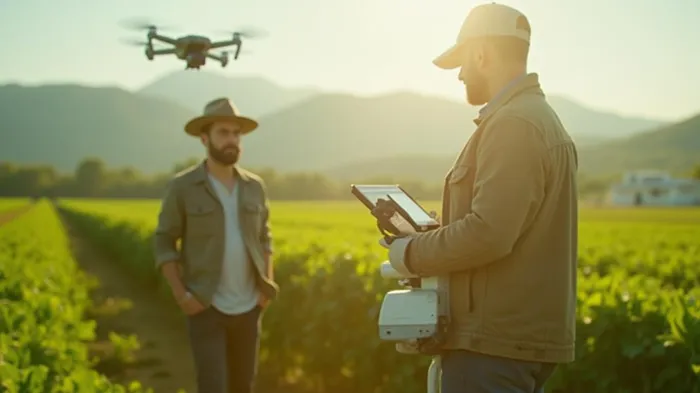
The Perfect Storm: Climate Volatility + Food Demand
The numbers are stark. * is outpacing agricultural yield improvements, even as extreme weather disrupts harvests. In 2023, the U.S. Department of Agriculture reported a *21% drop in corn yields due to heatwaves, while India's wheat production fell by 7 million tons in 2022 due to erratic monsoons. These aren't outliers—they're the new normal.
Enter precision agriculture, which leverages AI, IoT, and satellite data to optimize every acre. Companies like John Deere and Indigo Agriculture are deploying tools that analyze soil composition, moisture levels, and microclimate conditions in real time. For example, John Deere's AI platform now maps soil nitrogen variability across fields, reducing fertilizer waste by up to 30% while boosting yields. This isn't just efficiency—it's risk mitigation in a world where a single drought can wipe out a farmer's income.
The Rise of Climate-Resilient Crops: Where Tech Giants Are Betting Big
The real game-changer? Climate-resilient seeds engineered for drought, heat, and salinity tolerance. Here's where tech giants are partnering with agriscience firms to build the future:
Microsoft & Indigo Agriculture: In a landmark deal, Microsoft purchased 100,000 soil carbon credits (worth $20M+) from Indigo's regenerative farming programs. These credits fund farmers to adopt practices like cover cropping, which sequester carbon while making soil 30% more water-retentive. The partnership aims to generate 1 megaton of carbon impact by 2025, proving that “soil tech” can be both profitable and planet-positive.
Google & Indigo Ag: Google's $1.5M investment in Oklahoma's regenerative farms (2025) targets water scarcity. By incentivizing no-till farming and soil health practices, the project aims to replenish 1.5 billion gallons of water by 2032—a critical step toward Google's goal of replenishing 120% of its water use by 2030.
Propagate's Agroforestry Platform: This startup is using AI to map optimal tree-crop combinations, boosting yields while reducing erosion. Their partnerships with Agfunder and The Nest have already enrolled 5,000+ farmers, proving that agroforestry can turn marginal lands into climate-resilient ecosystems.
The Data-Driven Case for Investment
The numbers speak for themselves:
- * is expected to hit *$22.5B by 2030, growing at a 12% annual clip.
- The drought-resistant seed market (led by companies like Inari and Tropic Biosciences) hit $97.1B in 2023, with a 6.5% CAGR to 2032.
- Indigo Agriculture's fourth carbon crop program alone has injected $100M into rural economies, proving that sustainability can be a cash flow engine.
But the real upside is in synergies between tech and agriscience. Consider Phytoform Labs, whose AI-engineered vertical farming tomatoes use 30% less water and yield 5x more fruit than traditional crops. Or Loam Bio, which uses CRISPR to create salt-tolerant crops for regions where soil degradation has rendered farmland barren.
Risks? Yes. But the Upside Is Bigger
Critics point to high R&D costs and regulatory hurdles. True—but the $100B+ climate tech investment boom (2023) is already funding breakthroughs. Take Indigo's TellusLabs acquisition: its predictive analytics now cover 20M acres, reducing crop insurance losses by $500M annually for farmers. Meanwhile, Microsoft's Azure FarmBeats platform has cut data processing costs for agriscience startups by 40%, democratizing access to AI tools.
Why Wait? The Time to Invest Is Now
The writing is on the wall: governments are mandating carbon neutrality, consumers are demanding “clean” food, and institutional investors are pouring capital into ESG-aligned sectors. Here's how to play it:
- Buy the Leaders: Indigo Agriculture (INDG) and John Deere (DE) are already scaling AI and carbon solutions.
- Go for the Startups: Back ventures like Propagate (agroforestry) and ClimateCrop (AI-driven root optimization) via venture funds like Agfunder.
- Leverage ETFs: The MOO Agriculture ETF or ARKW's precision ag holdings offer diversified exposure.
The next decade will see food production decarbonize and digitize, turning soil and seeds into the next tech frontier. The question isn't whether to invest—it's whether you'll be on the right side of this revolution.
The soil tech boom isn't just about saving the planet—it's about building fortunes. Act now, or watch the harvest go to someone else.

Stay ahead of the market.
Get curated U.S. market news, insights and key dates delivered to your inbox.


AInvest
PRO
AInvest
PRO



Comments
No comments yet