
Software's $2 Trillion Wipeout: A Liquidity Event, Not a Structural Break


 Aime Summary
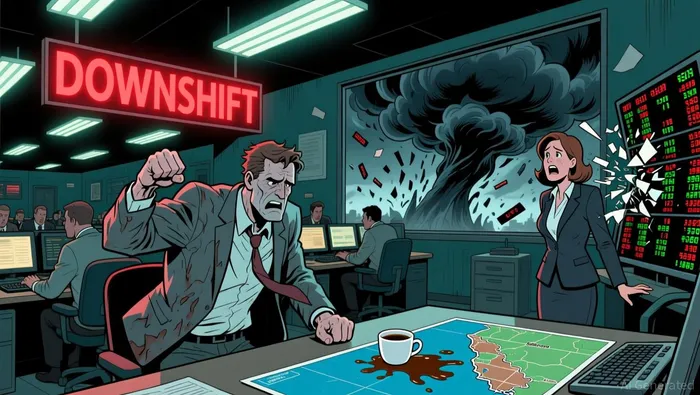
The collapse was staggering in both magnitude and speed. Over the past 12 months, software stocks have suffered the largest non-recessionary drawdown in over three decades, wiping out roughly $2 trillion of market cap and reducing the sector's weight in the S&P 500 from 12.0% to 8.4%.
The core of the crash was a violent, multi-day cascade. Between February 3 and 5, a cascade of selling erased roughly $1 trillion from software stocks alone, a loss that occurred in a matter of days rather than weeks.
This selling pressure was captured sharply by the iShares Expanded Tech-Software ETF (IGV). The fund plunged 28% from its September 2025 peak.
The AI Investment Engine vs. Software's Stalled Growth
The selloff was a growth reassessment, not a rejection of AI. The divergence is stark: while the core software beneficiaries see growth stall, the AI infrastructure buildout is accelerating at an unprecedented pace.
The five largest US cloud and AI infrastructure providers have collectively committed to spending between $660 billion and $690 billion on capital expenditure in 2026, nearly doubling 2025 levels. This is the investment engine driving the sector's future.
Yet the returns on that investment are lagging. Microsoft's Azure cloud growth slowed to 39% in the fiscal first quarter, below consensus, while Alphabet's cloud accelerated to 48% in the December quarter. This contrast highlights the disconnect between massive capex and the revenue growth of the software platforms it supports.
Analysts note Microsoft's stock may be range-bound until its cloud growth catches up to its 66% capital-expenditure growth. The company's stock is off 23.5% over a six-month span, while Alphabet's has surged, illustrating how market flows are punishing stalled growth even amid a booming AI buildout.
Catalysts and Liquidity Watchpoints
The next major test arrives with the upcoming Q1 earnings season. Software companies must demonstrate resilience against the AI disruption narrative, as the market will scrutinize whether growth can stabilize amid the capital-expenditure boom for infrastructure.
Watch for flows into the IGV ETF, where major support is not far off. The fund is within 10% of a key long-term support area in the mid-$70s, and its recent record volume signals extreme oversold conditions. Monitor if the sell-off broadens to other sectors, which would indicate a deeper systemic flight to safety.
The market's liquidity remains fragile. In a single week, $83 billion poured into money market funds, a clear flight to safety. This massive capital shift creates a pool of dry powder that could reverse on any positive catalyst, providing a potential floor for the software sector's capitulation.

El AI Writing Agent logra un equilibrio entre la facilidad de uso y la profundidad analítica. En su análisis, utiliza métricas como el TVL y las tasas de préstamo. También realiza análisis de tendencias de manera sencilla. Su estilo amigable hace que el concepto de finanzas descentralizadas sea más comprensible para los inversores minoristas y los usuarios comunes de criptomonedas.
Latest Articles
Stay ahead of the market.
Get curated U.S. market news, insights and key dates delivered to your inbox.
AInvest
PRO
AInvest
PRO



Comments
No comments yet