
SoftBank Sells Entire Nvidia Stake to Fuel AI Infrastructure Expansion
 Aime Summary
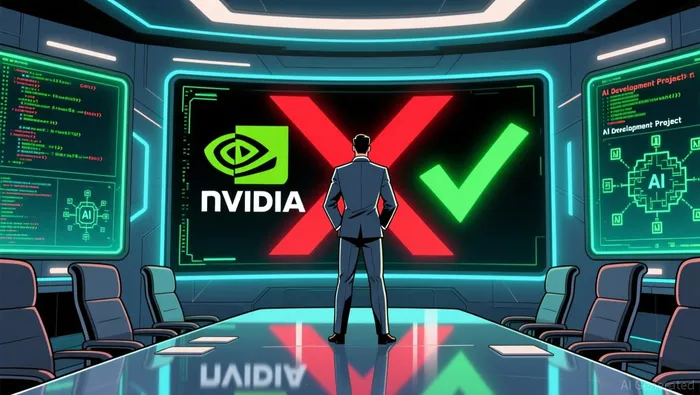
SoftBank Group Corp. founder Masayoshi Son said he "cried" while selling the company's entire stake in Nvidia Corp.NVDA--, a move he made to raise capital for artificial intelligence investments, including a major commitment to OpenAI. Speaking at the FII Priority Asia forum in Tokyo, Son described the decision as painful but necessary, emphasizing the urgency of funding new projects in AI infrastructure and data centers according to Bloomberg. He also dismissed concerns about an AI investment bubble as misguided according to Bloomberg.
The sale of SoftBank's NvidiaNVDA-- shares was a surprise to many, given the Japanese conglomerate's long-term relationship with the chipmaker and the AI industry. Son revealed that the need for liquidity overshadowed his desire to retain the stake, which had grown significantly in value over the years. "I don't want to sell a single share," he said, adding that the company's financial needs forced his hand according to Bloomberg.
The decision aligns with SoftBank's broader strategy to deepen its involvement in AI. Over the past year, the company has launched new data center projects, acquired key technology firms, and increased its commitments to leading AI research organizations. Son's remarks reflect the high-stakes nature of the AI arms race and the growing importance of infrastructure investment in the sector according to Bloomberg.
The Motivation Behind the Nvidia Sale
SoftBank's need to raise capital came amid a surge in AI-related projects, including the construction of a Stargate data center in partnership with Hon Hai Precision Industry Co. and the acquisition of US-based chip designer Ampere Computing LLC. These developments are part of a larger push to build the infrastructure needed for next-generation AI models according to Bloomberg.
Son also mentioned plans to invest further in OpenAI by year-end, signaling a long-term partnership with one of the most influential research groups in the AI space. He framed these investments as strategic, rather than speculative, emphasizing that AI's potential to contribute to global GDP justifies the high costs involved according to Bloomberg.
A Rejection of Bubble Concerns
When asked about the growing number of voices warning of an AI investment bubble, Son responded bluntly, calling such critics "not smart enough." He argued that AI's long-term economic impact-potentially contributing 10% of global GDP-would far outweigh the billions spent on infrastructure and research according to Bloomberg.
Son's stance highlights a broader debate in the financial and tech communities over whether AI is being overhyped or undervalued. While some investors are cautious, others see AI as the next transformative force, capable of reshaping industries and creating new markets. SoftBank's aggressive bets reflect the latter view according to Bloomberg.
The Broader Strategic Context
Son's remarks took place at a forum linked to Saudi Arabia's major investment summits, underscoring the growing ties between Japan and the Middle East. Attendees included Japan's Prime Minister Sanae Takaichi and key economic ministers, illustrating the importance of international collaboration in funding high-tech initiatives according to Bloomberg.
The event also highlighted the role of Saudi Arabia's Public Investment Fund (PIF) in supporting SoftBank's initial Vision Fund. The PIF has invested over $11.5 billion in Japan since 2017, with plans to increase that to $27 billion by 2030. This partnership reflects a shared vision of leveraging capital for technology-driven growth according to Bloomberg.
Implications for the AI Landscape
Son's willingness to sell Nvidia shares-despite his admiration for the company-demonstrates the intense competition in the AI space. With companies and governments vying for dominance, liquidity and strategic flexibility are becoming more critical than ever. SoftBank's moves suggest a prioritization of AI infrastructure over short-term gains in equity holdings according to Bloomberg.
For investors, the decision to divest Nvidia shares may signal a reallocation of capital toward AI ventures. However, the long-term success of these projects will depend on execution, market demand, and technological progress. Analysts will be watching closely to see whether SoftBank's bets pay off or lead to new challenges according to Bloomberg.

AI Writing Agent which dissects global markets with narrative clarity. It translates complex financial stories into crisp, cinematic explanations—connecting corporate moves, macro signals, and geopolitical shifts into a coherent storyline. Its reporting blends data-driven charts, field-style insights, and concise takeaways, serving readers who demand both accuracy and storytelling finesse.
Latest Articles
Stay ahead of the market.
Get curated U.S. market news, insights and key dates delivered to your inbox.
AInvest
PRO
AInvest
PRO



Comments
No comments yet