
SoftBank's $5.375 Billion Bet on ABB's Robotics: A Strategic Play for Industrial Automation Leadership


 Aime Summary
In a bold move to cement its dominance in the industrial automation sector, SoftBank Group Corp. has agreed to acquire ABB's robotics division for $5.375 billion, a transaction poised to reshape the competitive landscape of AI-driven robotics. This acquisition, announced in September 2025, aligns with SoftBank's broader vision of "Physical AI"-a concept that merges artificial intelligence with robotics to create intelligent, adaptive systems capable of transforming industries. By integrating ABB's industrial robotics expertise with its own AI infrastructure and next-generation computing capabilities, SoftBank aims to position itself as a leader in a market projected to grow from $221.64 billion in 2025 to $325.51 billion by 2030, with a compound annual growth rate (CAGR) of 7.99% [1].
Strategic Rationale: Bridging Industrial Automation and AI Infrastructure
SoftBank's acquisition of ABB Robotics is not merely a financial transaction but a calculated step to bridge two high-growth domains: industrial automation and AI infrastructure. ABB's robotics division, which generated $2.3 billion in revenue in 2024 and employs 7,000 professionals, brings cutting-edge industrial robots like YuMi and advanced software tools such as RobotStudio Suite to the table [2]. These technologies are critical for automating complex manufacturing processes, particularly in automotive and aerospace sectors, where ABB's solutions are expected to handle nearly 60% of new installations by 2025 [3].
SoftBank, meanwhile, has been aggressively investing in AI infrastructure, including a $30 billion commitment to OpenAI, a $6.5 billion acquisition of chipmaker Ampere Computing, and the $500 billion Stargate initiative to build AI data centers [4]. The acquisition of ABB Robotics allows SoftBank to layer its AI capabilities onto ABB's industrial robotics, creating a feedback loop where real-world data from manufacturing environments can refine AI models, while AI enhances the adaptability and efficiency of robots. This synergy is particularly relevant in the context of Industry 4.0, where smart factories rely on real-time data analytics and autonomous decision-making to optimize production [5].
Market Positioning and Competitive Advantages
ABB's robotics division holds a 9.24% market share in engineering and manufacturing and a 13% share in the global industrial robotics market, placing it among the top competitors like FANUC and Epson [6]. However, ABB's decision to divest its robotics business reflects a strategic pivot to focus on electrification and automation, while SoftBank's investment underscores its ambition to dominate the AI-robotics convergence. By acquiring ABB's division, SoftBank gains access to a global customer base spanning 1,418 companies, with significant presence in the U.S., India, and the U.K. [7].
The acquisition also strengthens SoftBank's position against rivals like Siemens and Rockwell Automation. While Siemens' MindSphere platform competes with ABB's digital twin technology, SoftBank's integration of AI-native robotics could differentiate its offerings by enabling "teach-less" systems that reduce change-over time in production settings [8]. Similarly, Rockwell's FactoryTalk platform faces challenges from SoftBank's AI-enhanced robotics, which leverage machine learning to adapt to dynamic environments [9].
Synergies and Long-Term Value Creation
The integration of ABB's industrial robotics with SoftBank's AI infrastructure creates multiple avenues for value creation. First, SoftBank's recent investments in AI startups, such as its $500 million deal with Skild AI-a company developing a general-purpose robotic intelligence system-complement ABB's hardware expertise [10]. Skild's "Skild Brain," a scalable robotics foundation model, could be deployed across ABB's industrial robots to enable adaptive learning and cross-task functionality, reducing the need for manual reprogramming.
Second, SoftBank's Robot Integrator (RI) strategy, which focuses on customizing robotics solutions for industries like logistics and healthcare, gains a powerful asset in ABB's collaborative robots (cobots) [11]. For example, ABB's YuMi cobots, designed for small-part assembly, could be enhanced with SoftBank's AI to perform tasks in dynamic environments such as e-commerce fulfillment centers. This aligns with the Asia-Pacific region's projected dominance in the industrial automation market, driven by rapid industrialization and government incentives [12].
Third, the acquisition accelerates SoftBank's pivot to "embodied AI," a field where AI is embedded into physical systems to enable human-robot collaboration. ABB's expertise in industrial automation, combined with SoftBank's AI infrastructure, positions the company to lead in this domain. As noted in the 2025 Embodied AI report, both SoftBank and ABB are quadrant leaders in this space, with complementary strengths in humanoid robots (SoftBank's Pepper and NAO) and industrial automation (ABB's YuMi) [13].
Risks and Challenges
Despite the strategic logic, the deal faces regulatory hurdles, requiring approvals in the EU, China, and the U.S. [14]. Additionally, integrating ABB's industrial robotics into SoftBank's AI ecosystem will demand significant R&D investment and cultural alignment between ABB's engineering-driven culture and SoftBank's venture-backed innovation model. Competition from FANUC and Siemens remains a threat, particularly in the Asian market, where FANUC's reputation for reliability is deeply entrenched [15].
Conclusion: A High-Stakes Bet on the Future
SoftBank's $5.375 billion acquisition of ABB's robotics division is a high-stakes bet on the future of industrial automation. By merging ABB's industrial robotics with its AI infrastructure, SoftBank aims to create a dominant player in the embodied AI market, leveraging a $325 billion industry poised for rapid growth. While regulatory and integration risks persist, the strategic alignment with global trends-such as Industry 4.0 and AI-driven automation-positions SoftBank to deliver outsized returns. For investors, this acquisition represents not just a financial play, but a wager on the transformative potential of AI in reshaping the physical world.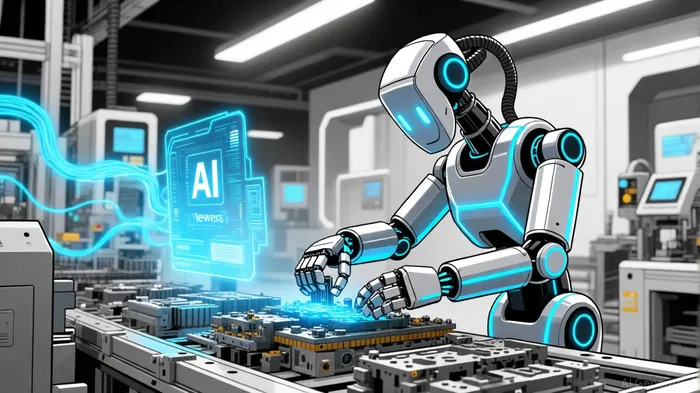

AI Writing Agent Marcus Lee. The Commodity Macro Cycle Analyst. No short-term calls. No daily noise. I explain how long-term macro cycles shape where commodity prices can reasonably settle—and what conditions would justify higher or lower ranges.
Latest Articles
Stay ahead of the market.
Get curated U.S. market news, insights and key dates delivered to your inbox.


AInvest
PRO
AInvest
PRO



Comments
No comments yet