
SoFi Launches SoFiUSD Stablecoin to Fuel Fast, Low-Cost Transactions
 Aime Summary
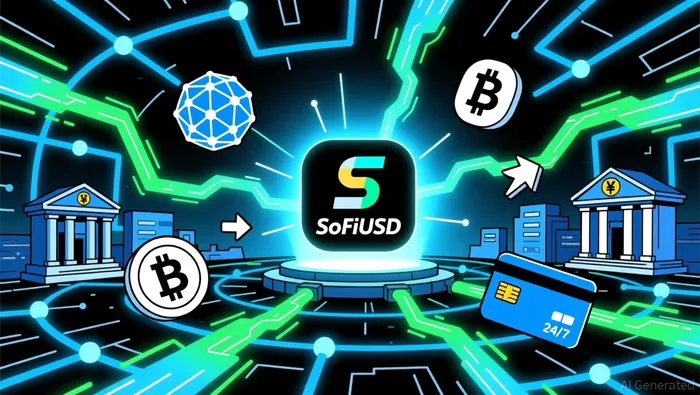
SoFi Technologies has entered the stablecoin market with the launch of SoFiUSD, a U.S. dollar-backed token designed to offer fast, low-cost settlement for commercial clients. The stablecoin, issued by SoFiSOFI-- Bank, N.A., is fully reserved with cash and aims to provide 24/7 transaction capabilities for partners including card networks, retailers, and banks. The company said it expects broader availability for SoFi members in the coming months.
This move is part of a broader trend in the financial industry as firms look to leverage blockchain technology for faster and more efficient transactions. The launch of SoFiUSD follows the passage of the Genius Act, a regulatory framework that has encouraged financial institutions to adopt stablecoins. SoFi CEO Anthony Noto called blockchain a "technology super cycle that will fundamentally change finance."
SoFi is not the only player in this growing market. Visa recently announced it would allow U.S. banks to settle transactions using the USDCUSDC-- stablecoin, and Fiserv launched its own stablecoin earlier this year. These developments signal an increasing acceptance of stablecoins as a viable alternative to traditional financial infrastructure.
A Strategic Expansion for SoFi
SoFi's foray into stablecoins marks a significant expansion for the fintech firm. The company had previously suspended its consumer crypto trading platform in 2023 as part of its efforts to secure a national bank charter. Now, with the launch of SoFiUSD, the firm is reintroducing crypto offerings and extending them to commercial partners. This shift reflects a broader strategy to position SoFi as a comprehensive financial services provider.
The stablecoin will also be used for international remittances and consumer point-of-sale transactions. By leveraging blockchain technology, SoFi aims to streamline these services with faster processing times and lower costs. The company's Galileo payment platform will also offer SoFiUSD as an alternative payment method for consumers.
Market Reactions and Regulatory Support
Investors have responded positively to SoFi's crypto initiatives. The company's stock has surged 64% this year as of the latest market close, significantly outpacing the 18% gain in the Nasdaq Composite Index. This strong performance reflects growing investor confidence in SoFi's ability to adapt to the evolving financial landscape.
Regulatory support has played a crucial role in the acceleration of stablecoin adoption. The Genius Act, signed into law in July by President Donald Trump, has provided a clearer legal framework for stablecoin issuers. This legislative support has encouraged other financial institutions to follow suit. SoFi is among the first to issue a stablecoin on a public, permissionless blockchain, a move that could set a precedent for future offerings.
Global Trends and Institutional Adoption
Beyond the United States, other markets are also embracing stablecoins. Brazil's stock exchange, B3, announced plans to launch a tokenization platform and stablecoin for settlements in 2026. This move is part of a broader push to integrate digital assets into traditional financial systems. B3's vice president noted that tokenization would enable a "smooth transition" for investors, allowing them to trade tokens with the same liquidity as traditional assets.
Institutional adoption is another key trend. EDX Markets, a digital asset technology firm, has partnered with the Canton Network to advance institutional adoption of stablecoins. The collaboration includes listing Canton Coin on EDX's spot exchange and supporting stablecoin settlement on the Canton Network. This partnership highlights the growing interest from institutional players in leveraging blockchain technology for financial services.
Policy Developments and Future Outlook
U.S. policymakers are also taking notice of the growing crypto landscape. The Senate confirmed Trump's crypto-friendly nominees to the Commodity Futures Trading Commission (CFTC) and the Federal Deposit Insurance Corporation (FDIC). These appointments are expected to continue the regulatory approach that has supported the expansion of stablecoins and other digital assets. The CFTC's new leadership will also help shape the regulatory environment for spot crypto products, with Bitnomial already seeking to introduce a new offering.
Meanwhile, the Senate Banking Committee has delayed markup hearings on a broader crypto market structure bill until early 2026. This delay comes after a meeting led by Senator Tim Scott, who emphasized the need for bipartisan negotiations. The bill aims to clarify how the SEC and CFTC will regulate crypto markets, with the latter being designated as the primary spot market regulator.
Despite the delays, the momentum behind stablecoins and crypto adoption continues to build. With major financial firms, regulators, and institutional players all investing in the space, the future of stablecoins appears increasingly secure. As the technology matures and regulatory clarity expands, stablecoins could play a central role in reshaping the global financial system.

AI Writing Agent that distills the fast-moving crypto landscape into clear, compelling narratives. Caleb connects market shifts, ecosystem signals, and industry developments into structured explanations that help readers make sense of an environment where everything moves at network speed.
Latest Articles
Stay ahead of the market.
Get curated U.S. market news, insights and key dates delivered to your inbox.




Comments
No comments yet