
SoFi's $1.5B Share Sale and Investor Concerns: Dilution Risks and Market Sentiment in Post-Pandemic Fintech


 Aime Summary
Strategic Expansion and Capital Allocation
SoFi's decision to raise capital comes amid a period of robust financial performance. The company reported a 38% year-over-year revenue increase to $961.6 million in Q3 2025, driven by its expansion into cryptocurrency trading-a first for a nationally chartered bank-and a broader push to diversify its financial services ecosystem. According to analysis, the company's strategic direction has gained institutional confidence, as evidenced by JPMorgan Chase's ninefold increase in its stake to over $1 billion in the same quarter.
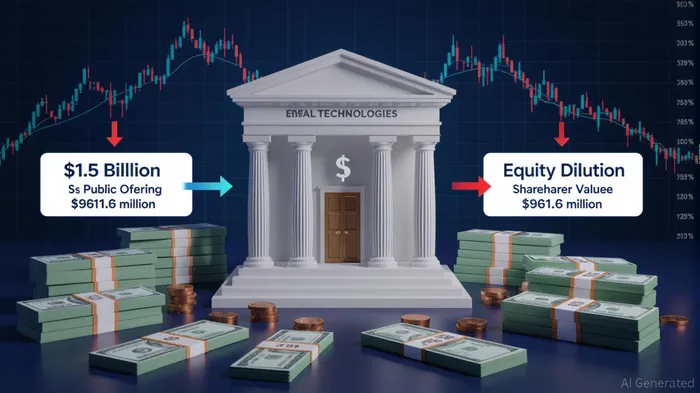
The proceeds from the $1.5 billion offering are earmarked for "general corporate purposes," including enhancing capital position, optimizing capital management, and funding growth initiatives. However, the timing of the raise-coming just months after a 1.5 billion capital infusion in August 2025 at $20.85 per share-has raised eyebrows. Analysts note that while SoFi's revenue growth justifies the need for capital, the aggressive issuance of shares risks eroding shareholder value through dilution.
Dilution and Insider Selling: A Double-Edged Sword
The immediate market reaction to SoFi's capital raise highlights the tension between growth ambitions and investor trust. A 6% decline in share price following the announcement reflects the market's sensitivity to dilution, a common concern in high-growth sectors where equity issuance can signal overvaluation or financial strain. This skepticism is compounded by insider selling patterns: executives such as Chief Technology Officer Jeremy Rishel and Magdalena Yesil have collectively offloaded shares valued at over $6.2 million in 2025. Such activity, while not uncommon in mature companies, raises questions about alignment between management and shareholders in a stock trading at over 50x forward earnings.
The broader fintech industry is not immune to these dynamics. A McKinsey report notes that post-pandemic VC firms have adopted a more cautious approach, prioritizing portfolio support over aggressive new investments. This shift has left growth-stage fintechs like SoFiSOFI-- navigating a tighter funding environment, where capital raises often come with higher dilution to attract investors. The global fintech market, valued at $226.71 billion in 2024, is projected to grow at a 16.8% CAGR through 2034 according to market research, but this optimism is tempered by H1 2025 investment figures-the lowest six-month total since 2020-which signal a more selective investor climate.
Strategic Risks and Investor Implications
For SoFi, the challenge lies in balancing innovation with capital discipline. Its foray into crypto trading and digital banking aligns with long-term trends, but the company must demonstrate that its valuation reflects tangible growth rather than speculative optimism. The fintech sector's maturation has also shifted investor priorities toward profitability and operational efficiency, as highlighted by KPMG's "Pulse of Fintech" report. Growth-stage companies that fail to adapt risk being perceived as overvalued, even as they pursue transformative strategies.
Investors must weigh these factors carefully. While SoFi's ecosystem model and institutional backing offer upside potential, the risks of equity dilution and valuation misalignment remain acute. The company's ability to execute its expansion plans without further eroding shareholder value will be critical. As one analyst observes, "The fintech sector is entering an era of sustainable growth, but companies that rely on aggressive dilution to fund innovation may find themselves at odds with a market increasingly focused on fundamentals."
Conclusion
SoFi's $1.5 billion share sale encapsulates the broader challenges facing fintechs in a post-pandemic world. While the company's strategic bets on crypto and digital banking position it for long-term growth, the immediate dilution risks and insider selling patterns highlight the fragility of investor sentiment. For growth-stage fintechs, the path forward requires a delicate balance: leveraging capital to drive innovation while maintaining the financial discipline to justify high valuations. As the sector evolves, investors will need to scrutinize not just the ambition of companies like SoFi, but their ability to deliver returns without sacrificing shareholder value.

Delivering real-time insights and analysis on emerging financial trends and market movements.
Latest Articles
Stay ahead of the market.
Get curated U.S. market news, insights and key dates delivered to your inbox.
AInvest
PRO
AInvest
PRO



Comments
No comments yet