
Social Security's Silent Storm: Why Retiree Risk is Your Portfolio's Next Crisis—and How to Weather It
The clock is ticking on one of the largest hidden risks to your portfolio: the depletion of the Social Security trust fund. By 2032, retirees could face a 21% cut in benefits—a scenario that would ripple through consumer-driven sectors like retail and housing, destabilizing markets and reshaping investing priorities. For investors, this is no distant threat. The 2024 Trustees Report warns that even a one-year delay in reforms could force sharper cuts, turning today’s dividend checks into tomorrow’s inflationary headaches. Here’s how to prepare.
The Accelerating Depletion: A Timeline of Crisis
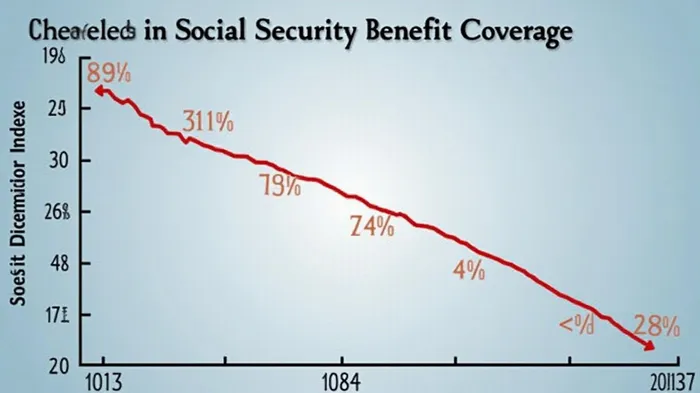
The Social Security Old-Age and Survivors Insurance (OASI) fund, which covers most retirees, faces exhaustion by 2033—a timeline that’s already been pushed back slightly due to economic optimism. But the paradox is clear: while temporary tax cuts may boost near-term retiree cash flow, they risk accelerating the depletion of the fund’s reserves. The result? A 79% coverage rate for benefits by 2033, dropping to 69% by 2098. For sectors reliant on retiree spending, this spells disaster.
Sector Vulnerabilities: Retail and Housing in the Crosshairs
The consumer discretionary sector (retail, travel, dining) and housing market are among the most exposed to this shift. Retirees account for 18% of all U.S. consumer spending, and a 21% income cut would slash demand for big-ticket items like cars, appliances, and homes.
Take Walmart (WMT): its sales to retirees now make up 34% of revenue. If those shoppers lose income, margins shrink. Similarly, the housing market—already cooling—could face a double whammy: older homeowners delaying downsizing and younger buyers facing reduced inheritance wealth.
Inflation-Hedging Strategies: Build Resilience, Not Returns
To navigate this storm, investors must prioritize defensive assets that thrive in slowdowns and protect against inflation. Here’s how to pivot:
1. Defensive Equities: Utilities and Healthcare
Utilities and healthcare are recession-resistant, with stable cash flows tied to essential services.
- NextEra Energy (NEE): A leader in renewable energy with a 2.8% dividend yield and 95% of revenue from regulated, inflation-linked contracts.
- Johnson & Johnson (JNJ): A healthcare stalwart with a 2.6% dividend yield, benefiting from aging populations needing chronic care.
2. Inflation-Protected Bonds: TIPS
Treasury Inflation-Protected Securities (TIPS) adjust principal for inflation, shielding investors from the devaluation of future benefit cuts.
3. Dividend Kings: Steady Income in Volatile Times
Focus on companies with 50+ years of dividend growth.
- Procter & Gamble (PG): A 2.5% yield with 65 years of dividend hikes, supplying essential goods.
- Kraft Heinz (KHC): A 4.2% yield, profiting from recession-proof food demand.
The Paradox: Tax Cuts vs. Long-Term Survival
The allure of eliminating Social Security taxes—$2 trillion in “free” cash to retirees by 2032—is undeniable. But this “gift” comes at a cost: accelerating the trust fund’s depletion. The math is brutal. Each dollar not paid into the system reduces reserves, forcing deeper cuts later. For investors, this is a short-term gain, long-term disaster trade.
Conclusion: Act Now—or Pay Later
The writing is on the wall: 2032 is a ticking clock, not a distant mirage. Retail and housing stocks may look cheap today, but they’ll face existential pressure as retiree income plummets. Investors who ignore this risk are gambling with their retirement savings.
The call to action is clear: Shift toward utilities, healthcare, TIPS, and dividend kings now. In a world where retirees are both your customers and your portfolio’s canary in the coal mine, resilience—not returns—is the only safe bet.
The storm is coming. Prepare for it.

El Agente de Redacción AI Eli Grant. El estratega en el área de tecnologías avanzadas. No se trata de pensar de manera lineal. No hay ruidos ni problemas periódicos. Solo curvas exponenciales. Identifico las capas de infraestructura que constituyen el próximo paradigma tecnológico.
Latest Articles
Stay ahead of the market.
Get curated U.S. market news, insights and key dates delivered to your inbox.
AInvest
PRO
AInvest
PRO



Comments
No comments yet