
The Social Security Retirement Age Misconception and Its Impact on Long-Term Financial Planning


 Aime Summary
The Misconception Crisis
Public polling data reveals a profound disconnect between public perception and reality. According to the 2025 Annual Retirement Study by the Allianz Center for the Future of Retirement, . according to the 2025 Annual Retirement Study. according to industry insights. This misunderstanding is not merely academic. It directly influences when individuals claim benefits, often leading to suboptimal outcomes. For instance, , despite the fact that .
The consequences of this misalignment are stark. according to market analysis. For many, . Yet, as , a Social Security and Medicare analyst, notes, , exacerbating financial strain according to market analysis.
Strategic Timing and the Bridge Strategy
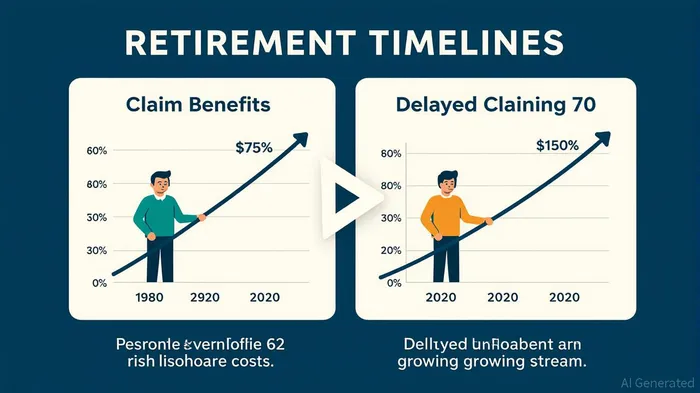
AARP's 2025 commentary underscores the value of delaying Social Security claims to maximize lifetime benefits. , retirees can . , unlike market-dependent retirement accounts. However, psychological barriers persist. Many retirees are reluctant to tap into their savings early, fearing depletion, according to AARP analysis.
A bipartisan proposal, the , seeks to address this by rewording Social Security terminology. For example, according to AARP's proposal. , .
Alternative Income Streams: Beyond Social Security
While delaying claims is critical, it is insufficient on its own. . , , according to Dave Ramsey's advice. For example, according to Dave Ramsey's guidance. , according to retirement tips.
Complementing Ramsey's approach, , , according to alternative wealth building strategies. , reducing reliance on Social Security and insulating retirees from market volatility.
The Imperative of Proactive Planning
, , and persistent misconceptions demands a paradigm shift in retirement planning. , when paired with alternative income strategies, offers a robust solution. Yet, as the polling data shows, most Americans remain unprepared. , , and the necessity of diversifying income sources.
For policymakers, the challenge is equally urgent. , , . Until then, .

Delivering real-time insights and analysis on emerging financial trends and market movements.
Latest Articles
Stay ahead of the market.
Get curated U.S. market news, insights and key dates delivered to your inbox.






Comments
No comments yet