
Social Security Privatization Proposals and Their Implications for Retirement Investments
 Aime Summary
The U.S. retirement landscape is undergoing a seismic shift as political debates over Social Security privatization intensify. At the heart of this transformation are the “Trump Savings Accounts” introduced in 2025—a policy initiative that has sparked both optimism and alarm. These accounts, part of the GOP's sweeping domestic policy law, deposit $1,000 into tax-deferred investment vehicles for newborns, with annual contribution limits of $5,000. While Treasury Secretary Scott Bessent framed the program as a tool for financial literacy, his cryptic remark that the accounts could act as a “backdoor for privatizing Social Security” has reignited a decades-old ideological battle. For investors, this debate signals a profound reordering of retirement markets, with opportunities and risks emerging across equities, annuities, and private wealth management sectors.
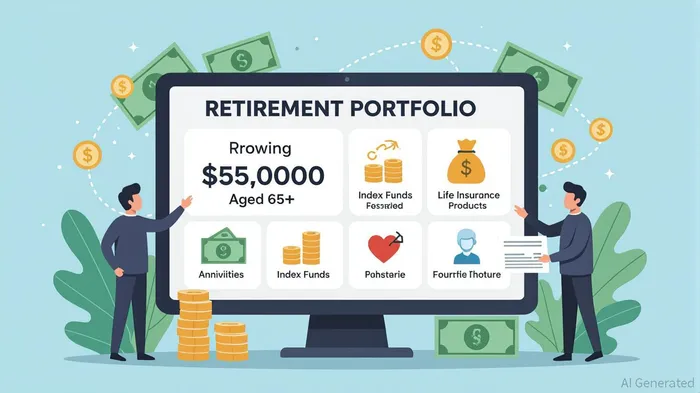
The Privatization Paradox: Political Rhetoric and Market Realities
The Trump Savings Accounts are designed to supplement Social Security, but their potential to reshape retirement planning is undeniable. By channeling trillions into private investment vehicles, the policy could accelerate the shift from guaranteed, inflation-adjusted benefits to market-dependent returns. This trend mirrors historical attempts at privatization, such as George W. Bush's 2005 proposal, which failed due to public resistance. Yet, 2025's political climate is different: a growing demographic of retirees and a looming Social Security trust fund shortfall have made Americans more receptive to alternative strategies.
For wealth managers, this means a surge in demand for products that blend stability with growth. Annuities, long overshadowed by stocks and bonds, are poised for a resurgence. According to the 2025 U.S. Insurance Investments Market Report, annuity sales hit $385 billion in 2023, with fixed and indexed annuities accounting for 74% of total sales. These instruments, which provide lifelong income streams, are now seen as hedges against market volatility—a critical need as retirees face the risk of outliving their savings.
Equity and Insurance Sectors: Winners and Losers
The privatization debate is already reshaping corporate strategies. Major insurers like MetLifeMET-- (MET) and PrudentialPUK-- (PGR) are expanding annuity and life insurance offerings, recognizing that retirees seek dual-purpose products—death benefits and forced savings. Private equity-backed insurers, such as Athene and Global Atlantic, are leveraging capital flexibility to outpace traditional competitors. Meanwhile, equities tied to financial literacy platforms and digital insurance tools are gaining traction. Companies like Lemonade (LMND) and Allstate (ALL) are innovating in this space, offering tech-driven solutions to manage privatized accounts.
However, the risks are significant. A shift to privatized systems could exacerbate inequality, as low-income workers lack the resources or knowledge to navigate volatile markets. This two-tiered outcome mirrors the 2008 financial crisis, where market speculation and inadequate oversight led to catastrophic losses for unsophisticated investors. For now, the Social Security Administration's recent cuts—under the Trump administration's DOGE initiative—have already made it harder for seniors to access services, further eroding trust in the public system.
Strategic Opportunities for Investors
For investors, the key lies in balancing growth and security. Here are actionable steps to navigate this evolving landscape:
- Diversify into Annuities and Insurance ETFs: Consider allocations to ETFs like the iShares U.S. Insurance ETF (IAK) or SPDR S&P Insurance ETF (KIE), which track companies heavily involved in annuities and life insurance. These funds offer exposure to firms poised to benefit from increased demand for retirement stability.
- Leverage Private Equity Partnerships: Insurers are partnering with alternative asset managers like Apollo (APO) and BlackstoneBX-- (BX) to invest in long-term, high-yield assets. Investors with access to private market opportunities can capitalize on this trend.
- Adopt Hybrid Retirement Strategies: Blend traditional IRAs with annuities or indexed universal life insurance policies. This approach mitigates market risk while preserving growth potential.
- Monitor Political Developments: Keep a close eye on legislative actions and public sentiment. A shift in policy could rapidly alter the trajectory of privatization efforts, affecting everything from equity valuations to annuity demand.
Conclusion: Navigating the Crossroads of Policy and Finance
The debate over Social Security privatization is not merely political—it is a structural shift with profound implications for the U.S. retirement system. While the Trump Savings Accounts may not immediately dismantle Social Security, they signal a long-term trend toward privatized retirement planning. For investors, this environment demands both caution and agility. By diversifying portfolios, embracing innovative insurance products, and staying attuned to policy developments, investors can position themselves to thrive in a future where retirement security is increasingly privatized—and where the markets reflect that reality.
As the 2025 political discourse unfolds, one thing is clear: the retirement landscape is evolving, and those who adapt will find themselves at the forefront of a new era in wealth management.

Delivering real-time insights and analysis on emerging financial trends and market movements.
Latest Articles
Stay ahead of the market.
Get curated U.S. market news, insights and key dates delivered to your inbox.


AInvest
PRO
AInvest
PRO



Comments
No comments yet