
Social Security's Clock Ticks Down: How to Fortify Retirement Portfolios Against the 2034 Trust Fund Cliff
The U.S. Social Security system faces a critical inflection point. New projections from the 2025 Trustees Report reveal the Old-Age and Survivors Insurance (OASI) Trust Fund will be depleted by 2033, with the combined OASI and Disability Insurance (OASDI) fund following suit by 2034. At that point, payroll taxes will cover only 81% of scheduled benefits—a shortfall that could grow to 72% by century's end. Meanwhile, Medicare's Hospital Insurance (HI) trust fund, which finances inpatient care, is projected to exhaust its reserves by 2033, underscoring systemic vulnerabilities in public retirement safety nets.
For investors, these timelines are a clarion call to reassess retirement savings strategies. Relying solely on Social Security's diminished payouts leaves retirees exposed to income shortfalls, inflation, and market volatility. The solution lies in building portfolios that balance growth, income generation, and resilience against systemic risks.
The Depletion Timeline: A Race Against Time
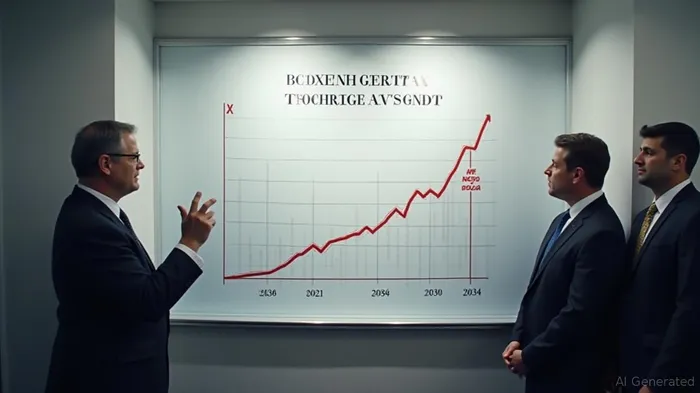
The OASI fund's reserves, which currently cover 100% of benefits, will drop to 77% by 2033—a gap that could force retirees to cut spending or delay retirement. The HI fund's depletion adds urgency, as Medicare costs for hospital care may rise faster than projected, squeezing budgets further. These trends mean individuals must take proactive steps to supplement income and protect assets.
Implications for Retirees: A New Reality
The Trustees' report paints a stark picture: retirees cannot afford to wait for policy fixes. The delayed benefits and reduced payouts will disproportionately affect lower-income workers, who rely more heavily on Social Security. But even middle-class households face challenges: a 72% benefit by 2099 could leave many with insufficient income to cover basic needs, especially if inflation outpaces wage growth.
Investors must confront two core risks:
1. Income Shortfalls: Reduced Social Security payouts may force retirees to liquidate assets prematurely or take on debt.
2. Market Volatility: Portfolio values could be hit by rising interest rates, geopolitical instability, or economic slowdowns—factors that often coincide with periods of fiscal stress like this one.
Building Resilient Portfolios: Strategies for the 2030s
To navigate these risks, portfolios should emphasize diversification, income stability, and exposure to sectors that will thrive amid aging demographics. Below are actionable steps:
1. Boost Income Streams with Defensive Assets
Focus on assets that generate steady income while shielding against market downturns.
Utilities and Consumer Staples: These sectors offer stable cash flows and are less sensitive to economic cycles.
XLU's dividend yield of 3.2% (as of June 2025) and low volatility make it a defensive cornerstone.Dividend Aristocrats: Companies with 25+ years of consecutive dividend increases, like Procter & Gamble (PG) or Johnson & Johnson (JNJ), provide reliable income.
2. Invest in Aging-Population Sectors
Healthcare, biotechnology, and senior housing are poised to grow as the population ages.
Healthcare ETFs: The iShares U.S. Healthcare ETF (IYH) offers exposure to innovators in drug development and telehealth.
Telehealth and Senior Care: Companies like Teladoc HealthTDOC-- (TDOC) or Brookdale Senior LivingBKD-- (BKD) address rising demand for cost-effective care.
3. Diversify Globally and Tax-Advantageously
- International Bonds: Emerging markets bonds (e.g., iShares J.P. Morgan Emerging Markets Bond ETF (EMB)) offer higher yields than U.S. Treasuries while hedging against dollar weakness.
- Real Estate Investment Trusts (REITs): Healthcare REITs like VentasVTR-- (VTR) or Omega HealthcareOHI-- Investors (OHI) benefit from long-term leases and inflation adjustments.
4. Consider Annuities and Inflation Protection
- Deferred Income Annuities: These instruments lock in future payouts, providing a guaranteed income stream post-2034.
- TIPS (Treasury Inflation-Protected Securities): Their principal adjusts with inflation, preserving purchasing power.
The Bottom Line: Act Now, Adapt Later
The Social Security depletion timeline is not a distant abstraction—it's a looming reality. Investors who delay rebalancing portfolios to account for reduced benefits risk falling short of their retirement goals. Prioritize income stability, diversify across sectors and geographies, and embrace strategies that mitigate systemic risks. The clock is ticking, but proactive planning can turn uncertainty into opportunity.
In the decade ahead, resilience will be the hallmark of successful retirement portfolios. Those who adapt early will navigate the 2030s with confidence.

Stay ahead of the market.
Get curated U.S. market news, insights and key dates delivered to your inbox.


AInvest
PRO
AInvest
PRO



Comments
No comments yet