
AInvest Newsletter
Daily stocks & crypto headlines, free to your inbox
 Aime Summary
In 2025, the cryptocurrency market has witnessed an unprecedented convergence of social media virality and retail investor behavior, with
coins emerging as both a cultural phenomenon and a speculative asset class. Tokens like (DOGE), (SHIB), and (PEPE) have transcended their origins as internet jokes to become barometers of retail sentiment, driven by platforms like TikTok, , and X (formerly Twitter). This article examines the mechanisms behind meme coin volatility, the evolving psychology of retail investors, and the risks inherent in a market where sentiment can shift overnight.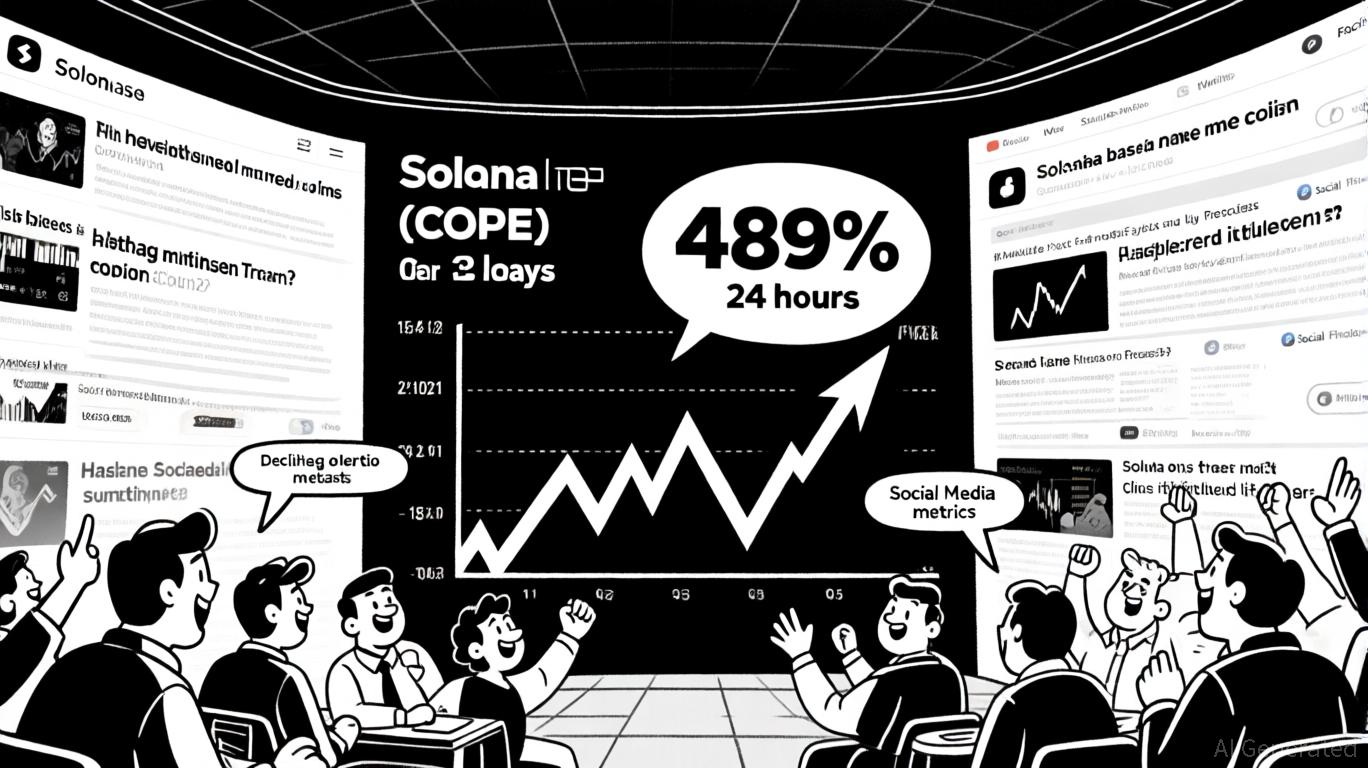
Social media platforms have become the primary engine for meme coin adoption and price movements. According to an
, tokens with strong social media presence-such as $PEPE and $DOGE-experienced rapid surges in trading volume and visibility, often within hours of a viral post or influencer endorsement. For instance, the Solana-based meme coin COPE surged 489% in 24 hours in July 2025, fueled by TikTok challenges and celebrity endorsements, only to collapse by 66% within three weeks as sentiment shifted, according to a . This volatility underscores the fragility of meme coin valuations, which are tethered to ephemeral trends rather than fundamentals.Retail investors, particularly Gen Z and millennial traders, have embraced meme coins as a form of participatory finance. Platforms like Pump.fun enable the creation of new meme coins in minutes, while Discord servers and Reddit threads coordinate "pump" campaigns. As noted by Analytics Insight, this collective action mirrors the GameStop short squeeze of 2021 but operates at a faster, more chaotic pace, as described in a
. The fear of missing out (FOMO) remains a dominant driver, though 2025 has seen a shift toward data-driven strategies. Retail investors now use sentiment analysis tools and real-time analytics to track social media trends, blending intuition with algorithmic insights, as TradingOnRamp also notes.Celebrity endorsements continue to sway markets. Elon Musk's tweets, for example, historically correlate with Dogecoin price spikes, a pattern that persisted into 2025, according to a
. Similarly, the $TRUMP meme coin, launched in January 2025, reached a peak of $16.44 before collapsing due to delayed token unlocks and negative social media sentiment, as the Bitget case study shows. These cases highlight the dual-edged nature of influencer-driven hype: while it can catalyze explosive growth, it also amplifies downside risk when narratives shift.Interestingly, some meme coins are now adopting "Meme+" models, integrating utility like AI tools or governance rights to appeal to long-term holders, according to a
. Projects such as BonkDAO and Pepe Unchained blend humor with community-driven governance, creating a hybrid of cultural identity and speculative value. However, as TradingOnRamp warns, these tokens remain vulnerable to social media sentiment, with price swings often decoupled from their utility.The meme coin market's lack of regulation exacerbates its volatility. A Gov.Capital analysis revealed that
, , and PEPE collectively generated $4.6 billion in daily trading volume in May 2025, yet their valuations remain disconnected from traditional metrics. This creates fertile ground for market manipulation, as seen in the COPE case, where coordinated social media campaigns drove artificial demand before a crash, documented in the Bitget case study.Retail investors are increasingly aware of these risks but remain drawn to the allure of quick profits. A Meme Street Journal survey found that 68% of meme coin traders in 2025 use stop-loss strategies, compared to 42% in 2023, indicating a growing emphasis on risk management. Nevertheless, the sector's speculative nature means losses remain common, particularly for novice traders.
The 2025 meme coin boom reflects broader shifts in retail investing, where social media and community engagement redefine market dynamics. While these tokens offer opportunities for profit, their volatility and reliance on sentiment make them unsuitable for risk-averse investors. As Analytics Insight advises, diversification and due diligence are critical, with investors balancing meme coin exposure against more stable assets.
For now, the meme coin market remains a testament to the power of social media in shaping financial behavior. Yet, as the COPE and $TRUMP cases demonstrate, the line between cultural phenomenon and speculative bubble is perilously thin. In a world where a single tweet can move markets, the only certainty is uncertainty.

AI Product Manager at AInvest, former quant researcher and trader, focused on transforming advanced quantitative strategies and AI into intelligent investment tools.

Dec.03 2025

Dec.01 2025

Nov.27 2025

Nov.27 2025

Nov.27 2025
Daily stocks & crypto headlines, free to your inbox





Comments
No comments yet