
Sneaker Retail Power Shift: Dick's $2.4B Foot Locker Acquisition Signals a New Era of Consolidation
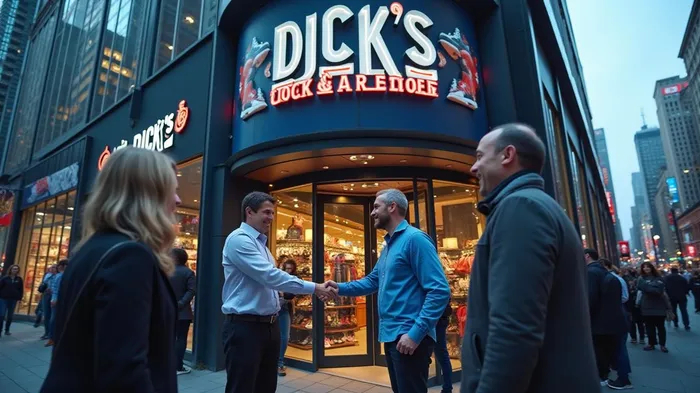
The $2.4 billion acquisition of Foot LockerFL-- by Dick's Sporting Goods marks a seismic shift in the sneaker retail landscape, as consolidation accelerates to counter slower growth and intensify competition. By combining Dick's U.S. sporting goods dominance with Foot Locker's global sneaker culture reach, the merged entity emerges as a $21 billion retail giant poised to reshape shareholder value—and the risks are as clear as the opportunities.
The Deal's Strategic Calculus: Market Share + Global Reach = Survival
Dick's 2024 performance—$13 billion in sales and a 5.2% full-year comparable sales growth—contrasts starkly with Foot Locker's 1.9% sales decline, driven by Nike's pivot to direct-to-consumer models. The merger aims to turn this disparity into an advantage:
- Market Share Surge: The combined entity will command 15.4% U.S. market share, up from Dick's 11.1%, while Foot Locker's 2,400 global stores give Dick's its first foothold in Europe, Asia, and Australia.
- Cost Synergies: Targeted $100–$125M annual savings through procurement efficiencies and supply chain integration could lift margins in a sector where thin margins are the norm.
Why Consolidation Is the Play—and JD Sports Is Already Ahead
Dick's move mirrors broader industry trends. Rival JD Sports (JD.S), which bought Hibbett and Courir, has expanded its store count to 4,000+ globally, prioritizing profitability over rapid growth. Its focus on franchising in emerging markets and automated distribution centers highlights a path Dick's-FL could follow.
“Consolidation isn't just about size—it's about scale to negotiate with brands like Nike,” says Neil Saunders of GlobalData Retail. JD's success in Europe and the U.S. underscores that vertical integration and geographic diversification are critical to weathering brand shifts like Nike's.
The Synergy Sweet Spot: Nike's Role and Supply Chain Leverage
Nike, which accounts for 30–35% of combined sales, stands to gain from a stronger retail partner. Dick's-FL's enhanced buying power could stabilize Nike's wholesale relationships, while Foot Locker's sneaker expertise could breathe new life into Dick's experiential stores (e.g., its “House of Sport” concepts).
However, execution risks loom. Maintaining separate operations limits immediate synergies, and regulatory hurdles—particularly antitrust scrutiny—could delay closing. Meanwhile, Foot Locker's reliance on Nike's goodwill remains a wildcard.
The Elephant in the Room: Can They Avoid Cultural Clashes?
Critics argue that running the businesses separately risks underutilizing synergies. Dick's CEO, Ed Stack, insists the “seamless” integration will focus on digital platforms and shared logistics, but past retail mergers (e.g., Walmart/Asda) show that cultural alignment is as vital as financials.
Investment Takeaway: Buy the Trend, But Watch the Execution
The deal's 66% premium to Foot Locker's trading price reflects investor confidence in consolidation's long-term upside. For investors, this is a bet on:
1. Global retail dominance: Dick's-FL could rival JD Sports as a multi-regional sneaker powerhouse.
2. Margin expansion: Synergies and cost discipline could lift EPS by ~5–8% annually.
3. Shareholder returns: Dick's has a history of buybacks; post-merger accretion could fuel dividends.
But risks persist:
- Regulatory delays could push the late 2025 close date into 2026.
- Brand dilution: Foot Locker's sneaker-centric stores must not overshadow Dick's broader sporting goods appeal.
Final Verdict: A Necessity, Not a Luxury
In a sector where Nike's DTC push and rising logistics costs squeeze profits, consolidation is no longer optional. Dick's-FL's move mirrors JD Sports' playbook—scale, global reach, and efficiency—and positions it to lead in a winner-takes-most landscape.
Investors should monitor execution milestones: store conversions, supply chain savings realization, and regulatory approvals. For now, the merger's premium and strategic logic make Dick's a buy, with Foot Locker's shares offering a leveraged play on consolidation success.
The sneaker retail revolution is here. Buckle up—or miss the ride.

Delivering real-time insights and analysis on emerging financial trends and market movements.
Latest Articles
Stay ahead of the market.
Get curated U.S. market news, insights and key dates delivered to your inbox.
AInvest
PRO
AInvest
PRO



Comments
No comments yet