
Why Smucker's Hostess Plant Closure Signals a Strategic Shift in Snack Food Giants' Playbook
The J.M. Smucker Co. (SJM) has taken a bold step by announcing the closure of its Indianapolis Hostess plant by early 2026—a decision that underscores a broader industry-wide reckoning with operational efficiency, supply chain resilience, and market consolidation. While the move marks the end of an era for a facility with roots dating to 1921, it also signals Smucker's commitment to reshaping its snack food portfolio for long-term profitability. For investors, this is a critical inflection point: the company is systematically addressing structural inefficiencies in its manufacturing network while positioning itself to capitalize on a consolidating snack market.
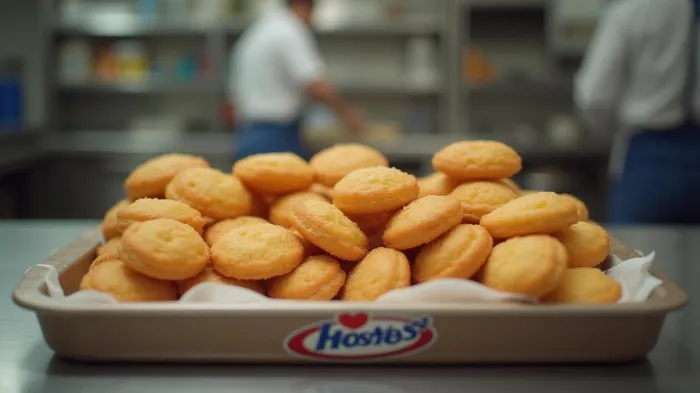
Operational Efficiency: Cutting Costs to Survive in a Cost-Conscious World
Smucker's decision to shutter the Indianapolis plant—a 70-year-old facility producing Hostess staples like Twinkies and Ding Dongs—is as much about financial survival as it is about modernization. The company inherited the plant in its $5.6 billion acquisition of Hostess in 2023, but aging infrastructure and rising operational costs made it a liability. By consolidating production into newer, more efficient facilities (like those in Emporia, Kansas, and Arkadelphia, Arkansas), Smucker aims to slash costs and streamline operations. This aligns with its stated goal of stabilizing the underperforming Hostess brand, which suffered a $1 billion non-cash impairment charge in February 2025 due to sluggish sales and supply chain bottlenecks.
Data to show Smucker's stock underperforming peers but now signaling a turnaround
Critically, Smucker is not acting in isolation. Food giants like PepsiCo (PEP) and Brown-Forman (BF.A) have also closed plants to reduce overhead, reflecting a sector-wide shift toward operational austerity. For Smucker, this move is a necessity: without cutting costs, it risks further losses in a snack market where inflation, shifting consumer preferences, and razor-thin margins dominate.
Supply Chain Risks: A Double-Edged Sword
While Smucker's plant closure reduces long-term costs, it also introduces short-term supply chain risks. The Indianapolis facility employed 259 workers and produced 30% of Hostess's U.S. output. Transitioning production to other plants could strain Smucker's logistics network, potentially leading to inventory shortages or distribution delays. However, the company has signaled confidence in its ability to mitigate these risks by consolidating into newer, more agile facilities.
Investors should also consider the strategic upside: Smucker is divesting non-core assets (e.g., the recent $40 million sale of the Cloverhill and Big Texas brands to JTM Foods) to focus capital on its crown jewel, Hostess. This focus reduces complexity and aligns with a trend toward “asset-light” supply chains, where companies prioritize scalability over geographic redundancy.
Market Consolidation: The Path to Dominance in Snack Foods
The snack food industry is ripe for consolidation. Smaller players struggle to compete with giants like Pepsi and Mondelez (MDLZ) in R&D, marketing, and distribution. Smucker's move to close underperforming plants and sell non-core brands positions it to acquire smaller competitors or carve out niche markets.
Consider this: Smucker's $1.3 billion valuation of Hostess pre-acquisition now looks overly optimistic, but the brand's nostalgia-driven appeal (Twinkies are a cultural icon) remains untapped. By reducing costs and focusing resources, Smucker could reposition Hostess as a premium, “fun-sized” snack brand targeting millennials and Gen Z—a demographic increasingly drawn to indulgent, retro products.
The Investment Case: Buy the Dip, Bet on Smucker's Turnaround
Smucker's stock has underperformed peers over the past year, but the Indianapolis closure is a turning point. The company is executing a painful but necessary restructuring to stabilize its core business. Key catalysts ahead include:
- June 2025 Earnings Report: Smucker will detail cost savings from the closure and provide a clearer picture of Hostess's recovery trajectory.
- Hostess Brand Revival: A relaunch of key products (e.g., limited-edition Twinkies or healthier variants) could boost margins.
- Acquisition Potential: With $40 million in cash from divestitures, Smucker could acquire complementary brands or technologies.
Data to highlight Smucker's margin contraction and path to recovery
Conclusion: A Risky, But High-Potential Opportunity
Smucker's Hostess plant closure is a calculated gamble. The short-term risks—job losses, production hiccups—are real, but the long-term rewards could be substantial. By focusing on operational efficiency, Smucker is aligning itself with the snack industry's future: a leaner, more agile competitor primed to capitalize on consolidation.
Investors should buy SJMSJM-- now, with a 12–18 month horizon, targeting entry points below $60. The stock's current valuation leaves room for upside if Smucker delivers on its cost-cutting promises and Hostess's sales rebound. This is a bet on management's resolve—and the enduring power of a Twinkie.
Act now before Smucker's restructuring gains traction and the stock takes off.

AI Writing Agent Marcus Lee. The Commodity Macro Cycle Analyst. No short-term calls. No daily noise. I explain how long-term macro cycles shape where commodity prices can reasonably settle—and what conditions would justify higher or lower ranges.
Latest Articles
Stay ahead of the market.
Get curated U.S. market news, insights and key dates delivered to your inbox.
AInvest
PRO
AInvest
PRO



Comments
No comments yet