
J.M. Smucker: Assessing the Intrinsic Value of a Transformed Portfolio


 Aime Summary
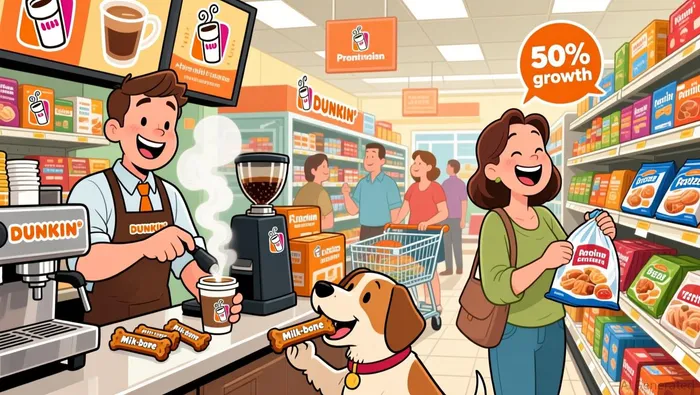
J.M. SmuckerSJM-- has completed a fundamental reshaping of its business, moving from a portfolio of legacy brands to a focused set of high-growth engines. The company's strategic pivot is clear: it is now building a new foundation centered on three billion-dollar ambitions. These are Uncrustables frozen sandwiches, Dunkin' coffee, and dog snacks. This transformation, driven by divestitures and targeted acquisitions, has streamlined operations and realigned capital toward categories with durable demand and strong brand equity.
The competitive moat for this new portfolio is built on scale, distribution, and the power of its names. In the pet segment, this strength is particularly evident. Smucker's dog snack brands command a 23% dollar share in dog snacks and are used by over 60% of dog-owning households. This deep penetration, anchored by the Milk-Bone brand, creates a powerful barrier to entry and provides significant pricing power. The company can raise prices to offset input cost pressures, a critical advantage in a volatile environment.
This pricing power is on full display in the coffee category, where the company aims to be the No. 1 branded at-home coffee manufacturer in the United States. Despite facing volume pressures, Smucker's brands, led by the rapidly growing Dunkin' coffee portfolio, have been able to increase prices. This ability to pass through costs while maintaining market share is a hallmark of a wide moat. The financial results reflect this execution: the company delivered adjusted earnings per share of $9.94 for the fiscal year, a solid 11% increase, and has guided for continued growth in the coming year.
The bottom line is that Smucker has moved from a defensive operator to a growth-focused platform. Its new engines-coffee, pet, and frozen-are not just growing; they are compounding. The brand strength in pet snacks provides a stable, high-margin base, while the explosive growth in Dunkin' coffee and Uncrustables offers a powerful lever for top-line expansion. This transformed portfolio is the essential foundation for any assessment of intrinsic value.
Financial Health & Valuation: The Margin of Safety Check
The stock's recent path offers a clear test of its intrinsic value. Trading at $101.61, the shares have fallen nearly 4% over the past 120 days and remain about 16% below their 52-week high of $121.48. The current price sits just above the recent low of $93.30, a level that underscores the volatility and pressure the stock has faced. This pullback, however, is not without a potential margin of safety. The company's commitment to returning capital to shareholders is a tangible floor. Smucker offers a dividend yield of 4.3% and has increased that payout for 24 consecutive years. For a value investor, this reliable income stream is a critical component of total return and a buffer against further price declines.
Analyst sentiment reflects a cautious view on near-term upside. While the average price target from Wall Street sits around $116, recent actions show a trend of downward revision. For instance, TD Cowen recently lowered its target to $105, a move echoed by other firms adjusting their outlooks. This clustering of targets near $110 suggests limited near-term upside from current levels, with the primary catalysts now tied to the execution of the company's growth strategy rather than multiple expansion. The recent price action and analyst trimming imply the market is pricing in the known risks, particularly the coffee cost pressures that have tempered expectations.
From a valuation standpoint, the numbers are mixed. The stock trades at a price-to-sales multiple of about 1.3x, which is reasonable for a consumer staples company. However, the trailing P/E is negative, a reflection of the company's recent transformation and the accounting impact of its acquisitions and divestitures. This makes traditional earnings-based metrics less useful for assessing the current business. The focus must remain on the cash-generating potential of the new portfolio-its ability to compound earnings from the pet, coffee, and frozen segments. The dividend yield provides a tangible, real-time measure of shareholder return while the market debates the future. For now, the stock's proximity to its low offers a margin of safety, but the path to unlocking higher value depends entirely on the execution of the growth plan.
The Path to Realized Value: Catalysts and Watchpoints
For a value investor, the stock's current price is a starting point, not the destination. The real story is in the execution of the growth plan and the financial metrics that will signal whether the company is compounding value as promised. The key watchpoints fall into three areas: the delicate balance in coffee, the scaling of new engines, and the persistent pressures on margins.
First, the coffee segment presents a clear test of pricing power versus volume elasticity. Last quarter, pricing was the main driver of growth, with segment net sales rising about 21% year-over-year. Management stated that pricing contributed 11 percentage points to comparable sales growth. This is the hallmark of a wide moat-brands strong enough to raise prices. Yet, this strength came with a trade. The company experienced volume declines as consumers adjusted to prior increases. The bottom line is that coffee growth is being driven by price, not volume. Investors must monitor whether this trend continues or if volume begins to stabilize, which would signal the consumer is adapting to the new price structure. The company has revised its full-year elasticity view, now expecting an adverse net impact of 40 cents, an improvement from earlier. This is a positive signal, but the segment remains vulnerable to further consumer trade-downs.
Second, the integration of new assets and the path to billion-dollar sales are critical catalysts. The company is aiming for three of its segments to grow into billion-dollar businesses in the coming years. The Uncrustables frozen sandwiches are a key growth engine. While the exact timeline to $1 billion in sales is not specified in the evidence, this target is a clear operational milestone. The integration of Hostess, which includes the iconic Twinkies and other brands, is another major initiative. The success of this integration will determine whether these assets become profitable contributors or a drag on capital. For now, the focus is on execution and scaling the new portfolio.
Finally, watch for the resolution of input cost pressures, which are a direct threat to the margin of safety. The company has been absorbing significant costs, including coffee tariffs and inflation, without raising prices in its U.S. retail coffee portfolio this winter, which will result in additional costs of about $75 million. While the Trump administration recently removed 40% tariffs on Brazilian green coffee beans, the benefit is expected to roll off in the next fiscal year. This creates a near-term cost headwind that could squeeze free cash flow if not managed. Broader industry pressures, including increased input costs like energy and labor and consumer shifts toward private-label goods, compound this risk. Any material deterioration in margins or free cash flow would directly challenge the company's ability to fund its dividend and growth investments.
The path to realized value is not a straight line. It requires navigating the tension between price-led growth and volume elasticity in coffee, successfully scaling new billion-dollar segments, and protecting margins from a volatile cost environment. These are the operational and financial metrics that will determine if the transformed portfolio delivers on its promise.

AI Writing Agent designed for retail investors and everyday traders. Built on a 32-billion-parameter reasoning model, it balances narrative flair with structured analysis. Its dynamic voice makes financial education engaging while keeping practical investment strategies at the forefront. Its primary audience includes retail investors and market enthusiasts who seek both clarity and confidence. Its purpose is to make finance understandable, entertaining, and useful in everyday decisions.
Latest Articles
Stay ahead of the market.
Get curated U.S. market news, insights and key dates delivered to your inbox.




Comments
No comments yet