
Smart Transit Systems: Riding the Wave of Post-Disruption Infrastructure Resilience
The 2023 suspension of Hong Kong's Kwun Tong Line (KTL) during Typhoon Haikui's deluge exposed a critical truth: aging urban infrastructure is no match for climate volatility. When record rainfall flooded tunnels and stations, severing rail services for 28 hours, it wasn't just an operational failure—it was a call to action. The incident underscored the fragility of traditional transit systems and the urgent need for tech-driven solutions. For investors, this crisis is a catalyst. The era of reactive infrastructure management is ending; the future belongs to smart transit systems underpinned by public-private partnerships (PPPs) and data-driven resilience.
The Vulnerability of Aging Systems
The KTL disruption revealed three systemic weaknesses:
1. Physical Infrastructure Gaps: Floodgates and drainage systems were overwhelmed by rainfall exceeding historical norms, highlighting inadequate climate preparedness.
2. Operational Rigidities: Without real-time adaptive systems, the MTR Corporation struggled to reroute trains or manage crowds dynamically.
3. Data Silos: Traditional vulnerability assessments ignored track layout specifics, leaving critical sections—like the Shek Kip Mei-Wong Tai Sin segment—unprepared for cascading failures.
These flaws are not unique to Hong Kong. Urban rail networks globally face similar risks: 40% of the world's subway systems were built before 1980, and climate-related disruptions are rising. A would starkly illustrate this mismatch.
The Rise of Smart Transit Solutions
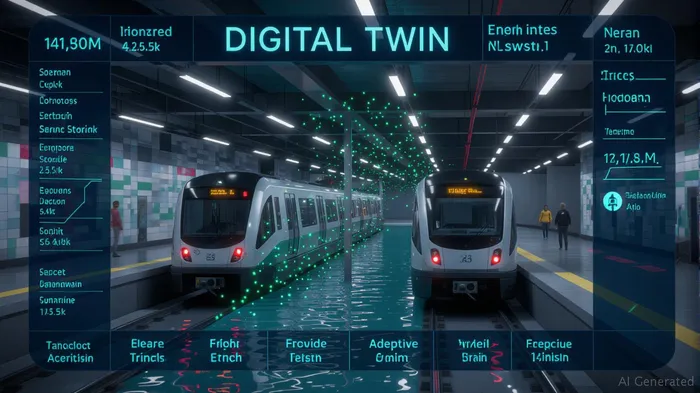
Enter the era of tech-enabled resilience. The MTR's response—deploying a ridership prediction model with 10% accuracy, digitizing its network into a “digital twin,” and upgrading flood defenses—offers a blueprint. This shift is creating opportunities in three key areas:
1. Digital Twins and Predictive Analytics
Firms like Siemens Mobility and U.S.-based Sidewalk Labs are pioneers in building real-time digital twins of transit systems. These tools simulate disruptions, optimize rerouting, and predict maintenance needs. The MTR's model, trained on 1+ billion transaction records, reduced service recovery time by 20% post-KTL. Investors should track companies with proven partnerships, such as .
2. Climate-Resilient Infrastructure Tech
Startups like FloodFactor (flood-risk mapping) and Aclima (air quality sensors) are gaining traction. Governments increasingly mandate such tech for PPP projects. For instance, Singapore's Land Transport Authority now requires flood sensors in all new rail projects. is projected to hit $200B, fueled by policy shifts.
3. Emergency Response and Equity-Focused Tech
The KTL incident highlighted disparities: elderly passengers faced greater risks during evening disruptions. Solutions like AI-driven evacuation systems (e.g., Israel's Trafi) or accessibility apps (e.g., TransLoc's real-time bus tracking) address both safety and equity. These sectors align with ESG mandates, attracting ESG funds and government grants.
The Role of Public-Private Partnerships
Governments alone cannot fund resilience upgrades. PPPs—where private firms invest in infrastructure in exchange for operational rights—are scaling. The U.S. Bipartisan Infrastructure Law (2021) allocated $65B to transit modernization, while the EU's Resilience and Recovery Facility prioritizes smart rail tech. Key investment vehicles include:
- Infrastructure Funds: Entities like Macquarie Infrastructure Partners are expanding into smart transit projects.
- Tech Startups: Firms with scalable solutions (e.g., predictive maintenance AI) can access venture capital and government R&D grants.
Investment Thesis: Allocate to Tech-Driven Resilience
The KTL disruption was a watershed moment. It proved that tech—not just concrete—can future-proof transit systems. Investors should prioritize:
- Firms with PPP track records: Companies like Bechtel or Acciona that combine engineering expertise with digital integration.
- Data platforms: Firms like HERE Technologies (mapping) or PalantirPLTR-- (data analytics) that enable real-time decision-making.
- Climate adaptation startups: Companies like Climate Adaptation Technology (CAT) that specialize in flood-resistant materials.
The MTR's stock, despite a recent “Sell” rating due to operational hiccups, offers a long-term bet on resilience (check ). Meanwhile, infrastructure ETFs like iShares Global InfrastructureIGF-- (IFRA) provide diversified exposure.
Conclusion: Building Tomorrow's Transit Today
The 7 train of old—clunky, reactive, and vulnerable—is obsolete. The new transit paradigm demands agility, data, and collaboration. Investors who back firms enabling real-time adaptive systems, predictive maintenance, and equitable emergency tech will profit as cities rebuild. As governments pour trillions into resilient infrastructure, the smart transit sector is no longer a niche play—it's the next frontier of growth.

Delivering real-time insights and analysis on emerging financial trends and market movements.
Latest Articles
Stay ahead of the market.
Get curated U.S. market news, insights and key dates delivered to your inbox.




Comments
No comments yet