
Smart Money Plays: Why Energy-Efficient Homes Are the Future of Sustainable Wealth
The global energy market is at a crossroads. As prices for fossil fuels remain volatile and climate policies tighten, homeowners and investors are seeking ways to insulate themselves from financial risks while advancing environmental goals. Energy-efficient homes, once seen as a niche sustainability play, are now emerging as a strategic asset class. Driven by federal tax incentives, proven cost savings, and resilience to energy price swings, these upgrades offer a rare win-win: long-term financial stability and reduced carbon footprints.
The Tax Incentive Bonanza: A Clock Is Ticking
The Inflation Reduction Act (IRA) of 2022 supercharged the economics of energy-efficient home upgrades, but the window to claim these benefits is closing fast. Through 2025, homeowners can secure up to $3,200 annually in federal tax credits for projects like solar panels, heat pumps, and insulation. For instance:
- Solar installations: A 1,500 sq ft home could save $1,116/year in electricity costs, with upfront costs slashed by 55% after credits.
- Heat pumps: Replacing a gas furnace with a high-efficiency model can cut heating bills by $755 annually, though payback periods vary by region.
The Section 45L credit, which subsidizes new energy-efficient homes, expires at the end of 2025, creating urgency for builders and investors to act before subsidies vanish. This expiration could trigger a “gold rush” of construction activity in late 2025, as developers rush to qualify.
Cost Savings: A Shield Against Volatility
Energy price volatility is a persistent threat to household budgets. In 2024, UK households saw their wellbeing drop as energy costs tied to solvency risks and affordability pressures (a metric called LENRES). Energy-efficient upgrades, however, act as a hedge.
Take the Maryland case study:
- A home with solar panels reduced its grid dependency by 70%, shielding it from electricity price spikes. Even with shading losses, the net savings of $1,116/year offset 15% of annual energy costs.
- Heat pump water heaters delivered a 4-year payback, while attic insulation upgrades (costing $9,187 post-rebates) saved $320/year—a small but steady buffer against price shocks.
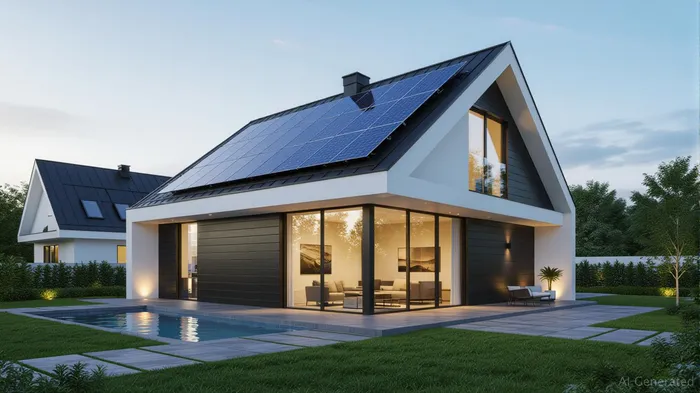
The math is clear: reducing energy demand lowers exposure to volatile markets. For investors, this means homes with efficiency upgrades retain value better during price spikes, making them a safer long-term bet.
The Environmental Case: A Legacy of Sustainability
Beyond finances, energy-efficient homes are a climate imperative. The 45L credit alone supported 350,000 energy-efficient homes in 2024, collectively slashing annual emissions by 805,000 tons of CO₂—equivalent to taking 170,000 cars off the road.
For real estate investors, this translates to long-term asset value. Buyers increasingly prioritize green features, with energy-efficient homes selling at a 6–9% premium in markets like California. As governments phase out fossil fuel subsidies, these homes will only gain appeal.
Where to Invest Now
The IRA's expiring credits create a clear playbook:
1. Act by 2025: Deploy capital into projects eligible for the 25C and 45L credits before deadlines.
2. Target high ROI upgrades: Solar panels and heat pump water heaters offer the fastest paybacks (under 5 years).
3. Look for geographic advantages: In regions like the U.S. South, where gas is cheaper than electricity, focus on insulation and air sealing to reduce HVAC needs.
For equity investors, companies enabling these upgrades are poised to thrive.
Final Takeaway: Build for the Future, Today
Energy-efficient homes are no longer a moral choice—they're a financial necessity. With tax incentives expiring, rising energy costs, and climate risks mounting, now is the time to act. Whether you're a homeowner upgrading insulation or an investor in green real estate funds, the ROI is clear: sustainability pays.
Don't wait for the clock to strike midnight on subsidies. The homes of tomorrow are being built today—and they're worth every penny.

Stay ahead of the market.
Get curated U.S. market news, insights and key dates delivered to your inbox.






Comments
No comments yet