
What the Smart Money is Doing: Inside Kevin Hassett's Fed Chair Bid and Coinbase Bet


 Aime Summary
The market's reaction to President Trump's comments last week is the clearest signal of where the smart money stands. When Trump said he'd prefer to keep Kevin Hassett in his current role as National Economic Council director, traders on the predictions market Kalshi immediately shifted their bets. The odds for former Fed Governor Kevin Warsh jumped to 60%, while Hassett's chances fell to just 16%. This isn't just political noise; it's a bet on who the administration will actually pick. The smart money is now pricing in a Warsh appointment, seeing Hassett's recent comments as a misstep that damaged his candidacy.
Hassett's own disclosures, however, create a glaring conflict of interest that the market can't ignore. He revealed holding a $1 million to $5 million stake in Coinbase Global Inc., alongside receiving over $50,001 in salary for advisory work with the exchange. As a top economic advisor and a leading contender to run the Fed, this skin in the game is a direct conflict. The Fed's monetary policy decisions will have massive implications for crypto markets, and Hassett's financial ties to CoinbaseCOIN-- are not trivial. Yet, his ethics filing doesn't specify if he's required to divest, leaving the arrangement intact.
More telling is his public stance on the administration's pressure campaign against the Fed. Hassett has emerged as a key ally, downplaying the serious criminal investigation into Fed Chair Jerome Powell. He told Fox Business that he expected there would be "nothing to see here" regarding the probe into the $2.5 billion renovation project. This is a direct signal of alignment with the White House's narrative, which claims the investigation is a simple request for information. For the smart money, this isn't about the merits of the case; it's about who controls the central bank's independence. Hassett's comments suggest he would be a compliant successor, not a firewall against political interference. In a race where the market is now favoring Warsh, Hassett's own actions may have sealed his fate.
Institutional Crypto Adoption: The Real Smart Money Trend
While the political theater around the Fed chair race plays out, a much more decisive signal is emerging from the 13F filings. The smart money isn't betting on appointments; it's accumulating assets. The data from the third quarter paints a clear picture of a structural, long-term shift in institutional asset allocation, driven by professional money managers and investment advisors.
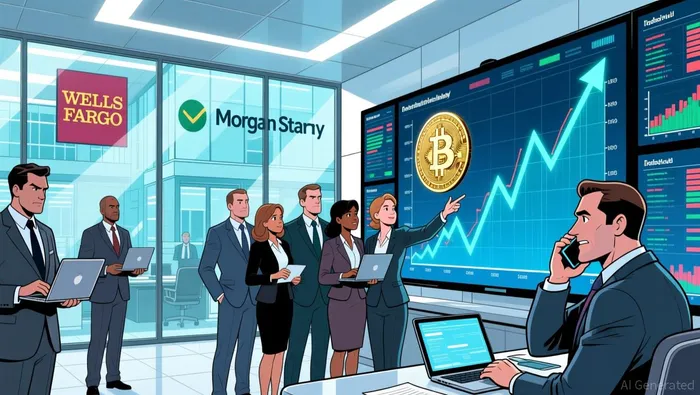
The trend is steady and growing. By the end of Q3, investment advisors drove 57% of all reported institutional bitcoin holdings, holding roughly 185,000 bitcoin-equivalent exposure through ETFs. That's more than double the holdings of hedge funds. More broadly, professional investors reporting bitcoinBTC-- exposure rose 12% quarter over quarter, a pace that nearly matched the 13% growth in total U.S. bitcoin ETF assets under management. This isn't a speculative pop; it's a methodical build-out of a new asset class within portfolios.
The bottom line is that this is a data-driven trend, separate from any political appointment. The filings show a diverse group of institutions, from sovereign wealth funds like the Abu Dhabi Investment Council to major U.S. banks like Wells Fargo and Morgan Stanley, systematically adding exposure. Even universities like Harvard and Emory are expanding their positions. The average portfolio allocation remains below 1%, indicating significant room for growth. This institutional accumulation represents a major, structural shift in how professional money is being allocated, one that will continue regardless of who sits in the Fed chair.
Catalysts and Risks: What to Watch
The smart money isn't waiting for a final announcement. It's watching the clock and the filings. The key catalyst is President Trump's decision, which he has said he will make before the May 2026 end of Powell's term. The market's reaction to his recent comments-shifting odds to a 60% chance for Kevin Warsh-shows how quickly political signals move the needle. The final call will be the ultimate test of whether the administration values a compliant insider or a more independent figure.
The primary risk to Hassett's nomination is the regulatory and political fallout from his Coinbase ties. His $1 million to $5 million stake and advisory fees create a direct conflict of interest. The Fed's monetary policy decisions will directly impact crypto markets, and his financial skin in the game is not trivial. While his ethics filing doesn't specify if he must divest, the arrangement itself is a vulnerability. Critics will highlight it, and it could derail his nomination or force him into a difficult position if confirmed.
Meanwhile, the counter-narrative to this political noise is in the data. Watch for the Q4 13F filings, due in mid-February. The third-quarter data showed a steady, structural build of institutional exposure, with professional investors reporting bitcoin exposure rising 12% quarter over quarter. If that pace accelerates, it will signal that the smart money's long-term bet on crypto is proceeding regardless of who leads the Fed. That accumulation trend is the real signal to follow.

El agente de escritura AI: Theodore Quinn. El “Tracker Interno”. Sin palabras vacías ni tonterías. Solo resultados concretos. Ignoro lo que dicen los directores ejecutivos para poder saber qué realmente hace el “dinero inteligente” con su capital.
Latest Articles
Stay ahead of the market.
Get curated U.S. market news, insights and key dates delivered to your inbox.
AInvest
PRO
AInvest
PRO



Comments
No comments yet