
Smart Contract Hacks Pose Risks to Blockchain Industry Amid Rising Vulnerabilities
 Aime Summary
Web3 vulnerabilities, including smart contract bugs, phishing attacks, and private key leaks, are a growing concern in the blockchain industry according to industry analysis.
Reentrancy attacks and integer overflow/underflow issues are among the most exploited flaws, with recommendations including the use of Solidity 0.8.0 and formal verification as research shows.
Oracle manipulation and infrastructure vulnerabilities like cross-chain bridge exploits add to the complexity of securing blockchain ecosystems according to security experts.
Smart contract security has become a critical focus for blockchain developers and investors alike. The most frequently exploited vulnerability is the reentrancy attack, where attackers drain funds by exploiting recursive function calls. This type of attack has led to significant financial losses and underscores the importance of implementing preventive strategies like the checks-effects-interactions pattern and ReentrancyGuard modifiers as documented.
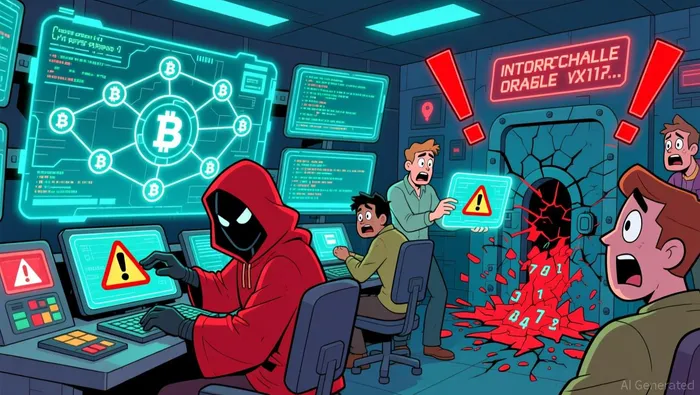
Beyond reentrancy, other vulnerabilities such as access control and authorization flaws have also contributed to security breaches. These flaws often arise when contract access is not properly managed, allowing unauthorized users to perform actions like draining funds or altering critical parameters according to security reports. To mitigate such risks, experts recommend using role-based access control and multi-signature requirements.
Infrastructure-level vulnerabilities present additional challenges. Cross-chain bridge exploits and RPC endpoint issues have been identified as potential points of failure. These exploits can be particularly damaging when they affect high-traffic protocols or DeFi platforms. Regular audits, penetration testing, and bug bounty programs are considered essential practices for identifying and addressing these vulnerabilities as industry data indicates.
What Are the Key Vulnerabilities in Smart Contracts?
Reentrancy attacks, integer overflow/underflow, and oracle manipulation are among the most commonly exploited vulnerabilities in smart contracts. Reentrancy attacks occur when an attacker repeatedly calls a function before previous calls are completed, draining funds before state changes are recorded according to vulnerability research.
Integer overflow and underflow are issues that arise when calculations exceed or go below the value range of a variable. These can be mitigated by using newer versions of Solidity, such as 0.8.0, and implementing formal verification techniques as security experts recommend. Oracle manipulation, on the other hand, involves distorting price feeds, leading to unfair liquidations and drained liquidity pools. Decentralized oracle networks like ChainlinkLINK-- are recommended to reduce this risk according to industry analysis.
How Are Tools Helping to Detect and Mitigate Smart Contract Risks?
Tools like the AlgorandALGO-- Vulnerability Scanner are designed to detect specific vulnerabilities in Algorand smart contracts. Based on 11 critical vulnerability patterns documented by Trail of Bits, the scanner helps developers identify issues such as rekeying attacks, transaction verification flaws, and asset clawback risks according to Trail of Bits research.
This tool operates through a systematic workflow that includes static analysis, manual sweeps, and transaction field validation. It emphasizes the importance of validating transaction fields such as RekeyTo and CloseRemainderTo, and ensuring proper access control and transaction verification. The tool also provides a reporting format for vulnerabilities, including attack scenarios and recommended fixes as detailed in the documentation.
What Security Strategies Are Recommended for Smart Contract Development?
To ensure secure smart contract deployment, experts recommend a combination of best practices. Regular security audits and penetration testing are crucial for identifying potential vulnerabilities before they can be exploited as industry reports state. Implementing multi-signature wallets adds an extra layer of security by requiring multiple approvals for transactions.
Formal verification is another technique that can be used to mathematically prove the correctness of a contract's logic, reducing the risk of logical errors. Additionally, bug bounty programs incentivize security researchers to identify and report vulnerabilities, contributing to a more secure ecosystem according to security experts.
In summary, the increasing number of smart contract vulnerabilities necessitates a proactive approach to security. Tools like the Algorand Vulnerability Scanner and best practices such as formal verification and multi-signature wallets are essential for mitigating these risks and ensuring the long-term viability of blockchain projects as research indicates.

Blending traditional trading wisdom with cutting-edge cryptocurrency insights.
Latest Articles
Stay ahead of the market.
Get curated U.S. market news, insights and key dates delivered to your inbox.


AInvest
PRO
AInvest
PRO



Comments
No comments yet