
Smart Contract Hacks Highlight Security Risks for Investors
 Aime Summary
- Smart contract vulnerabilities pose significant risks to investors due to unaddressed flaws in complex blockchain systems according to security analysis.
- Crypto hackers are using large language models (LLMs) to scan old EVM smart contracts for unguarded bugs, highlighting the risks posed by outdated contracts with active token approvals as reported.
- VEREM, a Real-World Asset (RWA) project, achieved zero-vulnerability status after a comprehensive smart contract audit by Hacken, enhancing institutional adoption in the RWA space according to project documentation.
Smart contract security remains a critical concern for the blockchain industry, particularly as the complexity of systems increases and tokenized assets expand. Investors face significant risks from unaddressed vulnerabilities, including potential financial losses and trust erosion as highlighted. Innovations like SmartGraphical use AI and graphical modeling to detect logical vulnerabilities more effectively than traditional methods, offering a more robust approach to smart contract security according to security reports.
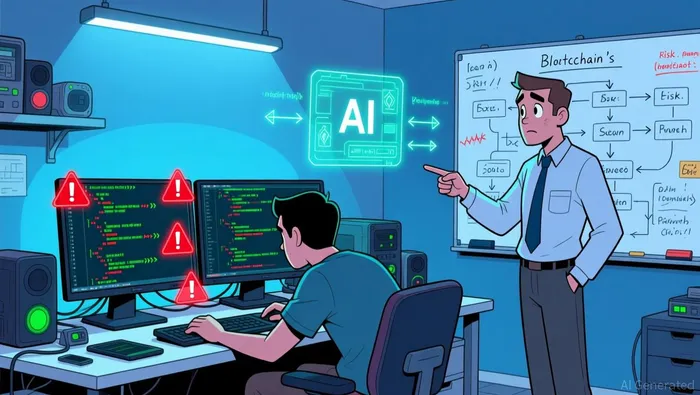
The rise of AI, particularly large language models, has introduced a new dimension to smart contract exploitation. Hackers are using these advanced tools to identify and exploit weaknesses in older EVM contracts that may still hold active token approvals from users. For example, the six-year-old Ethereum contract Noda was found to allow attackers to trigger unauthorized trades by reusing valid signatures, demonstrating the long-term risks of outdated contracts as demonstrated.
In a significant move for Real-World Asset (RWA) security, VEREM has set a benchmark by achieving a zero-vulnerability status after a comprehensive audit by Hacken. The project tokenizes GIA-certified emeralds and ensures authenticity and scarcity through a fixed supply model. The audit confirmed the project's robust security and decentralized governance, including renounced contract ownership to prevent manipulation according to audit findings.
What are the implications of smart contract vulnerabilities for investors?
Smart contract vulnerabilities can lead to irreversible financial losses, as these contracts are immutableIMX-- and cannot be patched after deployment. This makes rigorous testing and third-party audits essential as security experts emphasize. Investors must be aware that even minor flaws can be exploited, leading to fund theft or unauthorized transactions. The use of AI tools to detect these vulnerabilities underscores the growing sophistication of both threat actors and security measures.
How are hackers exploiting AI to identify smart contract bugs?
Hackers are leveraging AI, particularly large language models, to identify and exploit vulnerabilities in smart contracts. These models can efficiently scan vast amounts of code and simulate attacks to uncover weaknesses. For example, AI models have successfully identified known vulnerabilities in EVM contracts and generated exploit code based on historical attack patterns as reported. This highlights the need for blockchain developers to stay ahead of these threats by adopting AI-driven security solutions and continuous testing.
What role does auditing play in securing Real-World Assets (RWAs)?
Auditing plays a critical role in ensuring the security and trustworthiness of Real-World Assets (RWAs). Projects like VEREM have demonstrated the importance of comprehensive smart contract audits in building institutional confidence. The audit by Hacken confirmed the project's zero-vulnerability status, reinforcing its commitment to cybersecurity and decentralized governance according to audit reports. By achieving this benchmark, VEREM has set a standard for the RWA space, showing that rigorous testing and transparency can significantly enhance investor trust and adoption.
Overall, the intersection of AI, blockchain, and smart contract security is shaping the future of digital asset management. Investors and developers alike must remain vigilant in adopting best practices to mitigate risks and ensure the long-term viability of blockchain-based systems.

Combinando la sabiduría tradicional en el comercio con las perspectivas más avanzadas sobre criptomonedas.
Latest Articles
Stay ahead of the market.
Get curated U.S. market news, insights and key dates delivered to your inbox.


AInvest
PRO
AInvest
PRO



Comments
No comments yet