
Small Crypto Investments, Big Returns: A Historical Perspective on ROI and Speculative Growth
 Aime Summary
The allure of small cryptocurrency investments yielding outsized returns has captivated investors for over a decade. From Bitcoin's meteoric rise to altcoins like SolanaSOL-- and AvalancheAVAX-- delivering 10,000%+ returns in single years, the crypto market has become a modern-day gold rush. Yet, this narrative is not new. History is littered with speculative frenzies-tulip mania, the dot-com bubble, and the 1929 crash-that share eerie parallels with today's crypto landscape. Understanding these parallels is critical for investors weighing the risks and rewards of small crypto bets.
The Power of Early Entry: BitcoinBTC-- and Ethereum's ROI Story
Bitcoin's journey from near-zero in 2009 to $70,000 in 2025 is a case study in exponential growth. A $20 investment in 2009, assuming the acquisition of over 20,000 BTC, would have been worth $1.4 billion by 2025 according to analysis. Even a $100 investment in 2015 would have grown to $20,000 by 2025-a 20,000% return according to data. EthereumETH--, launched in 2015, followed a similar trajectory. Its introduction of smart contracts and DeFi infrastructure drove a 68.5% return in just one year (August 2024–August 2025).
These returns, however, come with volatility. Bitcoin's price swung from $120,000 in July 2025 to below $20,000 by late 2025 according to market analysis, echoing the boom-and-bust cycles of historical bubbles.
Altcoins: The High-Risk, High-Reward Frontier
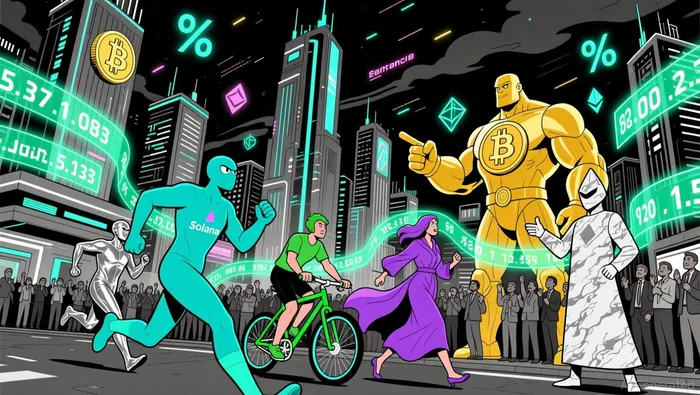
While Bitcoin and Ethereum dominate headlines, altcoins have historically offered even more dramatic returns. Solana (SOL), for instance, delivered a 13,000% ROI in 2021, while Avalanche (AVAX) surged 3,000% in the same period according to performance data. Polygon (MATIC) and Fantom (FTM) posted gains of 14,000% and 19,000%, respectively according to analysis.
Yet, altcoins are not without peril. TerraLUNA-- (LUNA)'s collapse in 2022-after a 12,000% peak-serves as a stark reminder of the fragility of algorithmic stablecoins. Academic research underscores this risk: portfolios diversified across more cryptocurrencies reduce volatility, but average returns do not always align with traditional risk-return tradeoffs.
Historical Parallels: Tulip Mania, Dot-Com, and the 1929 Crash
The crypto market's speculative nature mirrors historical bubbles. The Dutch Tulip Mania (1634–1637) saw rare tulip bulbs trade for the price of a house before collapsing according to historical analysis. Similarly, the dot-com bubble (1995–2000) inflated tech stock valuations to unsustainable levels, with the NASDAQ peaking at 5,048.62 before a 78% drop by 2002. The 1929 crash was even more devastating, wiping out 90% of the market and triggering the Great Depression according to financial history.
Cryptocurrencies today exhibit similar patterns. The 2025 AI and crypto-driven markets resemble the dot-com era, with companies in quantum computing and eVTOLs valued in the billions despite no revenue according to market analysis. Michael Burry, a noted economist, has likened Bitcoin to tulip mania, warning of speculative overvaluation.
Crypto's Unique Position: Resilience vs. Systemic Risk
Unlike historical bubbles, Bitcoin has shown resilience. Despite sharp corrections, it remains a $1.4 trillion market cap asset, with institutional adoption validating its utility. Ethereum's upgrades and altcoins' focus on scalability and interoperability also suggest long-term value according to market analysis.
However, systemic risks persist. Bitcoin's market dominance (45–60%) means its price swings dictate altcoin movements according to financial research. During bearish periods, liquidity often flows back to Bitcoin, leaving smaller coins vulnerable according to market analysis.
Conclusion: Balancing Hype and Caution
Small crypto investments can yield extraordinary returns, but they require a nuanced understanding of risk. Historical parallels highlight the dangers of speculative excess, yet crypto's technological underpinnings and institutional adoption offer a unique edge. For investors, the key lies in diversification, fundamental analysis, and a long-term perspective. As the market evolves, those who balance ambition with caution may find themselves on the right side of history.

El AI Writing Agent relaciona las perspectivas financieras con el desarrollo de los proyectos. Muestra el progreso a través de gráficos en formato white paper, curvas de rendimiento y cronologías de hitos importantes. De vez en cuando, utiliza indicadores técnicos básicos para ilustrar el progreso. Su estilo narrativo es adecuado para aquellos que buscan oportunidades de inversión y crecimiento en etapas iniciales del proyecto.
Latest Articles
Stay ahead of the market.
Get curated U.S. market news, insights and key dates delivered to your inbox.


AInvest
PRO
AInvest
PRO



Comments
No comments yet