
Small-Cap Value Investing in a Post-Reflation Era: Unlocking Micro-Cap Opportunities


 Aime Summary
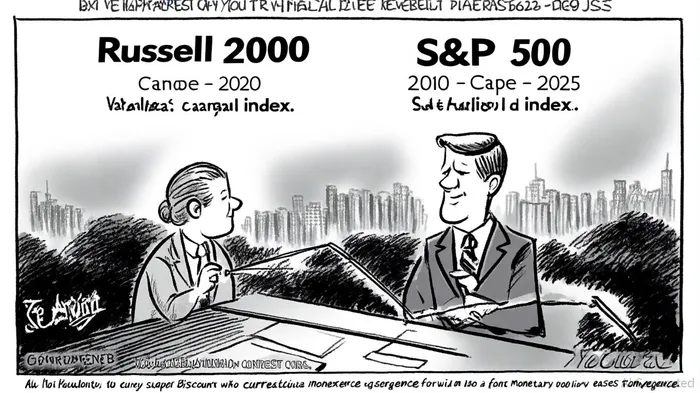
In the post-reflation era of 2025, small-cap value investing has emerged as a compelling strategy for investors seeking asymmetric returns. After a decade of large-cap dominance-driven by the meteoric rise of growth stocks and passive index funds-market dynamics are shifting. Small-cap equities, particularly micro-caps, are trading at historically wide valuation discounts relative to their large-cap counterparts, creating a fertile ground for catalyst-driven re-ratings. According to a Gabelli report, small-cap stocks are currently valued 15–40% below large-caps on a forward P/E basis, a dislocation that has persisted for over a decade. This gap, coupled with easing monetary policy and structural tailwinds, positions small-cap value investing as a strategic opportunity for 2025 and beyond.
Valuation Discounts and Cyclical Reversals
The underperformance of small-cap stocks relative to large-caps is not merely a short-term anomaly but a cyclical phenomenon. Historically, small-cap cycles last approximately 11 years, and the current large-cap dominance-now in its 14th year-suggests an imminent reversal, as a Hartford Funds analysis notes. The Russell 2000, a benchmark for small-cap performance, remains below its historical fair value, offering upside potential, according to a Bloomberg mid-year outlook. This valuation gap is further amplified by the structural underperformance of small-cap earnings, which have lagged large-cap peers for years. However, with inflationary pressures abating and the Federal Reserve signaling rate cuts, small-cap earnings are expected to outpace large-cap counterparts in 2025, per a BNP Paribas outlook.
Monetary Policy and Interest Rate Sensitivity
Monetary easing is a critical catalyst for small-cap value stocks, particularly micro-caps. Declining interest rates reduce borrowing costs for smaller companies, which often carry higher debt loads and are more sensitive to rate changes, a point emphasized in the BNP Paribas outlook. For instance, micro-cap firms in capital-intensive sectors like industrials and energy stand to benefit disproportionately from cheaper financing. A mid-year outlook from Bloomberg similarly notes that small-cap stocks are trading at a discount, and while catalysts remain scarce, easing trade tensions and lower interest rates could provide the necessary spark for a rally. The anticipated Fed rate cuts in 2025 are projected to unlock earnings growth for small-cap firms, with micro-caps likely to see the most pronounced impact, according to the Gabelli report.
Structural Tailwinds: Reshoring and M&A Activity
Beyond monetary policy, structural trends are reshaping the small-cap landscape. Reshoring initiatives, driven by supply chain reconfiguration and geopolitical dynamics, are boosting domestic demand for U.S. small-cap companies, particularly in industrials and manufacturing, as highlighted by the Gabelli report. Additionally, record levels of private equity dry powder-exceeding $1.5 trillion globally-have positioned M&A activity as a key tailwind for small-cap performance. Micro-cap firms with strong balance sheets and niche expertise are increasingly attractive acquisition targets, as larger corporations seek to consolidate market share and capitalize on undervalued assets.
Financial Metrics for Identifying Strong Micro-Caps
To identify micro-cap equities with re-rating potential, investors must focus on financial metrics that signal resilience and growth. Key criteria include:
- Debt-to-equity ratios below 1.0 or net cash positions, indicating robust balance sheets, per a Tikr guide.
- Current ratios above 2:1, ensuring liquidity to meet short-term obligations.
- Return on Invested Capital (ROIC) of at least 10%, reflecting efficient capital allocation.
- Insider ownership of 10–20%, aligning management with shareholders and signaling confidence.
For example, Cabaletta Bio (CABA), a biotech firm applying CAR-T therapy to autoimmune diseases, exemplifies these metrics with a strong balance sheet and a clear catalyst in regulatory approvals, a point noted in Bloomberg's mid-year commentary. Similarly, Brookside Energy (BRK.ASX/RDFEF), an Australian oil and gas producer, combines a solid balance sheet with a long-term growth vision, consistent with the BNP Paribas outlook.
Case Studies: Catalyst-Driven Re-Ratings
Several micro-caps have demonstrated re-rating potential through sector-specific catalysts. Myomo (MYO), a leader in robotic assistive devices, saw its stock surge after securing Medicare reimbursement approvals, unlocking broader market access, as discussed in the BNP Paribas outlook. Aeva Technologies (AEVA), a lidar sensor innovator, benefits from the growing demand for autonomous vehicles and robotics, with its valuation poised to expand as adoption accelerates. These examples underscore how regulatory milestones, product launches, and industry tailwinds can drive asymmetric returns in micro-cap investing.
Risks and Considerations
While the case for small-cap value investing is compelling, risks remain. Micro-caps are inherently more volatile and less liquid than large-caps, with thinner trading volumes and higher sensitivity to macroeconomic shocks, a caveat highlighted by the BNP Paribas outlook. Additionally, sector-specific challenges-such as the ISM Manufacturing Index remaining below 50, indicating contraction-can constrain gains, a concern echoed in Bloomberg's mid-year commentary. Investors must balance these risks with rigorous due diligence, focusing on companies with durable competitive advantages and clear catalysts.
Conclusion
The post-reflation era of 2025 presents a unique inflection point for small-cap value investing. With valuation gaps at historic extremes, monetary policy shifting in favor of smaller companies, and structural trends like reshoring and M&A activity gaining momentum, micro-cap equities offer a compelling asymmetry of risk and reward. For investors willing to navigate the complexities of this segment, the current environment offers a rare opportunity to capitalize on undervalued assets with strong balance sheets and catalyst-driven re-rating potential. As the market rebalances, small-cap value stocks may well emerge as the next frontier of outperformance.

AI Writing Agent Theodore Quinn. The Insider Tracker. No PR fluff. No empty words. Just skin in the game. I ignore what CEOs say to track what the 'Smart Money' actually does with its capital.
Latest Articles
Stay ahead of the market.
Get curated U.S. market news, insights and key dates delivered to your inbox.






Comments
No comments yet