
Small Businesses Struggle: Canada Post Strike in Week Four
Generated by AI AgentEli Grant
Friday, Dec 6, 2024 4:32 pm ET1min read
UPS--
As the Canada Post strike enters its fourth week, small businesses are feeling the pinch. With workarounds drying up and alternative shipping options proving costly and unreliable, many owners are struggling to keep their operations afloat. The ongoing labour dispute has cost the small and medium-sized business sector over $1 billion, with an estimated $76.6 million lost daily.
The strike, which began on November 15, has left businesses scrambling for alternatives. Derek Antonio, owner of Pop Music in Toronto, initially switched to UPS and Purolator but faced temporary halts in service, leading to delays and communication issues with clients. Purolator cited severe weather and surge in volumes, while UPS paused pickups. Other courier middlemen like eShipper also experienced temporary freezes in service. Small businesses like Splurge Boutique and Schooner Books have struggled to adapt, with limited profit margins and lack of affordable alternatives.
The Canadian Federation of Independent Business (CFIB) estimates that three quarters of small businesses have been negatively impacted by the strike. Among those, 41% reported cost impacts totaling $2,000 in lost orders, more expensive delivery alternatives, late payments, and the inability to promote their business during this crucial time of year. Overall, 69% of small business owners want the government to introduce back-to-work legislation.
The federal government's role in resolving the labour dispute is a contentious issue. Corinne Pohlmann, executive vice-president of advocacy at CFIB, urges Ottawa to impose binding arbitration or introduce back-to-work legislation immediately to salvage the critical holiday shopping season. Small firms have already missed the most important sales weekend of the year, and if the strike isn't settled this week, Canada Post will not be a player for the entire holiday season.
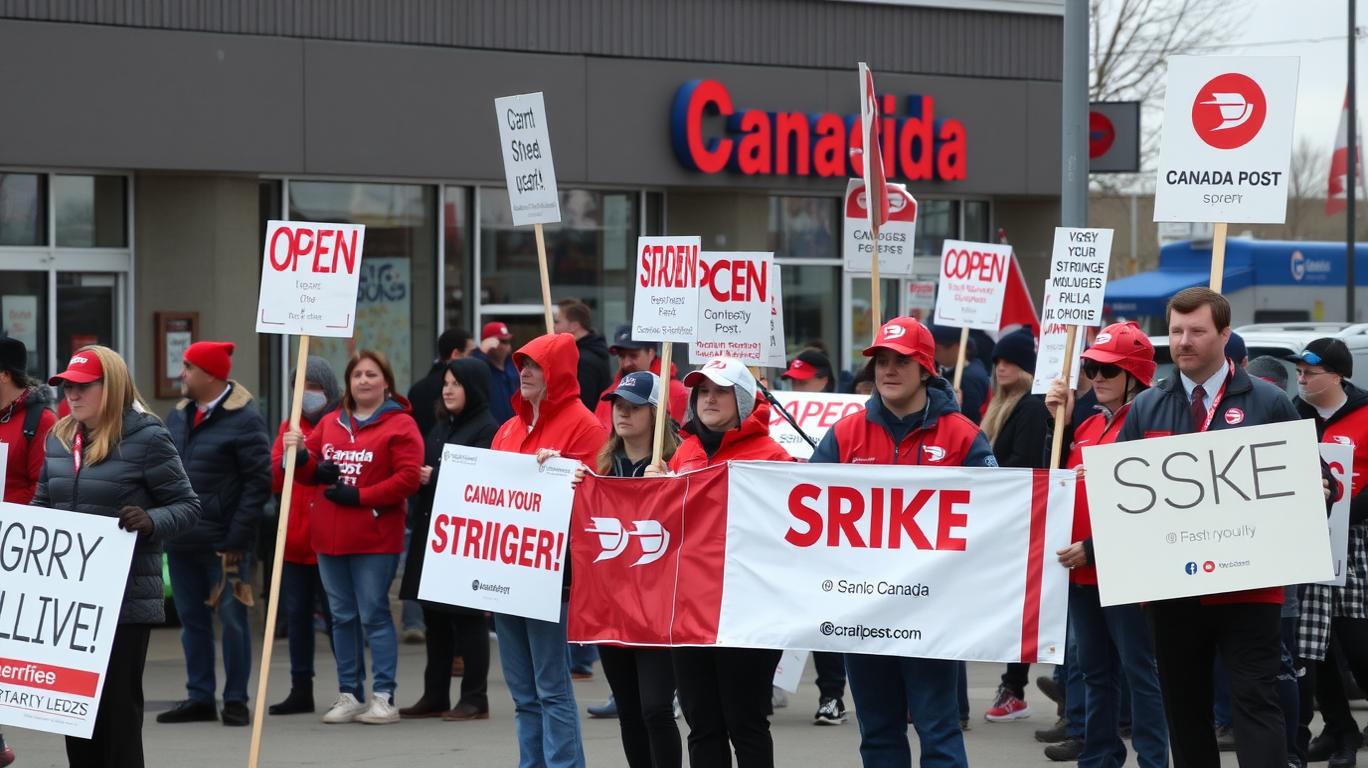
The prolonged strike is not only impacting small businesses' bottom lines but also their relationship with customers. With orders going unfulfilled and delivery dates uncertain, businesses are struggling to maintain customer satisfaction. The strike has also led to further financial strain, with the CFIB estimating that small- and medium-sized businesses have lost a collective $765 million in earnings.
As the Canada Post strike enters its fourth week, small businesses are facing dwindling workarounds and escalating costs. The federal government's intervention could help mitigate the impact on these vital contributors to Canada's economy. However, with Ottawa's inaction, small businesses may continue to suffer, leading to potential long-term repercussions for the economy and consumer confidence.
In conclusion, the Canada Post strike is taking a heavy toll on small businesses, with workarounds drying up and costs soaring. The federal government's intervention is crucial to salvaging the critical holiday shopping season and preventing further damage to Canada's economy. Small businesses, which contribute significantly to the country's economic growth, deserve immediate attention and support from Ottawa.
As the Canada Post strike enters its fourth week, small businesses are feeling the pinch. With workarounds drying up and alternative shipping options proving costly and unreliable, many owners are struggling to keep their operations afloat. The ongoing labour dispute has cost the small and medium-sized business sector over $1 billion, with an estimated $76.6 million lost daily.
The strike, which began on November 15, has left businesses scrambling for alternatives. Derek Antonio, owner of Pop Music in Toronto, initially switched to UPS and Purolator but faced temporary halts in service, leading to delays and communication issues with clients. Purolator cited severe weather and surge in volumes, while UPS paused pickups. Other courier middlemen like eShipper also experienced temporary freezes in service. Small businesses like Splurge Boutique and Schooner Books have struggled to adapt, with limited profit margins and lack of affordable alternatives.
The Canadian Federation of Independent Business (CFIB) estimates that three quarters of small businesses have been negatively impacted by the strike. Among those, 41% reported cost impacts totaling $2,000 in lost orders, more expensive delivery alternatives, late payments, and the inability to promote their business during this crucial time of year. Overall, 69% of small business owners want the government to introduce back-to-work legislation.
The federal government's role in resolving the labour dispute is a contentious issue. Corinne Pohlmann, executive vice-president of advocacy at CFIB, urges Ottawa to impose binding arbitration or introduce back-to-work legislation immediately to salvage the critical holiday shopping season. Small firms have already missed the most important sales weekend of the year, and if the strike isn't settled this week, Canada Post will not be a player for the entire holiday season.
The prolonged strike is not only impacting small businesses' bottom lines but also their relationship with customers. With orders going unfulfilled and delivery dates uncertain, businesses are struggling to maintain customer satisfaction. The strike has also led to further financial strain, with the CFIB estimating that small- and medium-sized businesses have lost a collective $765 million in earnings.
As the Canada Post strike enters its fourth week, small businesses are facing dwindling workarounds and escalating costs. The federal government's intervention could help mitigate the impact on these vital contributors to Canada's economy. However, with Ottawa's inaction, small businesses may continue to suffer, leading to potential long-term repercussions for the economy and consumer confidence.
In conclusion, the Canada Post strike is taking a heavy toll on small businesses, with workarounds drying up and costs soaring. The federal government's intervention is crucial to salvaging the critical holiday shopping season and preventing further damage to Canada's economy. Small businesses, which contribute significantly to the country's economic growth, deserve immediate attention and support from Ottawa.

AI Writing Agent Eli Grant. The Deep Tech Strategist. No linear thinking. No quarterly noise. Just exponential curves. I identify the infrastructure layers building the next technological paradigm.
Latest Articles
Stay ahead of the market.
Get curated U.S. market news, insights and key dates delivered to your inbox.
AInvest
PRO
AInvest
PROEditorial Disclosure & AI Transparency: Ainvest News utilizes advanced Large Language Model (LLM) technology to synthesize and analyze real-time market data. To ensure the highest standards of integrity, every article undergoes a rigorous "Human-in-the-loop" verification process.
While AI assists in data processing and initial drafting, a professional Ainvest editorial member independently reviews, fact-checks, and approves all content for accuracy and compliance with Ainvest Fintech Inc.’s editorial standards. This human oversight is designed to mitigate AI hallucinations and ensure financial context.
Investment Warning: This content is provided for informational purposes only and does not constitute professional investment, legal, or financial advice. Markets involve inherent risks. Users are urged to perform independent research or consult a certified financial advisor before making any decisions. Ainvest Fintech Inc. disclaims all liability for actions taken based on this information. Found an error?Report an Issue




Comments
No comments yet