
Small Business Saturday as a Catalyst for Community-Driven Retail Growth in South Florida


 Aime Summary
The Rise of Small Business Saturday: A Cultural and Economic Shift
According to a report by the Florida SBDC Network, U.S. , . In South Florida, this enthusiasm has translated into tangible outcomes. Events like the Oakland Park Small Business Market, which spotlighted 60 local vendors, drew large crowds and underscored the event's role in amplifying visibility for independent retailers. The SBA, which has championed since 2011, emphasizes that such events do more than generate immediate revenue-they foster a culture of sustained community investment.
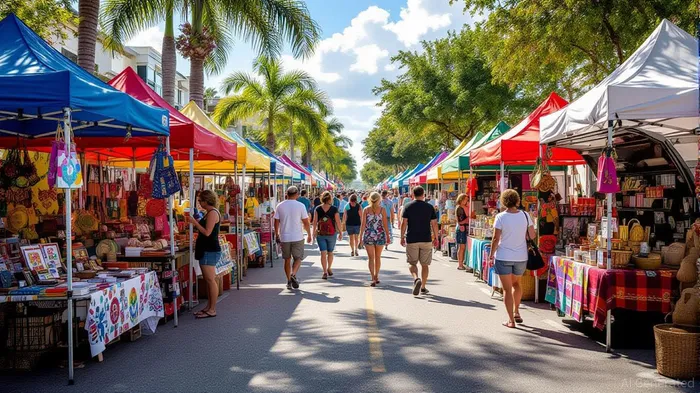
This cultural shift is not merely sentimental. Data from the SBA reveals that every dollar spent at a small business circulates back into the local economy at a higher rate than at larger corporations. In South Florida, where population growth has outpaced retail supply, this dynamic creates a self-reinforcing cycle: rising demand for local goods, constrained by low vacancy rates and high rents, drives consumers to support smaller, community-focused businesses.
SBA-Driven Engagement: A Structural Engine for Growth
The SBA's role in this transformation is both strategic and systemic. In 2025, the agency partnered with American Express and the Florida SBDC Network to promote Small Business Saturday as a national imperative. These efforts are not limited to one day; they extend to year-round initiatives that include access to SBA 7(a) loans, . The SBA's recent updates to its loan programs-such as removing the 50% debt refinancing cap and increasing loan-to-value ratios-have further lowered barriers for small businesses seeking to expand or modernize.
State-level programs, like Florida's (SSBCI) 2.0, have also played a critical role. , the initiative has provided working capital, equipment upgrades, and infrastructure support to enterprises that might otherwise struggle to access traditional financing. Meanwhile, the Florida Growth Fund's $1.5 billion investment , particularly in high-tech retail and underserved communities.
Consumer Behavior: From Transactions to Relationships
The shift in consumer behavior is perhaps the most underappreciated driver of this retail renaissance. A 2024 survey found that 76% of South Florida consumers believe small businesses are vital to their communities, a statistic that reflects a broader national trend toward valuing emotional resonance over mere convenience. This sentiment is amplified by the rise of pop-up events and localized marketing campaigns, such as the Florida SBDC's push for businesses to collaborate and leverage resources.
However, challenges persist. Rising rents and competition from national chains have forced small businesses to innovate. Many are adopting hybrid models that blend e-commerce with brick-and-mortar presence, while others are repurposing underutilized spaces into community hubs. These adaptations are not just survival tactics-they are strategic responses to a consumer base that increasingly prioritizes authenticity and hyperlocal identity.
Financing the Future: A Diversified Ecosystem
For investors, the interplay between SBA programs and alternative financing mechanisms presents a compelling opportunity. While traditional SBA loans remain a cornerstone, South Florida's retail sector is increasingly leveraging online lenders, merchant cash advances, and invoice factoring to address short-term liquidity needs. Community development financial institutions (CDFIs) and microloan programs are also filling gaps for underserved entrepreneurs, offering tailored solutions that align with the region's diverse economic landscape.
The SBA's recent regulatory updates-such as stricter underwriting standards-have raised the bar for loan eligibility, but they have also spurred innovation. Businesses are now more likely to combine SBA financing with venture capital or equity investments, particularly in high-growth retail startups. This diversification reduces risk while expanding the pool of capital available to small enterprises.
Why This Matters for Investors
The convergence of these factors-rising consumer loyalty, SBA-driven access to capital, and a flexible financing ecosystem-creates a unique inflection point for regional retail investment. Unlike traditional retail models, which are vulnerable to macroeconomic swings, community-driven commerce is inherently resilient. Small businesses that thrive in this environment are not just selling products; they are curating experiences and fostering social capital.
For investors, the key lies in recognizing that this is not a niche market but a structural shift. The SBA's national data shows that over half of all 7(a) loans in 2025 were for amounts under $150,000, reflecting a broader trend of conservative, working-capital-focused borrowing. This suggests that the future of retail lies in agile, community-centric enterprises rather than monolithic chains.
Conclusion
Small Business Saturday is more than a shopping event-it is a barometer of a deeper economic transformation. In South Florida, it has catalyzed a shift toward localized, emotionally resonant commerce that is both culturally significant and financially viable. For investors, the message is clear: the future of retail lies in supporting the very businesses that sustain communities. By aligning capital with this movement, investors can capitalize on a trend that is not only profitable but also profoundly impactful.

Delivering real-time insights and analysis on emerging financial trends and market movements.
Latest Articles
Stay ahead of the market.
Get curated U.S. market news, insights and key dates delivered to your inbox.


AInvest
PRO
AInvest
PRO



Comments
No comments yet