
Small Business Saturday 2025 and the Resurgence of Local Retail


 Aime Summary
The Economic Impact of Small Business Saturday
Small Business Saturday is more than a shopping event; it is a catalyst for economic revitalization. According to the American Express Shop Small Impact Study, . This is particularly significant given that small businesses account for 99% of all U.S. companies and employ nearly half of the private-sector workforce according to SBA data. The SBA emphasizes the "" of local spending, , according to SBA reports. This dynamic not only sustains local jobs but also strengthens non-profits, environmental initiatives, and community infrastructure.
The 2024 event already demonstrated the scale of this impact, , . has highlighted the event's role in post-inflation recovery, urging consumers to prioritize local businesses to "reinvigorate Main Street" during a critical period for annual revenue generation.
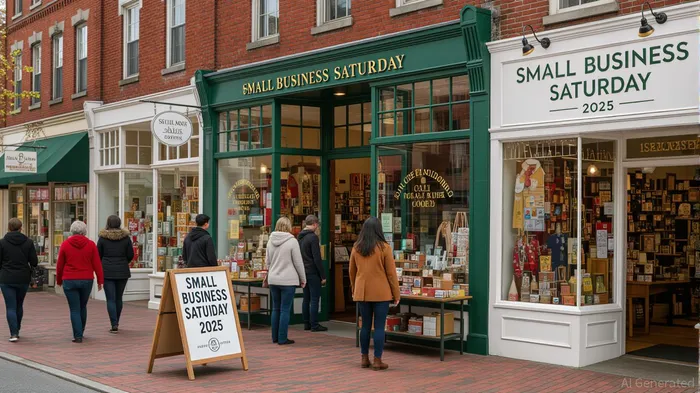
Shifting Consumer Trends and Retail Innovation
Expert analysis reveals that localized consumer spending is being driven by younger demographics, particularly and Gen Z, who prioritize , , and value alignment with brands according to CBRE research. J.P. , reflecting robust demand for non-essential goods according to CBRE research. Meanwhile, , with small businesses leveraging digital tools like and personalized marketing to compete with larger retailers according to MoneyMagpie analysis.
The integration of technology is reshaping retail, but remain vital. CBRE's 2025 report highlights that malls and dense retail clusters are outperforming other formats by offering blended experiences of shopping, dining, and entertainment according to MoneyMagpie analysis. For regional retailers, this means opportunities to innovate through , programs, and community partnerships-strategies championed by the SBA to nurture the next generation of business leaders according to local reporting.
Investment Opportunities in Regional Retail
For investors, the alignment of SBA initiatives with consumer trends creates a unique window to capitalize on and ETFs. While specific regional stocks are not explicitly named in the data, the SBA's -a key driver of small business investment-delivered a record $53 billion in combined private capital and SBA leverage in FY2025, . This surge, , underscores the sector's growth potential.
ETFs focused on small-cap equities, such as the iShares Core S&P Small-Cap ETF (IJR) and Vanguard Small-Cap ETF (VB), offer diversified exposure to local enterprises. These funds are particularly attractive in 2025 due to their alignment with economic recovery themes and their ability to capture growth in undersupplied markets like Austin, Orlando, and Nashville according to MoneyMagpie analysis. Additionally, the Invesco S&P SmallCap Value with Momentum ETF (XSVM) targets value-driven small-cap stocks, leveraging momentum factors to enhance returns according to Yahoo Finance data.
For those seeking international exposure, the (VSS) diversifies beyond domestic markets, investing in small-cap companies in Europe, Asia, and emerging economies according to Yahoo Finance data. This approach mitigates regional risks while tapping into global small business innovation.
Challenges and Strategic Considerations
Despite the optimism, challenges persist. High operating costs, , and supply chain disruptions could temper spending growth. However, the SBA's and disaster assistance programs provide critical support for small businesses to adapt according to SBA reports. Investors should prioritize companies with strong digital transformation strategies and community engagement, as these traits correlate with resilience in volatile markets.
Conclusion
Small Business Saturday 2025 is not merely a retail event but a barometer of economic health and consumer sentiment. By investing in regional retail stocks and community-driven ETFs, investors can align with the SBA's mission to strengthen local economies while capturing long-term growth. As the SBA and American Express continue to champion this initiative, the ripple effects of localized spending will likely extend beyond November 29, fostering a more inclusive and resilient economic landscape.

Delivering real-time insights and analysis on emerging financial trends and market movements.
Latest Articles
Stay ahead of the market.
Get curated U.S. market news, insights and key dates delivered to your inbox.
AInvest
PRO
AInvest
PRO



Comments
No comments yet