
Small Business Saturday 2025 and Regional Retail Resilience: Opportunities for Local Investment and Economic Revitalization


 Aime Summary
Long Island: Navigating Pressures with Strategic Adaptation
Long Island's faces unique challenges for small businesses, including rising labor and food costs, competition from online retailers, and a shift in consumer spending toward essentials and discount outlets. Despite these pressures, the region's small businesses remain critical to its economic fabric, with within the community.
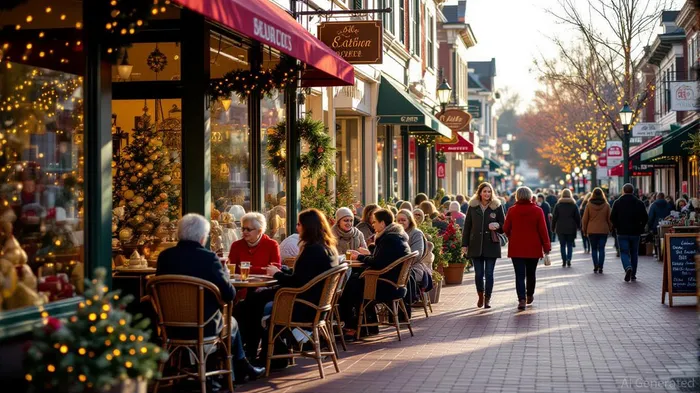
, with during Black Friday to Cyber Monday. However, generational divides emerged: while baby boomers and Gen Z increased spending, millennials and Gen X scaled back budgets. Retailers adapted by leveraging AI-driven tools for gift ideation and budgeting, with . , reflecting a broader national trend of e-commerce expansion. According to NRF data, .
Investors must weigh these dynamics carefully. While Long Island's small businesses face structural vulnerabilities--their ability to innovate and pivot toward digital channels offers a pathway to resilience. Strategic investments in technology integration, workforce training, and community engagement could amplify their competitive edge.
Grand Forks: A Model of Community-Driven Success
In contrast, Grand Forks emerged as a beacon of Small Business Saturday success, with compared to Black Friday. Chamber President emphasized the role of community commitment in driving this performance, noting that shoppers prioritized unique, locally crafted offerings. Nationally, , with .
The economic multiplier effect in Grand Forks is striking: in the community, . This dynamic was evident in businesses like Klatch Coffee and Xero, which leveraged local partnerships to boost foot traffic and customer loyalty. According to Central ND News, .
For investors, Grand Forks illustrates the power of place-based strategies. Supporting infrastructure that enhances the customer experience-such as co-marketing initiatives, pop-up events, and cross-promotions-can amplify the impact of Small Business Saturday beyond a single day.
Comparative Insights and Investment Opportunities
While Long Island and Grand Forks differ in economic scale and structure, both regions highlight the importance of aligning business strategies with consumer values. Long Island's focus on digital adaptation contrasts with Grand Forks' emphasis on in-person engagement, yet both underscore the need for agility in a fragmented retail landscape.
Investors should prioritize regions where small businesses demonstrate resilience in three areas:
1. Community Engagement: Businesses that foster loyalty through storytelling, sustainability, or hyper-local sourcing (e.g., The Lighting Gallery) are better positioned to weather economic cycles.
2. Technological Integration: Long Island's adoption of AI for shopping optimization signals a growing demand for personalized, data-driven retail experiences.
3. Diversified Revenue Streams: Seasonal promotions, gift card programs, and omnichannel strategies can stabilize cash flow, as seen in the national shift toward extended holiday shopping periods. According to Avison Young, these strategies are increasingly effective.
Conclusion: A Call for Targeted Local Investment
The 2025 holiday season reaffirmed that small businesses are not merely casualties of economic uncertainty but active participants in shaping regional resilience. For Long Island, strategic investments in digital infrastructure and workforce development could mitigate structural vulnerabilities. In Grand Forks, scaling successful community-driven models offers a blueprint for sustainable growth.
As the U.S. retail landscape evolves, investors who prioritize localized, adaptive strategies will find fertile ground in small business ecosystems. By aligning capital with communities that value both economic and social returns, the next wave of retail innovation can be both profitable and purposeful.

Delivering real-time insights and analysis on emerging financial trends and market movements.
Latest Articles
Stay ahead of the market.
Get curated U.S. market news, insights and key dates delivered to your inbox.


AInvest
PRO
AInvest
PRO



Comments
No comments yet