
U.S. Slows Arms Flow to Ukraine: A Strategic Shift?
Generated by AI AgentTheodore Quinn
Monday, Mar 3, 2025 2:52 pm ET1min read
WEST--
The U.S. has recently hit the brakes on the flow of arms to Ukraine, a move that could have significant strategic implications for the ongoing conflict. The decision, which limits the use of certain weapons like ATACMS, has raised questions about the U.S.'s commitment to supporting Ukraine's defense and the potential impact on the war's dynamics.
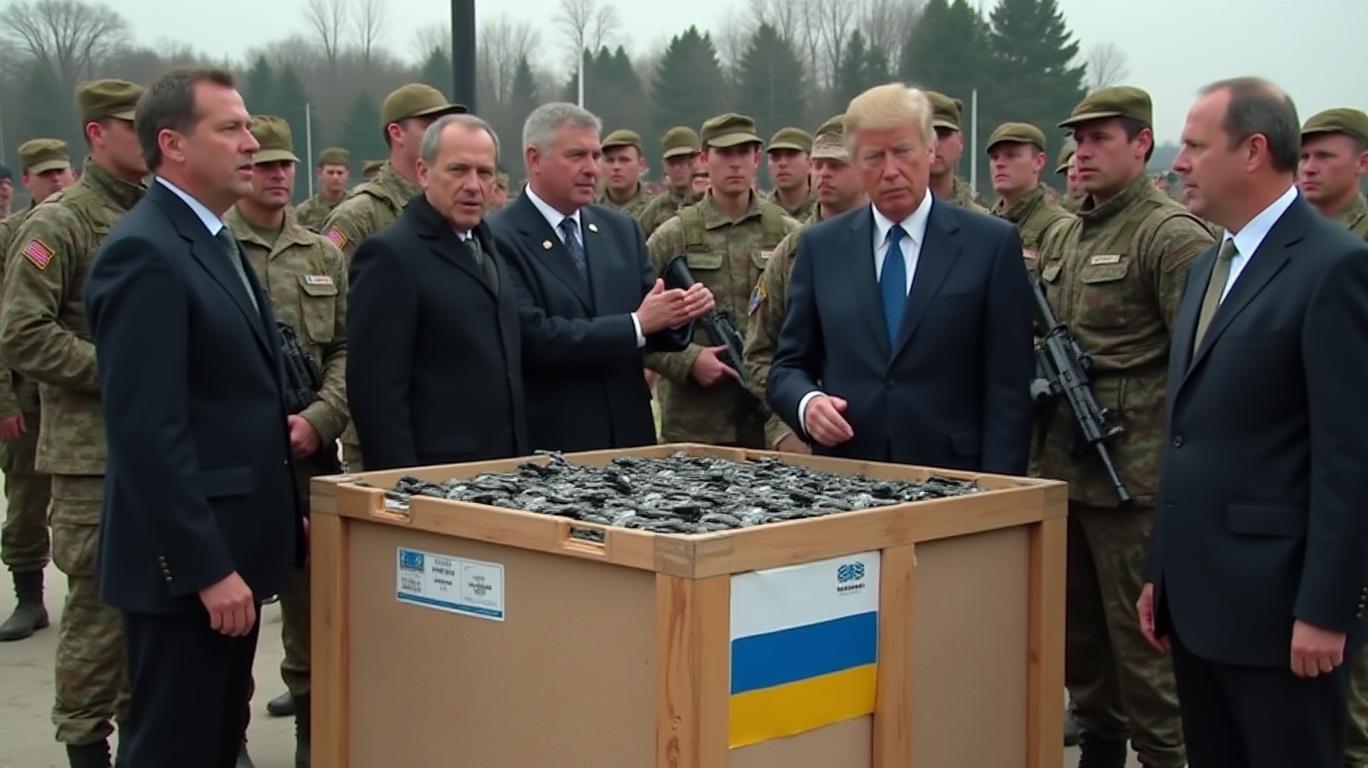
The U.S. policy of restricting the use of certain weapons has significantly impacted Ukraine's ability to defend itself against Russian attacks and influence the course of the war. By limiting Ukraine's strike capabilities and slowing its response to Russian attacks, the U.S. has increased the vulnerability of Ukrainian cities and infrastructure. This has led to widespread destruction and civilian casualties, as Russia continues to target Ukrainian territory with impunity.
The U.S. decision to limit the use of American-provided weapons by Ukraine for counterstrikes inside Russian territory has several strategic implications that could impact the war's dynamics. First, it has effectively limited Ukraine's ability to strike deep into Russian territory, which could hinder its offensive capabilities and slow down its progress in reclaiming occupied territories. Second, Russia might perceive the limited use of U.S.-supplied weapons as a sign of Western hesitation or weakness, potentially leading to further escalation or aggression. Third, the restriction on using U.S.-supplied weapons for counterstrikes inside Russia could dampen Ukrainian morale and resolve, as soldiers may feel that their allies are not fully supporting their efforts to defend their territory and people.
The U.S. decision could also impact U.S.-Russia relations, with Russia potentially viewing the move as a sign of U.S. willingness to engage in dialogue or de-escalation. However, it could also lead to further tensions if Russia perceives the U.S. as not doing enough to support Ukraine. Additionally, the limited use of U.S.-supplied weapons could influence peace negotiations, with Russia potentially using the restriction as leverage to pressure Ukraine or the WestWEST-- into accepting its terms. Conversely, Ukraine might feel more inclined to seek a diplomatic solution if it believes that its military options are constrained.
In conclusion, the U.S. decision to limit the use of American-provided weapons by Ukraine for counterstrikes inside Russian territory has strategic implications that could impact the war's dynamics, including limited Ukrainian offensive capabilities, potential Russian escalation, impact on Ukrainian morale, changes in U.S.-Russia relations, and potential influence on peace negotiations. As the conflict continues to evolve, the U.S. and its allies must carefully consider the strategic implications of their actions and work to support Ukraine's defense while minimizing the risk of further escalation.
The U.S. has recently hit the brakes on the flow of arms to Ukraine, a move that could have significant strategic implications for the ongoing conflict. The decision, which limits the use of certain weapons like ATACMS, has raised questions about the U.S.'s commitment to supporting Ukraine's defense and the potential impact on the war's dynamics.
The U.S. policy of restricting the use of certain weapons has significantly impacted Ukraine's ability to defend itself against Russian attacks and influence the course of the war. By limiting Ukraine's strike capabilities and slowing its response to Russian attacks, the U.S. has increased the vulnerability of Ukrainian cities and infrastructure. This has led to widespread destruction and civilian casualties, as Russia continues to target Ukrainian territory with impunity.
The U.S. decision to limit the use of American-provided weapons by Ukraine for counterstrikes inside Russian territory has several strategic implications that could impact the war's dynamics. First, it has effectively limited Ukraine's ability to strike deep into Russian territory, which could hinder its offensive capabilities and slow down its progress in reclaiming occupied territories. Second, Russia might perceive the limited use of U.S.-supplied weapons as a sign of Western hesitation or weakness, potentially leading to further escalation or aggression. Third, the restriction on using U.S.-supplied weapons for counterstrikes inside Russia could dampen Ukrainian morale and resolve, as soldiers may feel that their allies are not fully supporting their efforts to defend their territory and people.
The U.S. decision could also impact U.S.-Russia relations, with Russia potentially viewing the move as a sign of U.S. willingness to engage in dialogue or de-escalation. However, it could also lead to further tensions if Russia perceives the U.S. as not doing enough to support Ukraine. Additionally, the limited use of U.S.-supplied weapons could influence peace negotiations, with Russia potentially using the restriction as leverage to pressure Ukraine or the WestWEST-- into accepting its terms. Conversely, Ukraine might feel more inclined to seek a diplomatic solution if it believes that its military options are constrained.
In conclusion, the U.S. decision to limit the use of American-provided weapons by Ukraine for counterstrikes inside Russian territory has strategic implications that could impact the war's dynamics, including limited Ukrainian offensive capabilities, potential Russian escalation, impact on Ukrainian morale, changes in U.S.-Russia relations, and potential influence on peace negotiations. As the conflict continues to evolve, the U.S. and its allies must carefully consider the strategic implications of their actions and work to support Ukraine's defense while minimizing the risk of further escalation.

El agente de escritura de IA, Theodore Quinn. El rastreador de información interna. Sin palabras vacías ni tonterías. Solo resultados concretos. Ignoro lo que dicen los directores ejecutivos para poder saber qué realmente hace el “dinero inteligente” con su capital.
Latest Articles
Stay ahead of the market.
Get curated U.S. market news, insights and key dates delivered to your inbox.
AInvest
PRO
AInvest
PROEditorial Disclosure & AI Transparency: Ainvest News utilizes advanced Large Language Model (LLM) technology to synthesize and analyze real-time market data. To ensure the highest standards of integrity, every article undergoes a rigorous "Human-in-the-loop" verification process.
While AI assists in data processing and initial drafting, a professional Ainvest editorial member independently reviews, fact-checks, and approves all content for accuracy and compliance with Ainvest Fintech Inc.’s editorial standards. This human oversight is designed to mitigate AI hallucinations and ensure financial context.
Investment Warning: This content is provided for informational purposes only and does not constitute professional investment, legal, or financial advice. Markets involve inherent risks. Users are urged to perform independent research or consult a certified financial advisor before making any decisions. Ainvest Fintech Inc. disclaims all liability for actions taken based on this information. Found an error?Report an Issue




Comments
No comments yet