
Slovakia’s Trade Balance Surprises with First Deficit in Months
 Aime Summary
- Slovakia reported a trade deficit of €162.7 million in February 2026, compared to a surplus of €358.3 million in the previous period.
- Retail sales in Slovakia dropped sharply in December 2025, with a 5% annual decline, driven by a sharp fall in food, beverages, and tobacco.
- The deteriorating trade and retail data highlight broader economic vulnerabilities in Central and Eastern Europe, where structural changes and external trade policies could weigh on growth in 2026.
Slovakia's Trade Balance Turns Negative for the First Time in Recent Months
Slovakia’s trade balance turned negative in February 2026, recording a deficit of €162.7 million compared to a surplus of €358.3 million in the prior month. This dramatic reversal suggests a weakening of domestic export competitiveness or increased import demand amid global and domestic economic pressures. The data, published at 16:00, caught attention due to the lack of a forecast and the large swing from surplus to deficit.
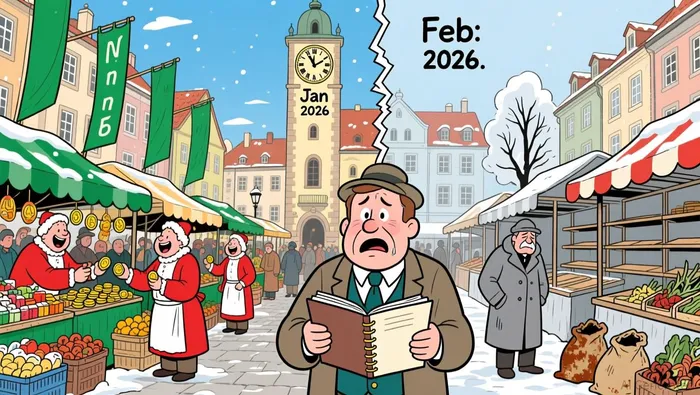
The shift may indicate a growing reliance on foreign goods and services, a concern for a small open economy like Slovakia, where the external sector plays a significant role in overall economic performance. This could also reflect the impact of ongoing consumer and business confidence deterioration due to high interest rates and a broader economic slowdown in the Eurozone.
What the Sharp Drop in Retail Sales Signals About Domestic Demand
Retail sales in Slovakia fell by 5% year-on-year in December 2025, the most significant drop in over two years. Food, beverages, and tobacco sales dropped 19.9%, while non-specialized stores and other goods also saw steep declines. This suggests a notable slowdown in domestic consumption, a key driver of growth for many economies in Central and Eastern Europe. The trend may reflect both economic uncertainty and the effects of monetary tightening.
The retail sales decline aligns with broader challenges in the region, particularly as Slovakia’s economy contends with external and internal headwinds. According to WIIW analysis, the sugar tax and broader fiscal pressures are already showing signs of reducing consumption, as seen in Kofola CeskoSlovensko’s earnings call, where a 10% drop in beverage consumption was reported. These domestic supply chain and demand-side issues are compounding the impact of global trade dynamics.
Broader Economic Risks in Central and Eastern Europe Emerge Amid Trade Weakness
The Slovak data is part of a broader narrative of mixed economic performance in Central and Eastern Europe. While the region is experiencing structural change and increased defense spending—both seen as long-term growth enablers— ongoing risks like US trade policies and large budget deficits are creating uncertainty. For countries like Slovakia, whose trade balances have historically been more volatile, these shifts raise questions about sustainability and resilience in the face of external shocks.
Moreover, the ECB’s recent decision to hold interest rates steady, citing stabilization of inflation and a resilient economy, may not be enough to offset the domestic pressures seen in Slovakia. Investors and policymakers will need to monitor further data, particularly on industrial output and consumer confidence, to determine the depth of the current slowdown and whether fiscal or monetary stimulus may be warranted.

Stay ahead of the market.
Get curated U.S. market news, insights and key dates delivered to your inbox.


AInvest
PRO
AInvest
PRO



Comments
No comments yet