
Slovak CPI Hits 4.3%—ECB Hikes Risk a Recession?
 Aime Summary
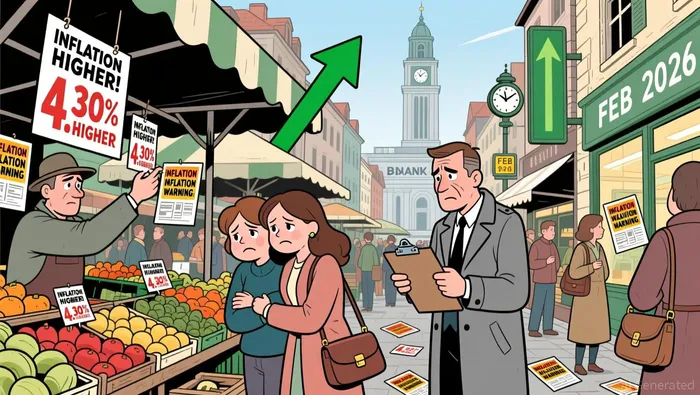
Slovak EU Normalized CPI (YoY) rose to 4.30% in February 2026, matching the forecast and slightly above the previous 4.10% reading according to FastBull.
Slovakia's February CPI data, published at 16:00, shows a persistent inflationary trend, with the 4.30% annualized rate aligning with ECB forecasts. This suggests that inflation pressures remain embedded in the broader eurozone periphery, especially in Central Europe. The data underscores the challenge of returning to the ECB's 2% inflation target amid ongoing global energy costs and sticky wage growth.
Despite the eurozone as a whole seeing headline inflation near its target, several ECB officials, including Peter Kazimir, have emphasized that inflation is likely to stay high for an extended period. This has led to a hawkish stance, with officials suggesting further rate hikes even if they raise the risk of a recession as reported. Kazimir, who is also the Governor of the National Bank of Slovakia, stressed the importance of preventing inflation from becoming entrenched and signaled that the ECB may continue its tightening cycle according to BNP Paribas.
The broader implications of this data are significant for investors. With the ECB maintaining its aggressive tightening path, eurozone interest rates are expected to remain elevated for the foreseeable future. This could increase borrowing costs for European companies and households, slowing economic activity. Additionally, with the U.S. Federal Reserve also showing a cautious approach to rate cuts, global liquidity could tighten further, impacting risk assets like equities and high-yield bonds.
Investors should closely monitor the upcoming ECB rate decision in March and the next round of eurozone inflation data. If inflation remains above 3% in the core eurozone, the ECB may delay rate cuts or even raise rates further. In the meantime, fixed-income markets will likely continue to price in a slow path to rate cuts, and equity markets may remain volatile as earnings face pressure from high interest rates and rising input costs according to European Parliament analysis.
What Does Slovak CPI Growth Signal About Eurozone Inflation Pressures?
Slovakia, like many Central European countries, has seen inflation remain stubbornly above the ECB's 2% target. While headline inflation in the eurozone as a whole is nearing the target, certain member states, including Slovakia, still show elevated pressures. This divergence can complicate the ECB's policy decisions, as it must balance the needs of more inflation-soft economies with those still experiencing high price increases.
The 4.30% CPI reading in Slovakia aligns with broader trends of persistent core inflation, especially in services. This is a concern for policymakers because, unlike energy-driven inflation, services inflation is more resistant to monetary policy and can become deeply embedded in wage-setting and pricing behavior. The ECB has historically found that services inflation is more difficult to bring under control, and the current environment appears to reflect this challenge.
Moreover, the ECB faces a delicate balancing act: tightening too much could cause a recession, while tightening too little risks allowing inflation to become entrenched. The current inflation path in Slovakia and other Central European countries suggests that the ECB may continue its hawkish bias for some time, even if it means tolerating higher short-term economic volatility.
Why Are Investors Watching Eurozone CPI and ECB Policy Now?
Investors are closely watching eurozone inflation and the ECB's policy trajectory because of their direct impact on global financial markets. With the ECB signaling continued tightening, European bond yields have been rising, narrowing the yield differential between European and U.S. debt. This can affect currency valuations, equity valuations, and credit spreads, especially for high-yield eurozone corporate bonds.
Furthermore, as the ECB delays rate cuts, the euro could remain under pressure against the U.S. dollar and other major currencies, affecting multinational corporations with eurozone exposure. A weaker euro could boost profits for European exporters but raise import costs for firms dependent on energy and raw materials from outside the region. This dynamic adds complexity for global investors, as regional performance can vary significantly.
The ECB's decision-making also impacts global liquidity conditions. A prolonged period of high interest rates in Europe can create a tighter global financial environment, especially if the U.S. Fed follows a similar path. This could lead to reduced risk appetite, tighter credit conditions, and increased volatility in emerging markets, where external debt burdens are already high.
What to Watch for in the Coming Months
Looking ahead, the key data points for investors will be the next round of eurozone CPI readings and ECB policy statements. The ECB's March meeting will be particularly important, as it will determine whether the central bank will continue its tightening cycle or begin to signal a pause.
Investors should also monitor forward guidance from ECB officials, especially from more hawkish voices like Kazimir and Muller, who have suggested that the ECB may continue to raise rates even if it means accepting a weaker eurozone economy. The market has begun to price in a delayed start to rate cuts, but if inflation remains stubbornly high, this timeline could be pushed further out.
In addition to monetary policy, investors should keep an eye on geopolitical developments, particularly in energy and global trade. The ECB has acknowledged that external risks—such as geopolitical tensions and supply chain disruptions—could complicate the inflation outlook. Any further shocks in these areas could force the ECB to recalibrate its policy stance, adding to market uncertainty.
In summary, the Slovak CPI data, while just one indicator, is part of a broader narrative of persistent inflation and a hawkish ECB. As the central bank continues to navigate this complex environment, investors should prepare for a prolonged period of high interest rates and elevated market volatility.

Stay ahead of the market.
Get curated U.S. market news, insights and key dates delivered to your inbox.


AInvest
PRO
AInvest
PRO



Comments
No comments yet