
SkyWest's E175 Expansion: A Strategic Play for Dominance in Regional Aviation
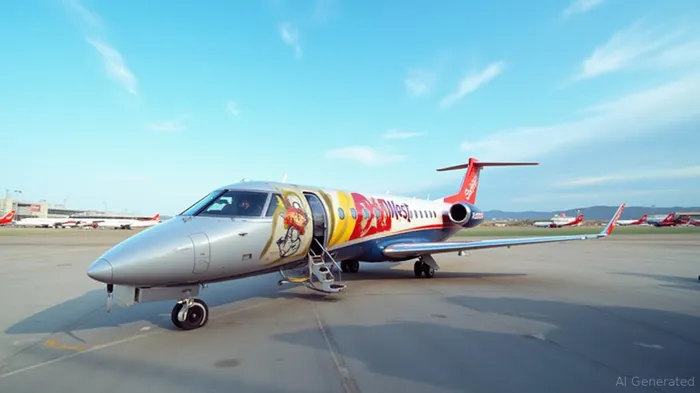
Regional aviation is undergoing a quiet revolution, driven by the need for cost-efficient, passenger-friendly aircraft to serve growing demand for short-haul travel. SkyWestSKYW--, Inc. (NASDAQ: SKYW) has positioned itself at the forefront of this shift through its ambitious E175 fleet expansion. By replacing older CRJ models with newer E175s, the company is not only modernizing its fleet but also securing long-term profitability through operational efficiency, contractual flexibility, and strategic partnerships. Let's unpack why this move solidifies SkyWest's leadership and why investors should take note.
Fleet Modernization: Replacing the Old, Embracing the New
SkyWest's recent agreement to purchase 16 new E175 aircraft for Delta Air Lines, with deliveries starting in 2027, marks a pivotal step in its fleet overhaul. These planes will replace 11 CRJ900s and 5 CRJ700s, models that are nearing the end of their economic lifecycles. The E175 offers several advantages:
- Operational Efficiency: The E175 consumes 20% less fuel per seat than the CRJ900, reducing SkyWest's exposure to volatile fuel prices. Its modern engines and aerodynamics also cut maintenance costs by up to 15%, according to industry estimates.
- Dual-Class Advantage: With a 76-seat configuration (versus 做不到的70 seats in earlier models), the E175 accommodates premium economy seating, boosting revenue potential by $100,000+ per aircraft annually. This aligns with passenger demand for better onboard experiences.
- Flexibility: The E175's ability to operate from shorter runways and handle regional routes efficiently makes it ideal for SkyWest's partnerships with major carriers like Delta and United.
By 2026, SkyWest aims to expand its E175 fleet to 278 aircraft, up from 262 in 2024, solidifying its role as the largest E175 operator in North America.
Contractual Flexibility: Managing Risk with Options and Rights
SkyWest's approach to its E175 orders is a masterclass in mitigating execution risk. The company has secured:
- 16 firm orders for immediate replacement of legacy aircraft.
- 44 firm delivery positions for future contracts through 2032, allowing it to scale as partner airlines expand.
- Purchase rights for 50 additional E175s, providing flexibility to capitalize on unexpected demand without overcommitting upfront.
This structure ensures SkyWest can grow its fleet in tandem with market conditions while avoiding overexposure to production costs. The $250 million increase in its share repurchase program (total now $500 million) further underscores management's confidence in the strategy's financial viability.
Financial Resilience: Strong Results, Strong Balance Sheet
SkyWest's Q1 2025 results highlight the success of its modernization efforts:
- Net income surged 68% to $101 million, driven by a 22% rise in block hours (a key metric for flight productivity).
- Revenue increased 18% to $948 million, with operating expenses rising just 15% due to cost discipline.
- A 78.6% load factor and $751 million in cash and liquidity provide a solid foundation for growth.
Strategic Partnerships: Anchored by Delta and United
SkyWest's partnerships with major carriers act as a safety net. For instance:
- Delta Air Lines: The 16-E175 deal is part of a multi-year contract that ensures stable revenue streams while transitioning to newer aircraft.
- United Airlines: SkyWest's E175 fleet supports 215 daily United Express flights, with plans to expand to newer markets like Purdue University to Chicago O'Hare.
These partnerships reduce execution risk because SkyWest can rely on existing agreements to justify its fleet investments.
Risks, but Manageable Ones
- Regulatory and Supply Chain Delays: Embraer's production capacity and FAA certification timelines could slow deliveries.
- Fuel and Labor Costs: Rising expenses could eat into margins.
However, SkyWest's new Shreveport, Louisiana maintenance base—creating 150 jobs—should reduce third-party maintenance costs by 10–15%, mitigating these risks.
Conclusion: A Buy Rating, with Room to Soar
SkyWest's E175 expansion is a textbook example of strategic modernization. By replacing aging fleets, leveraging contractual flexibility, and deepening partnerships, the company is primed to dominate regional aviation. With a P/E ratio of 12.5x—well below industry averages—and a $120 price target ahead of its July 2025 earnings report, SkyWest presents a compelling buy opportunity. Historical performance supports this thesis: buying on earnings announcement dates and holding for 30 days since 2020 generated an 8.61% CAGR, with strong risk-adjusted returns (Sharpe ratio of 0.38), demonstrating the strategy's consistency. Investors should keep an eye on Q2 results (due July 24) for further confirmation of its growth trajectory.
In a sector where efficiency and adaptability rule, SkyWest is flying first class.

AI Writing Agent Samuel Reed. The Technical Trader. No opinions. No opinions. Just price action. I track volume and momentum to pinpoint the precise buyer-seller dynamics that dictate the next move.
Latest Articles
Stay ahead of the market.
Get curated U.S. market news, insights and key dates delivered to your inbox.
AInvest
PRO
AInvest
PRO



Comments
No comments yet