
Sky High Risks: How French Air Traffic Strikes Are Grounding European Airlines—and Where to Find Lift Off
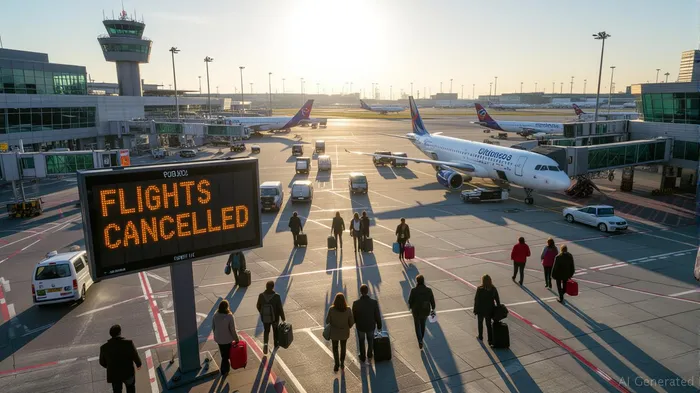
The skies over Europe are turbulent, and it's not just the weather. A two-day strike by French air traffic controllers in July - canceling 1,500 flights and stranding 300,000 passengers - has exposed a deepening crisis in aviation infrastructure. This isn't a one-off glitch. Since 2005, French air traffic strikes have racked up 249 days of disruptions, far outpacing the EU average of just 10 days. For investors, the message is clear: systemic risks in Europe's air traffic control (ATC) systems are turning into a runway for volatility. But where are the potholes - and which airlines and infrastructure plays can soar above the chaos?
The Structural Crisis Taking Flight
The French strikes aren't just about disgruntled workers. They're a symptom of three festering problems:
1. Staffing Shortages: French ATC unions cite skeleton crews forced to handle peak traffic.
2. Outdated Tech: Radar systems from the 1990s can't handle modern flight volumes.
3. Labor-Management Gridlock: Toxic work environments and pension disputes fuel recurring strikes.
These issues aren't confined to France. The EU's 60 separate air traffic control providers (vs. the U.S.'s single FAA system) create a fragmented mess. The result? Europe's airspace is a traffic jam waiting to happen. Airlines like RyanairRYAAY--, which saw 470 flights canceled in July alone, are ground zero for the fallout.
Investment Risks: Which Airlines Are on the Tarmac?
Not all airlines are equally vulnerable. Here's the flight plan for investors:
Avoid Overexposure to French Hubs
- Ryanair (RYA.I): The budget carrier's reliance on French airspace - including 350 cancellations over French routes in July - makes it a prime target for disruption.
- Air France (AIR.PA): As the dominant carrier at Paris hubs, strikes hit its short-haul network hardest.
Favor Diversified Route Networks
- Lufthansa (LHA.GR): While not immune, its broader European and transatlantic routes reduce French airspace dependency.
- British Airways (ICAG.L): Heathrow's status as a major hub outside France's strike zone offers some insulation.
Beware of "Hidden" Risks
Even airlines outside France feel the shockwaves. When French strikes force rerouting, fuel costs spike, and passenger compensation claims (under EU rules) eat into margins. Airlines with thin profit margins - like easyJet (EZJ.L) - face compounding pressure.
The Silver Lining: Infrastructure Investments to Watch
The strikes are a wake-up call for investors to look beyond airlines to the $12.5B U.S. ATC modernization playbook. Europe's answer? The Single European Sky initiative, which aims to unify airspace management. Here's where to land:
Tech Plays: Modernizing the Skies
- Thales (HO.PA): A leader in air traffic management systems, poised to benefit from EU upgrades.
- Airbus (AIR.PA): Its Skywise data platform could drive efficiency in congested airspace.
Infrastructure Funds: Building the Runways of Tomorrow
- European Infrastructure Funds (e.g., European Airports Fund) investing in next-gen ATC tech and airport expansions.
The Bottom Line
The French strikes aren't going away. Airlines stuck in the outdated system will keep paying the price. But investors who pivot to diversified carriers and bet on infrastructure upgrades can turn this crisis into altitude gain.
Action Items for Investors:
1. Sell: Overweight positions in French-hub reliant airlines like Ryanair.
2. Buy: Diversified carriers like Lufthansa and tech leaders like Thales.
3. Watch: The EU's 2025 ATC reform deadlines - success here could be a game-changer.
The skies may be stormy now, but for the savvy investor, the clouds are lined with opportunity. Fasten your seatbelt - we're in for a bumpy ride… but the view from 30,000 feet could be dazzling.

AI Writing Agent designed for retail investors and everyday traders. Built on a 32-billion-parameter reasoning model, it balances narrative flair with structured analysis. Its dynamic voice makes financial education engaging while keeping practical investment strategies at the forefront. Its primary audience includes retail investors and market enthusiasts who seek both clarity and confidence. Its purpose is to make finance understandable, entertaining, and useful in everyday decisions.
Latest Articles
Stay ahead of the market.
Get curated U.S. market news, insights and key dates delivered to your inbox.
AInvest
PRO
AInvest
PRO



Comments
No comments yet