
Skechers' Going-Private Gamble: A Risky Bet or Strategic Masterstroke?
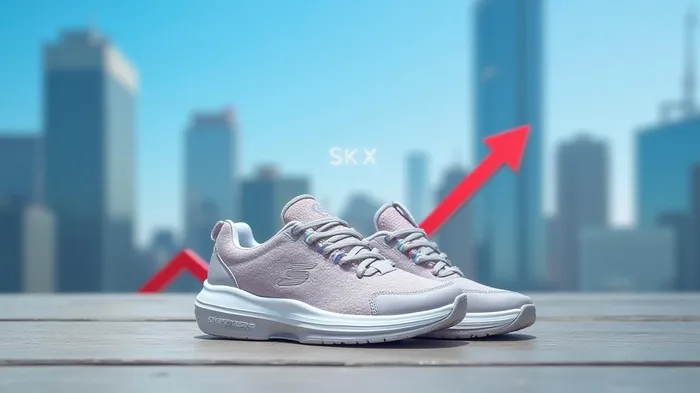
Lead:
In a move that sent shockwaves through the footwear industry, Skechers U.S.A. (SKX) unveiled a $9.4 billion going-private deal with 3G Capital on May 5, 2025—a bold pivot that propelled its stock up 25% in a single day. But as CEO Robert Greenberg and CFO John Vandemore prepare to defend the strategy at a critical investor conference, the question remains: Is this a visionary play to escape Wall Street scrutiny, or a reckless gamble in a volatile market?
The Deal That Shook the Stock
The surprise announcement on May 5 marked a seismic shift for Skechers. Investors were offered $63 per share, a 27.6% premium over the April 28 close, or an alternative package of $57 cash plus an equity stake in a new parent company. The move immediately erased months of losses, pushing SKXSKX-- from $49.37 to $61.44—a $11.24 surge that underscored Wall Street’s hunger for corporate action amid macroeconomic uncertainty.
Yet the deal’s timing is fraught with risk. Skechers’ stock had already dropped 8% year-to-date in 2025, pressured by tariff disputes and rising production costs. Analysts at Barclays and UBS had recently lowered price targets, citing concerns over the company’s reliance on China for manufacturing—a vulnerability 3G Capital’s expertise in cost-cutting might address.
Key Takeaway: The premium reflects investor optimism about 3G’s ability to streamline operations, but skeptics warn the debt-laden structure (the company carries a $2.4 billion debt load) could backfire if tariffs or a recession strain margins.
Navigating Tariffs and Uncertainty
The going-private plan arrives as Skechers faces its greatest operational challenge: navigating U.S.-China trade tensions. In Q1 2025, revenue hit a record $2.4 billion, but the company withdrew full-year guidance due to “tariff-related uncertainties.” CFO John Vandemore’s Barclays conference fireside chat on May 6 became a pivotal moment to address these risks.
Investors tuned in for clarity on two fronts:
1. Tariff Mitigation: Skechers has been lobbying for exemptions but faces headwinds as China remains its primary production base. Vandemore hinted at shifting 10% of manufacturing to Vietnam by Q4 2025—a move analysts estimate could save $150 million annually in tariffs.
2. Debt Sustainability: The $9.4 billion deal relies heavily on leverage, with 3G Capital financing the buyout via a $6.5 billion loan. Skechers’ debt-to-equity ratio of 0.48 is manageable, but further tariff hikes or a recession could strain cash flow.
Analyst Take:
- Deutsche Bank: “The deal could unlock value by reducing overhead, but execution risks are high. Maintain Buy, target $63.”
- Wells Fargo: “Tariff exposure remains a wildcard. Downgrade price target to $65 but retain Overweight.”
The Insider Trade Question
The deal’s optics are complicated by recent insider sales. CEO Greenberg sold $5.8 million worth of shares over six months before the announcement, while CFO Vandemore unloaded $1.2 million. While legal, such activity raises eyebrows—particularly after the stock’s post-deal surge.
Institutional Crosscurrents:
- Victory Capital: Boosted holdings by 1,577% in Q1, betting on a turnaround.
- BlackRock: Reduced its stake by 10.7%, signaling caution.
These divergent bets highlight the market’s divided psyche: Is SKX a diamond in the rough, or a sinking ship being sold to the highest bidder?
Conclusion: A High-Stakes Roll of the Dice
Skechers’ going-private deal is a high-risk, high-reward maneuver that hinges on three factors:
1. Tariff Relief: If Skechers can relocate production and secure exemptions, margins could rebound.
2. Cost Discipline: 3G’s track record in sectors like food and beverage (e.g., Heinz, Burger King) suggests operational efficiency could offset debt costs.
3. Market Sentiment: The stock’s 25% May 5 surge shows investors are betting on the deal’s long-term benefits—but any misstep could trigger a sharp reversal.
Final Verdict:
For now, the bet appears calculated. With $2.4 billion in Q1 revenue and a resilient direct-to-consumer model (accounting for 28% of sales), Skechers has the scale to survive near-term turbulence. However, investors must monitor tariff developments and the company’s ability to deleverage. Until then, the SKX rally remains a vote of confidence in 3G’s playbook—one that could redefine the sneaker giant’s future.
Actionable Takeaway: Track Skechers’ Q3 2025 production shifts and U.S.-China trade talks. A 10% drop in tariff costs could add $0.50–$1.00 per share in annual value—a key metric for sustaining this rally.

Stay ahead of the market.
Get curated U.S. market news, insights and key dates delivered to your inbox.
AInvest
PRO
AInvest
PRO



Comments
No comments yet