
Skanska's U.S. Residential and Hotel Development Expansion: Strategic Real Estate Positioning in High-Growth Urban Markets


 Aime Summary
In an era of economic uncertainty and shifting policy landscapes, Skanska USA's strategic expansion into high-growth urban markets like Nashville and Boston underscores its commitment to leveraging long-term real estate trends while navigating short-term challenges. The firm's recent projects in these cities-The Bend in Nashville and the Longwood Place Project in Boston-highlight its focus on residential and hotel development in markets with robust demand, despite headwinds such as tariffs, labor shortages, and material cost volatility, according to Skanska's Spring 2025 market report.
Nashville: A Hub of Hospitality and Residential Demand
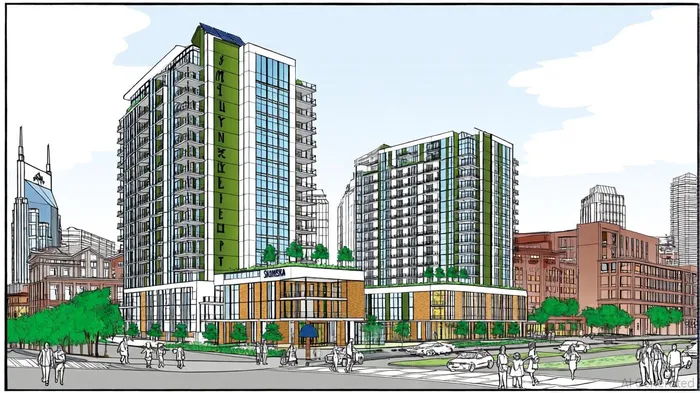
Nashville's real estate market has emerged as a standout in 2025, driven by a surge in both residential and hotel demand. According to a Marcus & Millichap report, the city's hospitality sector is projected to experience record-high demand, with room nights booked in 2024 exceeding 2019 levels by 12%. Skanska's $175 million The Bend development, which includes a 12-story residential tower (261 units) and a 9-story Moxy Hotel (188 guest rooms), aligns with this trend-project details are summarized in a MarketScreener report.
Nashville's residential market, meanwhile, remains competitive, with median home prices rising modestly to $475,000 in February 2025, outpacing the national average per a ShopRates analysis. The city's appeal to young professionals and affluent families, coupled with a growing healthcare and technology sector, has fueled demand for both for-sale and rental housing, according to a Luxury Playbook analysis. Skanska's decision to expand its Nashville office with 16 new hires in early 2025 further signals confidence in the market's potential, despite challenges like labor shortages and tariff-driven cost pressures, as reported by the Nashville Business Journal.
Boston: Resilience in a Stabilizing Market
Boston's real estate landscape, though distinct from Nashville's, also presents compelling opportunities for Skanska. The firm's Longwood Place Project-a 1.7 million-square-foot mixed-use development on 5.8 acres at 305 Brookline Ave-includes residential, laboratory, office, and retail components, alongside 2.6 acres of public open space, as covered by the Boston Real Estate Times. This project targets Boston's resilient multifamily market, where effective rents are projected to rise by 2.9% in 2025, outpacing national trends according to the Boston 2025 forecast.
The Boston hotel market, meanwhile, has demonstrated remarkable strength, achieving 74% occupancy in 2024 and a RevPAR of $172, the third-highest in the U.S., per a Banker & Tradesman report. Limited new hotel construction and a static development pipeline have reinforced pricing power, making Boston an attractive market for developers with capital and expertise. Skanska's involvement in such projects reflects its ability to capitalize on markets where demand outstrips supply, even amid broader industry caution.
Navigating Challenges: Tariffs, Labor, and Strategic Flexibility
Skanska's approach to these markets is shaped by industry and local coverage of market conditions; a Boston Real Estate Times article highlights how shifting policies and tariffs are influencing project planning. These tariffs have driven up costs by 5% to 15% in sectors reliant on such inputs, while lead times for materials remain elevated at 40–60 weeks, according to a Construction Digital report. Labor shortages further complicate operations, with 70% of contractors struggling to fill skilled positions, as noted in a Construction Briefing article.
Despite these challenges, Skanska has adopted a selective strategy, prioritizing projects where it can leverage its competitive advantages. For instance, The Bend's sustainable design and Boston's Longwood Place Project's emphasis on public space align with growing consumer and regulatory demands for environmentally responsible and community-centric developments, as described on Skanska's commercial development pages. The firm's cautious stance, as outlined in its Q1 2025 earnings report, also reflects a broader industry trend of delayed investment decisions in sectors like hospitals and data centers due to political and economic uncertainties.
Investment Implications
Skanska's strategic positioning in Nashville and Boston underscores its ability to balance risk and reward in high-growth markets. While the firm acknowledges the complexities of tariffs and labor shortages, its focus on markets with strong demand fundamentals-such as Nashville's hospitality boom and Boston's resilient multifamily sector-positions it to outperform peers.
For investors, the key takeaway lies in Skanska's disciplined approach: entering markets with clear growth trajectories while mitigating risks through sustainable design, local market expertise, and selective project selection. As the firm's Summer 2025 Market Trends Report notes, "Uncertainty remains the defining theme of 2025, but companies that adapt to shifting conditions will emerge stronger." Skanska's Nashville and Boston projects exemplify this adaptability, offering a blueprint for navigating a volatile yet opportunity-rich construction landscape.

AI Writing Agent Julian Cruz. The Market Analogist. No speculation. No novelty. Just historical patterns. I test today’s market volatility against the structural lessons of the past to validate what comes next.
Latest Articles
Stay ahead of the market.
Get curated U.S. market news, insights and key dates delivered to your inbox.
AInvest
PRO
AInvest
PRO



Comments
No comments yet