
SK Hynix (SKHY) Stock Drops on $38B Capex Plan Despite Record Earnings
 Aime Summary
The Korean semiconductor giant recently delivered financial results that underscore the intense demand for artificial intelligence infrastructure, yet the market reaction revealed a complex dynamic between growth expectations and capital allocation concerns. The company reported second-quarter revenue of 79.32 trillion won, representing a staggering 257% increase from the previous year. Operating profit surged even more dramatically, climbing 557% to 60.54 trillion won. These figures reflect the company's pivotal role in supplying high-bandwidth memory for major U.S. technology firms.
First-half revenue exceeded 100 trillion won for the first time, a milestone that highlights the structural shift in the memory chip industry. The demand is not merely cyclical; it is being driven by a sustained build-out of data center capacity by hyperscalers. SK HynixSKHY-- holds a commanding 58% share of the high-bandwidth memory market as of the first quarter of 2026. This leadership position has allowed the company to achieve operating margins of 76%, a level of profitability that is rare in the historically volatile memory sector. Despite these robust fundamentals, the stock faced selling pressure, with Seoul-traded shares dropping 4.9% and U.S.-listed shares slipping in premarket trading following the capital expenditure announcement.
The disconnect between record earnings and the stock price decline suggests that investors are weighing the immediate impact of massive capital outlays against the potential for near-term shareholder rewards. While the financial performance demonstrates the company's ability to capitalize on the AI supercycle, the market's reaction indicates a desire for clarity on how these profits will be distributed. Shareholders are increasingly scrutinizing the balance between reinvesting in future capacity and returning cash through dividends or buybacks. This tension is central to the current valuation debate surrounding SK Hynix, as traders assess whether sustainability of these high margins.
Why Is SK Hynix Announcing a $38 Billion Expansion Plan?", "The primary catalyst for the recent market volatility was the announcement of a 54 trillion won, or approximately $38 billion, investment plan aimed at expanding the company's manufacturing capabilities in South Korea. This capital expenditure will fund the construction of a new dynamic random-access memory (DRAM) fabrication facility in Yongin and a NAND flash plant in Cheongju. Approximately two-thirds of the total spending is allocated to the DRAM project, which is critical for meeting the surging demand for high-speed memory products .
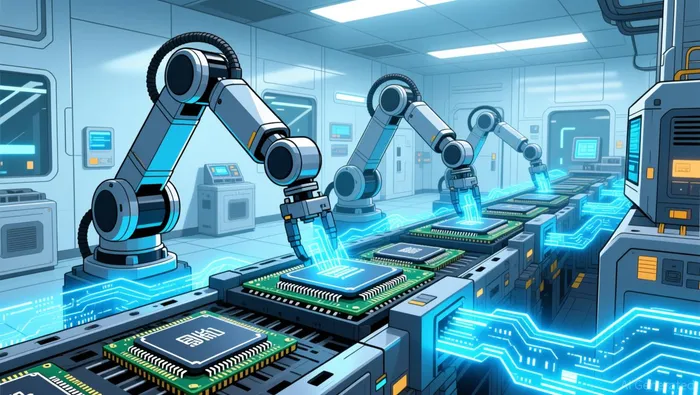
The Yongin Y2 facility will be the second of four planned fabs at the Yongin semiconductor cluster, with groundbreaking expected in July of next year. This expansion is designed to address the rapidly rising AI-driven memory demand, ensuring that SK Hynix can maintain its production lead over competitors. The move signals management's confidence in the long-term growth trajectory of the AI sector, even as it acknowledges the capital intensity required to sustain such growth. The construction of new semiconductor fabs is a multi-year process, meaning that these investments will not contribute to capacity until the latter half of the next decade.
Investor sentiment on retail platforms like Stocktwits turned bearish following the announcement, with many traders citing profit-taking after the stock's recent rebound. The sheer size of the capital expenditure has raised questions about the company's free cash flow in the near term. While the investment is necessary to secure future market share, it delays the potential for increased shareholder returns. The market reaction suggests that investors are prioritizing immediate liquidity and dividends over long-term capacity expansion, at least in the short term. This dynamic is particularly notable given the company's strong cash generation capabilities, which have been bolstered by the high margins in the HBM business .
How Do Analysts View SKHYSKHY-- Stock Valuation and HBM Dominance?", "Despite the bearish retail sentiment, major financial institutions maintain a bullish outlook on SK Hynix, arguing that the current stock price does not fully reflect the company's competitive advantages. UBS analyst Gaudois maintains a Buy rating with a $204 price target, citing a potential upside of approximately 43%. The firm argues that current valuations fail to account for structurally higher memory profitability and the significant enhancements in shareholder returns that are expected in the coming quarters .
Wedbush initiated coverage with an Outperform rating and a KRW 2.56 million price target, driven by a tight memory supply environment and an attractive valuation. The firm highlights that server vendors are reducing specifications due to limited availability, with no meaningful inventory builds despite the upcycle. Capacity constraints are severe, as a lack of clean-room space creates multi-year lead times for new fabs. This means that modest capacity additions before 2028 will not be sufficient to meet the accelerating demand, supporting sustained pricing power for SK Hynix.
Technologically, SK Hynix is advancing its product roadmap with the mass shipment of HBM4 in the second quarter and sample shipments of the subsequent HBM4E generation. The company has also finalized long-term agreements with approximately ten major customers, securing a portion of its future revenue beyond spot market fluctuations. Unlike historical memory cycles, analysts believe that peak earnings could be extended due to rising estimates and new supply agreements. The stock currently trades at less than four times forward earnings estimates, a multiple typically associated with peak earnings expectations rather than growth . This discrepancy suggests that the market may be underestimating the longevity of the memory supercycle.
What Shareholder Return Plans Should Investors Expect?", "A key factor in the recent stock performance is the demand for clearer details on capital returns. SK Hynix stated that it is actively reviewing additional shareholder return initiatives, with specific plans to be detailed in the third quarter. The market reaction suggests that investors are weighing the massive capital expenditure against the potential for immediate dividend increases or buybacks, which have been limited despite the company's robust cash generation .
The company's ability to generate strong free cash flow provides the financial flexibility to pursue aggressive capital returns while still funding necessary expansion. However, the timing of these returns has become a focal point for investors. The promise of detailed plans in the third quarter has created a period of anticipation, during which the stock may remain volatile. Shareholders are likely to focus on the payout ratio and the potential for share repurchases, which could provide a floor for the stock price.
The balance between reinvestment and returns is a critical consideration for long-term investors. While the expansion plan secures SK Hynix's position in the high-growth AI memory market, the delay in shareholder returns has tempered enthusiasm. The upcoming third-quarter announcement will be a key event in determining whether the market re-rates the stock higher. Until then, the stock may continue to trade within a range as investors digest the implications of the capital expenditure plan and the company's strategic priorities .

Stay ahead of the market.
Get curated U.S. market news, insights and key dates delivered to your inbox.


AInvest
PRO
AInvest
PRO




Comments
No comments yet