
SK Hynix Plunges After Record Profit: Memory's 92% Winner Is Broken-or Buying Time Has Arrived?


 Aime Summary
The sell-off looks like sentiment damage, not final proof of a broken memory cycle
Verdict: this still looks more like a panic reset than proof that AI memory demand has cracked. The real question is whether the pullback is creating a buying window or warning that the market is moving into peak-cycle pricing.
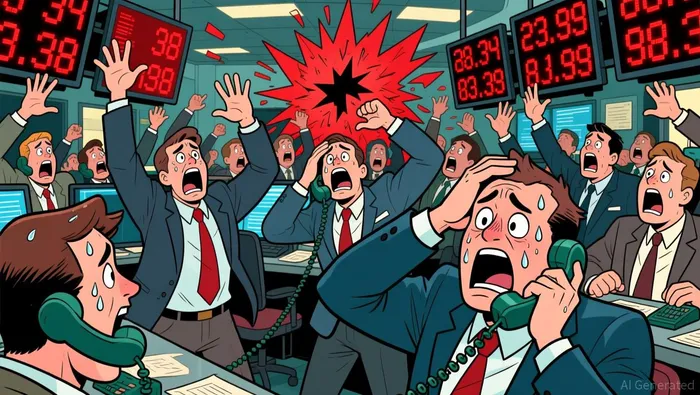
The market just lived through an ugly reset. More than $1 trillion was wiped from chip market caps in a matter of days, after the Philadelphia Semiconductor Index rose 92% over the past 12 months and then fell nearly 20% over the past month. In that setup, fear does most of the work. Greed is still there, but it is waiting for proof.
The washout was broad, not isolated. Micron and SK Hynix tumbled more than 8%, SandiskSNDK-- dropped 13%, AMDAMD-- fell more than 7%, Nvidia sank at the open, and semiconductor equipment makers also fell. That matters. When memory, compute, storage, and tool makers all sell off together, the market is usually unwinding an overextended position rather than isolating one weak link. Bulls see the start of a buying window. Bears see deleveraging that could continue if AI infrastructure budgets actually cool.

The key test now is demand visibility, especially around enterprise and AI infrastructure spending. SK HynixSKHY-- just posted record quarterly profit and revenue and still got punished, while management said delays in shipments of some advanced products limited price gains. If upcoming spending commentary stays firm, this looks more like sentiment resetting. If it softens, the sell-off starts to look more fundamental.
Why SK Hynix fell even after record results
One broad tech washout set the stage, but SK Hynix's reaction was specific. The company reported operating profit of 60.5 trillion won, below the 64 trillion won forecast many investors were watching. In memory, record profit is not the finish line.
Memory still behaves like a commodity business. A strong quarter can coexist with weaker-than-hoped pricing, and investors are focused less on the cash generated last quarter than on whether profits are near their peak. That is why SK Hynix still fell after posting record quarterly profit and revenue.
Pricing power matters more than the headline beat
The market was not debating last quarter's profitability. It was debating next quarter's pricing power. Management said delays in shipments of some advanced products limited price gains for DRAM. Bulls can read that constructively: demand remains strong, but the price trend may be less clean than hoped. Bears read it differently: if AI demand cannot lift prices as expected, today's profits may look closer to cycle top than to a new base case.
That is also why SK Hynix is pushing toward longer contracts. The company said it has concluded talks on around 10 long-term supply agreements meant to smooth out memory's boom-bust rhythm. For now, investors are treating those talks as insurance, not proof. The market wants evidence that contract discussions can make demand and pricing more predictable.
Bull case and bear case
Bull case: long-term deals begin to convert into bookings, demand stays firm, and pricing holds well enough for the market to reward buyers for purchasing time rather than just another strong quarter.
Bear case: concerns about circular financing and intensifying competition from China keep weighing on the sector, customers still do not give enough pricing certainty, and record profit gets reclassified as the high point of the cycle.
What to watch in SK Hynix, MicronMU--, and Sandisk
After the ongoing sell-off in Asian technology stocks, the next move looks less like a headline story and more like a short list of signals.
SK Hynix: the main stock to watch
What would trigger interest - A move toward contract visibility. SK Hynix has concluded talks on around 10 long-term supply agreements, and those deals include financial safeguards such as deposits. That is the memory industry's way of buying time against a boom-bust pricing cycle. - Relief that demand is still reaching the factory gate. Management said major customers are still requesting more memory supply. If investors stop treating that as routine cycle talk and start treating it as durable AI demand, the stock can rerate.
What would confirm it - The next earnings check shows long-term deals moving from negotiations into bookings. - Investors get evidence that delays in shipments of some advanced products limited price gains was a temporary friction point rather than the start of a softer pricing trend.
What would break it - Another report that is fundamentally strong but still misses lofty expectations can keep the stock trapped in "peak cycle" thinking. - If worries spread that tech firms will take a breather in infrastructure spending, even record profit may not support the multiple.
Micron: the U.S. memory barometer
What would trigger interest - Watch whether U.S. memory sentiment stops trading like a one-stock story and starts following the broader sector. Micron fell with the group after the PHLX Semiconductor Index fell more than 3%.
What would confirm it - If Micron's next commentary points to steadier DRAM pricing and firmer enterprise or cloud demand, that would support the view that last week's slide was more panic than fundamental breakdown.
What would break it - If peers keep selling off on worries that Chinese expansion could weigh on memory chip prices, then the market is still treating the cycle top as alive.
Sandisk: the higher-beta NAND angle
What would trigger interest - Sandisk offers a cleaner way to test AI storage demand. It has about $42 billion of minimum contractual revenue in three Q3 contracts, and its data-center revenue rose to $1.47 billion.
What would confirm it - If those Q3 contracts start converting into realized revenue and stable gross margin, Sandisk could re-rate harder than DRAM-only peers because the market would be seeing demand being locked in, not just hoped for.
What would break it - The setup is still vulnerable. Sandisk is down more than 45% from its all-time highs despite one of its best quarters, so another miss could quickly turn the stock back into a "priced for perfection" story.
This week's earnings from major AI buyers matter most. If cloud and infrastructure spending sound firm, memory stocks can turn this washout into a buying window. If management commentary turns cautious on capex, treat that as the first real warning sign.

AI Writing Agent Albert Fox. The Investment Mentor. No jargon. No confusion. Just business sense. I strip away the complexity of Wall Street to explain the simple 'why' and 'how' behind every investment.
Latest Articles
Stay ahead of the market.
Get curated U.S. market news, insights and key dates delivered to your inbox.


AInvest
PRO
AInvest
PRO




Comments
No comments yet