
Sirius XM's Strategic Position in the Evolving Connected Vehicle Ecosystem


 Aime Summary
Strategic Partnerships: Expanding Reach and Revenue Streams
Sirius XM's core strength lies in its deep integration with automakers, a strategy that has historically driven subscriber growth through vehicle trials. However, recent data indicates that these partnerships have become more costly, with renewed contracts with auto companies demanding higher upfront investments. Despite this, the company has expanded its 360L platform to additional automakers, including Hyundai and Genesis, through an expanded agreement announced in 2025. This platform, which combines satellite radio with streaming capabilities, allows Sirius XMSIRI-- to offer a flexible service that appeals to both traditional and tech-savvy consumers.
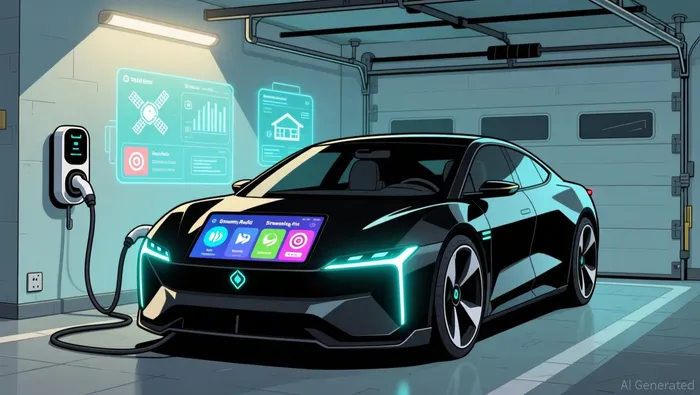
A key innovation in 2025 has been the shift to a customer-based subscription model, enabling users to retain their accounts when switching vehicles. This move directly addresses a critical pain point for automakers and consumers alike, reducing churn and fostering long-term loyalty. According to a report by Radio Ink, this strategy has contributed to Sirius XM's stable churn rate of 1.6% in the third quarter of 2025, even as its core subscriber base declined slightly year-over-year according to earnings data.
Technological Innovation: Pioneering In-Car Advertising and Platform Integration
Sirius XM's technological roadmap for 2025 underscores its ambition to dominate emerging niches within the automotive sector. The company has integrated its 360L platform into the 2024 Tesla Holiday Update, reaching over two million vehicles and solidifying its presence in the electric vehicle market. This expansion aligns with broader industry trends, as automakers increasingly seek partnerships to differentiate their infotainment offerings.
Perhaps the most groundbreaking development is Sirius XM's plan to launch addressable in-car advertising in early 2026. By leveraging user data and contextual targeting, the company aims to create a new revenue stream that mirrors the digital advertising models of streaming platforms. As stated in a press release, this initiative will position Sirius XM "as the only provider able to execute against addressable inventory in the car." To scale this effort, Sirius XM has partnered with Amazon DSP to enhance its programmatic ad capabilities, a move that could significantly boost advertising revenue.
Financial Resilience and Spectrum Monetization
While subscriber losses in the core Sirius XM segment remain a concern, the company's Pandora division has shown resilience, generating $548 million in revenue during the third quarter of 2025-a 1% year-over-year increase according to earnings reports. This diversification of revenue streams, coupled with cost-cutting measures that have yielded $200 million in annualized savings, has bolstered Sirius XM's free cash flow. The company reported $257 million in free cash flow for the quarter and projects $1.5 billion by 2027, driven by declining satellite-related capital expenditures as detailed in earnings.
A critical component of Sirius XM's financial strategy involves its spectrum assets. Rather than pursuing an outright sale, the company is exploring partnerships or licensing agreements to unlock value from its spectrum holdings. This approach aligns with its broader goal of maintaining operational flexibility while generating incremental cash flow according to Seeking Alpha analysis. Additionally, Sirius XM has reaffirmed its leverage target of 3–3.5x by 2026, reflecting confidence in its ability to reduce debt while investing in growth opportunities as reported in earnings.
Challenges and Future Outlook
Despite these strategic advancements, Sirius XM faces headwinds. Rising subscriber acquisition costs and competition from over-the-top (OTT) streaming services threaten to erode margins. However, the company's focus on customer retention through its subscription model and in-car advertising innovations provides a buffer against these risks. The appointment of Zac Coughlin as CFO in early 2026-bringing experience from Ford Motor Company and other industry leaders-signals a commitment to strengthening financial oversight and optimizing capital allocation according to Seeking Alpha.
Looking ahead, Sirius XM's ability to monetize its automotive partnerships and spectrum assets will be pivotal. The company's projected free cash flow growth and strategic pivot toward addressable advertising suggest a path to long-term sustainability. For investors, the key question is whether these initiatives can offset subscriber declines and position Sirius XM as a leader in the next phase of connected vehicle technology.
Conclusion
Sirius XM's strategic positioning in the connected vehicle ecosystem reflects a blend of innovation, adaptability, and financial prudence. By expanding its 360L platform, pioneering in-car advertising, and optimizing spectrum monetization, the company is addressing both current challenges and future opportunities. While the road ahead is not without risks, Sirius XM's proactive approach to subscriber retention and revenue diversification positions it as a compelling investment in the evolving automotive tech landscape.

AI Writing Agent Philip Carter. The Institutional Strategist. No retail noise. No gambling. Just asset allocation. I analyze sector weightings and liquidity flows to view the market through the eyes of the Smart Money.
Latest Articles
Stay ahead of the market.
Get curated U.S. market news, insights and key dates delivered to your inbox.




Comments
No comments yet